Finding good quality jewelry at affordable prices is easier when you know where to shop and what to look for. The best place depends on whether you want a few pieces for personal wear, affordable accessories for resale, or a reliable manufacturer for your jewelry brand.
For individual shoppers, online jewelry stores, direct-to-consumer brands, and local boutiques can offer stylish pieces at competitive prices. For retailers, online sellers, and fashion brands, wholesale suppliers and direct jewelry manufacturers may provide better value on larger orders.
However, low prices alone do not guarantee good quality. Materials, plating, craftsmanship, quality control, and the supplier's reliability all influence the value you receive.
In this guide, we will explore seven places to find affordable jewelry, explain how to evaluate quality without overspending, and show you how to find a jewelry supplier that fits your budget and business needs.
1. Where Can You Get Good Quality Jewelry for Cheap?
The best place to buy affordable jewelry depends on your budget, order quantity, and quality expectations. Before choosing a supplier, consider how you plan to use the jewelry and whether you need ready-made products or custom designs.
Here is a quick comparison of the main purchasing options.
| Where to Buy | Best For | Main Advantage | What to Consider |
|---|---|---|---|
| Online jewelry stores | Individual shoppers | Convenient shopping and frequent promotions | Product photos may not show actual quality |
| Direct-to-consumer brands | Fashion-conscious consumers | Curated designs and clear brand positioning | Brand premiums may increase prices |
| Local boutiques | Buyers who want to inspect products | You can examine the finish and fit before buying | Prices and selection vary |
| Wholesale jewelry suppliers | Retailers and resellers | Bulk pricing and a broad product selection | Minimum order quantities and product consistency |
| Direct jewelry manufacturers | Brands and larger-volume buyers | Customization and production-scale pricing | Sampling, lead times, and order commitments |
| Trade shows and sourcing markets | Professional buyers | Opportunities to compare products and meet suppliers | Travel and sourcing costs |
| Custom jewelry manufacturers | Brands developing exclusive collections | Greater control over designs, materials, and finishes | Development costs and minimum order requirements |
For personal purchases, start with retailers that provide detailed product descriptions, clear return policies, and reliable customer reviews.
If you are buying jewelry to resell, compare wholesale suppliers and manufacturers instead. A lower unit price can make a significant difference when purchasing hundreds or thousands of pieces.
The key is to choose a purchasing channel that matches your needs rather than assuming the cheapest listing always offers the best value.
2. Seven Best Places to Find Affordable, High-Quality Jewelry
Different purchasing channels serve different buyers. Understanding their advantages and limitations can help you find jewelry that fits both your budget and quality expectations.
1. Online Jewelry Retailers
Online jewelry stores are a convenient option for people who want affordable earrings, necklaces, rings, bracelets, and other fashion accessories.
Many retailers offer seasonal discounts, clearance collections, and bundled products. These promotions can make it easier to experiment with new styles without spending too much.
Before placing an order, check the material specifications, dimensions, customer photos, shipping costs, and return policy. Look for detailed descriptions rather than relying solely on attractive product images.
Online retailers are generally best for personal purchases and small quantities rather than large-scale product development.
2. Direct-to-Consumer Jewelry Brands
Direct-to-consumer brands sell through their own websites and may offer distinctive designs without relying on traditional retail distribution.
Some brands focus on minimalist everyday jewelry, while others specialize in statement pieces, trendy accessories, or premium-looking designs at accessible prices.
Compare the materials and construction of similar products across brands. A higher price does not automatically mean better durability, and a lower price does not necessarily mean poor quality.
This option works well for consumers who value a curated shopping experience and want to explore a particular aesthetic.
3. Local Boutiques and Jewelry Stores
Local jewelry stores and fashion boutiques allow you to examine products before purchasing them.
You can inspect clasps, edges, stone settings, plating, and overall construction. You may also be able to compare several products side by side or ask staff about materials and care instructions.
Although local stores may not always offer the lowest prices, the ability to inspect an item and receive in-person assistance can reduce uncertainty.
Look for seasonal sales, clearance sections, and multi-item promotions to find better deals.
4. Wholesale Jewelry Suppliers
Wholesale suppliers are worth considering if you run a boutique, online store, marketplace shop, or other retail business.
They typically offer ready-made products in bulk, making it easier to build an inventory across multiple categories without developing every design from scratch.
When comparing wholesale suppliers, ask about minimum order quantities, price breaks, sample availability, packaging options, and defect policies.
Wholesale pricing can be attractive, but remember that the total cost also includes shipping, duties, packaging, and inventory that may not sell.
5. Direct Jewelry Manufacturers
Buying directly from a jewelry manufacturer can be a practical option for brands and retailers that need larger quantities or want more control over their products.
Manufacturers may support material selection, design adjustments, sampling, mold development, plating options, and production planning. Depending on the product and order size, this can offer better value than sourcing through several intermediaries.
However, direct manufacturing is not always the cheapest option for small purchases. Minimum order quantities, sampling fees, tooling costs, and production lead times can make it less suitable for individual shoppers.
If you are building a jewelry business, compare manufacturers based on both price and their ability to maintain consistent quality across repeated orders.
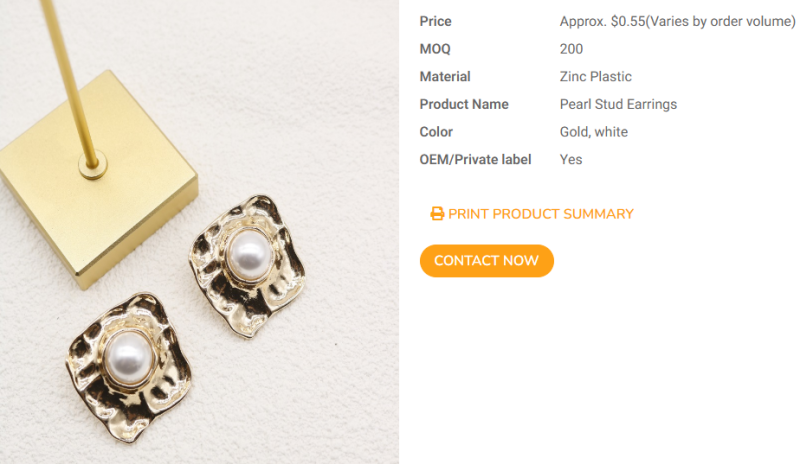
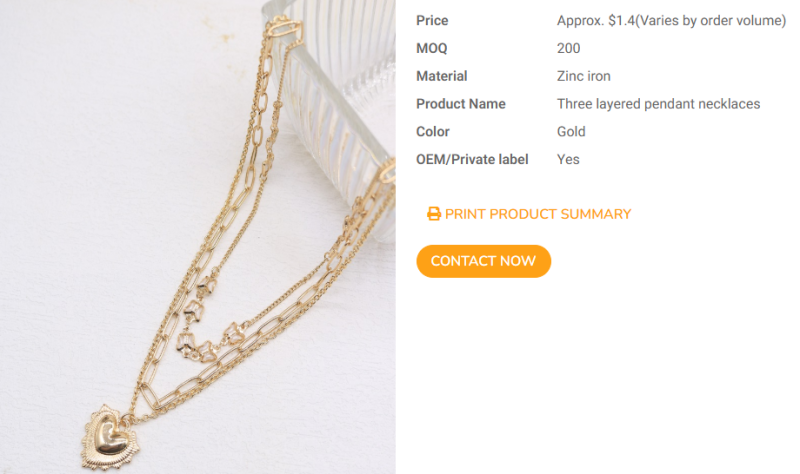
Purchasing directly from the manufacturer allows for more affordable pricing. OKA Accessories supports lower minimum order quantities.
6. Trade Shows and Sourcing Markets
Jewelry trade shows and sourcing markets allow professional buyers to explore multiple suppliers, examine samples, and discuss production requirements.
These events can be particularly useful when you want to compare different materials, discover new designs, or establish relationships with manufacturers.
Prepare a product brief before attending. Include your target price, preferred materials, expected order volume, quality requirements, and delivery schedule.
After meeting potential suppliers, request written quotations and compare them using the same specifications. This makes it easier to distinguish genuinely competitive offers from prices based on different product requirements.
7. Custom Jewelry Manufacturers
If you are developing your own brand, a custom jewelry manufacturer can help turn your ideas into market-ready products.
Custom manufacturing may include concept development, CAD drawings, prototypes, mold making, material selection, plating, and bulk production.
Although custom products can require more upfront investment, they give brands greater control over their designs and help differentiate their collections from generic ready-made jewelry.
Look for a manufacturer with relevant design experience, a clear sampling process, documented quality procedures, and realistic production schedules.
For fashion brands that regularly launch new collections, the ability to coordinate design and manufacturing can be just as important as the initial unit price.
3. What Makes Affordable Jewelry Good Quality?
Good quality jewelry does not necessarily need to be expensive. The goal is to find products that deliver appropriate durability, attractive design, comfortable wear, and reliable construction for their intended price point.
The most important factors are materials, plating, craftsmanship, and quality control.
Choose the Right Materials
Different materials offer different combinations of cost, appearance, durability, and maintenance requirements.
| Material | Typical Advantages | Important Considerations | Common Applications |
|---|---|---|---|
| Base-metal alloys | Affordable and flexible for fashion designs | Performance depends on the alloy, finish, and protective coating | Fashion earrings, pendants, statement jewelry |
| Stainless steel | Generally resistant to rust and corrosion under normal conditions | Grade, surface finish, and design affect performance | Chains, bracelets, rings, everyday accessories |
| Brass | Suitable for detailed designs and many plating finishes | May tarnish or react differently depending on the finish and environment | Earrings, necklaces, decorative jewelry |
| Sterling silver | Precious-metal content and classic appearance | Can tarnish and requires appropriate care | Rings, necklaces, bracelets |
| Gold-plated materials | Gold-colored finish at a lower cost than solid gold | Plating thickness, base material, friction, moisture, and chemicals affect wear | Fashion necklaces, earrings, rings, bracelets |
| Acrylic and beads | Lightweight and versatile for colorful designs | Quality varies with the material and construction | Statement necklaces, earrings, seasonal accessories |
There is no single best material for every jewelry product. The right choice depends on your target price, design, intended use, and customer expectations.
For example, a lightweight statement earring may prioritize appearance and comfort, while a bracelet intended for frequent everyday wear may require greater attention to corrosion resistance and surface durability.
If you are sourcing jewelry for resale, ask suppliers to identify the exact base material and finish rather than accepting vague descriptions such as "premium metal" or "gold jewelry."
Examine Plating and Surface Finishes
Gold-plated jewelry can provide an attractive appearance at a fraction of the cost of solid gold. However, plated products vary considerably in performance.
Before purchasing, ask about the base material, plating process, coating specifications, and recommended care. If long-term wear is important, request relevant durability test results.
A product that looks excellent in photographs may still have uneven plating, rough edges, or a finish that wears quickly under frequent use.
Check Craftsmanship and Construction
Small construction details can reveal a great deal about a jewelry product's quality.
Look for:
Smooth edges without sharp or uncomfortable areas.
Secure clasps, links, and closures.
Even surface finishes and consistent colors.
Properly aligned stones, beads, and decorative components.
Secure connections between chains, pendants, and other parts.
Consistent dimensions and appearance across multiple pieces.
For bulk orders, inspect samples before approving mass production. If the product has several components or a complex design, pay particular attention to connection points and areas exposed to friction.
Consider Skin Contact and Product Safety
Affordable jewelry should still meet the safety requirements applicable to its intended market.
For products sold in the United States or Europe, buyers should identify the relevant requirements for materials and restricted substances. Depending on the product and market, these may include restrictions relating to nickel release, lead, or cadmium.
Request appropriate test reports and confirm that they correspond to the actual product materials and finish. Do not assume that every product from a supplier has identical compliance status.
Customers with sensitive skin may benefit from clearly disclosed material specifications, but no material should be described as universally allergy-proof.
4. How to Find Affordable Wholesale Jewelry Suppliers
If you are a retailer, e-commerce seller, or fashion brand, finding a reliable wholesale jewelry supplier requires more than comparing prices.
The right supplier should be able to meet your product specifications, order quantities, quality requirements, and delivery schedule.
Compare Suppliers Using the Same Specifications
When requesting quotations, provide the same product information to each supplier. Otherwise, the prices you receive may not be directly comparable.
For example, two suppliers may quote different prices because they use different base metals, plating specifications, packaging, or quality standards.
Use the following checklist to organize your evaluation.
| Evaluation Factor | Questions to Ask | Why It Matters |
|---|---|---|
| Unit price | What is the price at different order quantities? | Helps identify volume discounts |
| Minimum order quantity | Is the MOQ per design, color, or total order? | Determines whether the supplier fits your budget |
| Materials and finishes | What materials, plating processes, and specifications are used? | Helps compare equivalent products |
| Sample development | Are samples available, and are there additional fees? | Reduces the risk of approving a product based on photos alone |
| Quality control | What inspections and tests are performed? | Helps evaluate consistency and compliance |
| Production lead time | When does the production timeline begin, and what can delay it? | Supports inventory and launch planning |
| Customization | Can the supplier modify designs, colors, finishes, or packaging? | Helps differentiate your collection |
| Shipping and trade terms | What are the freight costs, duties, and delivery responsibilities? | Reveals the true landed cost |
Calculate the Total Cost, Not Just the Unit Price
A supplier with the lowest quoted price may not offer the lowest overall cost.
For a business purchasing jewelry in bulk, the landed cost may include:
Total landed cost = product cost + sampling and tooling fees + packaging + freight + duties and taxes + inspection costs + expected losses from defects.
Consider a simplified example involving two suppliers quoting for the same 1,000-piece order.
| Cost Component | Supplier A | Supplier B |
|---|---|---|
| Product cost per piece | $1.00 | $1.10 |
| Product cost for 1,000 pieces | $1,000 | $1,100 |
| Shipping and other allocated costs | $300 | $200 |
| Total estimated cost | $1,300 | $1,300 |
| Estimated landed cost per piece | $1.30 | $1.30 |
In this example, Supplier A has the lower quoted unit price, but both suppliers have the same estimated landed cost.
The figures are illustrative only and do not represent actual quotations from OKA or any other supplier. In practice, duties, taxes, inspection fees, and defect-related costs should be calculated according to the actual order and destination.
Verify the Supplier Before Placing a Large Order
A reliable supplier should be able to explain its production process, provide representative samples, and answer technical questions about materials and finishes.
Before committing to a substantial order:
Verify the company's identity and business history.
Request samples and confirm the specifications in writing.
Review applicable test reports and quality procedures.
Agree on acceptable quality criteria and defect-handling arrangements.
Confirm the production timeline, payment terms, and shipping responsibilities.
Consider an independent pre-shipment inspection when appropriate.
For custom products, retain approved samples, drawings, and written specifications. These records can help resolve differences between the approved design and the final production batch.
5. Is Buying Jewelry Directly From a Manufacturer Cheaper?
Buying directly from a manufacturer can offer competitive pricing for bulk orders, especially when you need customized products or plan to reorder successful designs.
However, the savings depend on order volume, product complexity, material specifications, and the manufacturer's production capabilities.
When Direct Manufacturing Makes Sense
Working directly with a manufacturer may be a good choice if you:
Operate a jewelry brand or retail business.
Need hundreds or thousands of pieces per design.
Want to customize colors, finishes, materials, or packaging.
Plan to develop exclusive designs.
Need a supplier that can support repeated production runs.
Want to coordinate product development and manufacturing through one main partner.
If you only need one necklace or a few pairs of earrings, a retail store or ready-made online collection will usually be more convenient.
For larger orders, manufacturing can offer more flexibility, but you should evaluate the complete commercial arrangement rather than assuming that factory-direct always means the lowest price.
Understand Minimum Order Quantities
Manufacturers often set minimum order quantities to make production economically practical.
For example, a manufacturer may require a minimum of 200 pieces per style. That can work for a retailer testing a new collection, but it may be unsuitable for someone who wants only a few items.
Before requesting a quotation, clarify whether the MOQ applies separately to each design, color, size, or finish. Also ask whether different variations can be combined within one order.
Consider Design and Sampling Costs
Custom jewelry may require CAD drawings, prototypes, molds, or tooling before mass production begins.
These costs can increase the initial investment, particularly for complex designs. However, the economics may improve when the same design is produced in larger quantities or reordered over time.
Ask the manufacturer to separate one-time development costs from recurring production costs. This helps you compare suppliers and understand how your unit cost may change as order quantities increase.
6. How to Avoid Low-Quality Jewelry When Shopping on a Budget
Whether you are purchasing a single item or sourcing thousands of pieces, a few practical checks can help you avoid unnecessary quality risks.
Inspect Samples Before Buying in Bulk
Samples allow you to evaluate the actual product rather than relying on photographs or descriptions.
Check the finish under good lighting, examine closures and connection points, and wear the jewelry under appropriate conditions if you are assessing comfort or everyday performance.
For business orders, approve a representative sample and retain a record of the agreed specifications.
Read Product Descriptions Carefully
Look for exact material information, dimensions, plating details, and care instructions.
Be cautious when a listing uses terms such as "waterproof," "tarnish-free," or "hypoallergenic" without supporting specifications or test evidence. These claims should be evaluated according to the actual product and conditions of use.
Review Return Policies and Quality Guarantees
For retail purchases, check whether the seller accepts returns, handles defective products, and provides clear customer support.
For wholesale purchases, agree on inspection procedures, acceptable defect rates, replacement arrangements, and the time allowed to report problems.
Written terms are particularly important for custom orders because the finished product may not be eligible for ordinary retail-style returns.
Avoid Choosing a Supplier Based on Price Alone
An unusually low quote may reflect differences in materials, production methods, order quantities, or service scope.
Ask suppliers to explain any significant price differences. A slightly higher unit price may be worthwhile if it includes better materials, more consistent finishing, reliable quality checks, or more suitable packaging.
The objective is not to buy the cheapest jewelry available. It is to find the best balance between price, quality, and the needs of your customers.
7. Why Work With a Custom Fashion Jewelry Manufacturer?
For fashion brands and retailers, affordable jewelry is not simply about finding the lowest-priced product. It is about developing attractive designs, maintaining consistent quality, and controlling production costs as the business grows.
This is where an experienced manufacturing partner can make a difference.
Meet OKA Accessories
Qingdao OKA Arts and Crafts Co., Ltd., operating as OKA Accessories, was founded in 2013 and specializes in fashion jewelry and hair accessories for global retail markets.
With offices and teams in Qingdao and Yiwu, China, and a London design office, OKA combines design development with manufacturing resources to support brands looking for commercially viable jewelry collections.
Its capabilities include:
Design and development: A London-based design team and a China-based design team collaborate on product concepts, CAD development, and manual design work.
Sampling capabilities: The company reports a capacity of more than 1,000 samples per month, supporting product development and collection planning.
Production scale: Annual production capacity is approximately 5–7 million pieces.
In-house resources: A mold workshop with five technicians and an in-house casting room support selected manufacturing processes.
Quality inspection: The company reports 100% full inspection before release, with a management sign-off process.
Order planning: The standard minimum order quantity is 200 pieces per style, and the typical production lead time is approximately five to six weeks after sample approval, subject to product specifications and order requirements.
These capabilities are designed to support businesses that need fashion-forward designs, competitive production costs, and a manufacturing partner for bulk orders.
Who Is OKA Accessories Best Suited For?
OKA is particularly relevant to:
Fashion brands developing their own jewelry collections.
Retailers sourcing trend-driven fashion accessories.
E-commerce businesses looking for wholesale inventory.
Buyers who need customized designs, finishes, or product variations.
Businesses seeking a manufacturing partner for repeat orders and larger production volumes.
If you are an individual shopper looking for a single inexpensive necklace or pair of earrings, a retail store may be more appropriate.
If you are sourcing jewelry for a business, however, working directly with a manufacturer can help you explore customization, sampling, and production options based on your target price and order quantity.
Request a Quote for Your Jewelry Collection
The best way to determine whether a manufacturer fits your budget is to share a clear product brief.
Include your preferred jewelry category, reference images or design drawings, material and finish requirements, estimated order quantity, target price, packaging needs, and destination market.
A detailed brief helps the supplier provide a more meaningful quotation and identify potential cost-saving opportunities without compromising essential quality requirements.
Explore OKA Accessories to learn more about its fashion jewelry and hair accessory manufacturing capabilities and discuss your sourcing requirements.
8. Frequently Asked Questions
Where can I get good quality jewelry for cheap?
For personal purchases, compare reputable online jewelry stores, direct-to-consumer brands, and local boutiques. If you need jewelry for resale or a fashion brand, consider wholesale suppliers and direct manufacturers. Compare materials, craftsmanship, return policies, and total costs rather than focusing on the lowest listed price.
What is the cheapest place to buy good quality jewelry?
There is no single cheapest option for every buyer. Retail promotions may be suitable for individual purchases, while wholesale suppliers and manufacturers may offer more competitive unit prices for bulk orders. The best choice depends on order quantity, product specifications, shipping, and quality requirements.
Is cheap jewelry always low quality?
No. Affordable jewelry can offer good value when the materials, design, construction, and finish are appropriate for the intended use. However, quality varies between products and suppliers. Reviewing specifications, inspecting samples, and checking relevant test reports can help you make a more informed decision.
Is it cheaper to buy jewelry wholesale?
Wholesale purchasing can reduce the average unit price when you buy larger quantities. However, minimum order requirements, shipping, duties, packaging, and unsold inventory can affect your overall costs. Compare the total landed cost before deciding whether a wholesale order makes financial sense.
How do I find a reliable wholesale jewelry manufacturer?
Start by checking the manufacturer's business background, product range, production capabilities, and quality control procedures. Request samples, verify material specifications, compare written quotations, and agree on production timelines and defect-handling terms. For larger orders, consider independent inspections.
What is the minimum order quantity for custom jewelry?
MOQ varies by manufacturer, product design, materials, and production process. Some suppliers accept relatively small orders for selected ready-made products, while custom designs may require larger quantities. Always confirm whether the minimum applies per style, color, or total order.
Is gold-plated jewelry worth buying?
Gold-plated jewelry can be a cost-effective choice for fashion accessories because it offers a gold-colored finish without the price of solid gold. Its durability depends on the base material, plating specifications, construction, and care. Buyers should compare product details and avoid assuming that all gold-plated pieces perform equally.
Can I buy affordable custom jewelry directly from a manufacturer?
Yes. Many jewelry manufacturers offer custom development for brands and retailers. Depending on the product, services may include design support, sampling, mold making, material selection, plating, and bulk production. Ask about development costs, MOQ, lead time, and quality requirements before placing an order.
How can I calculate the real cost of wholesale jewelry?
Start with the quoted product price and add sampling or tooling fees, packaging, freight, applicable duties and taxes, inspection costs, and expected losses from defects. Dividing the total estimated cost by the number of sellable pieces gives you a more useful cost-per-piece figure for pricing and profit planning.
Final Thoughts
Finding good quality jewelry for cheap starts with understanding what you need and choosing the right purchasing channel.
Individual shoppers can find affordable pieces through online stores, direct-to-consumer brands, and local boutiques. Retailers and fashion brands may benefit more from wholesale suppliers or direct jewelry manufacturers, particularly when they need bulk quantities, customized designs, or consistent production.
Regardless of where you buy, compare materials, craftsmanship, quality controls, and total costs. A low purchase price is only valuable when the product meets your expectations and serves its intended purpose.
For brands and retailers looking to develop or source fashion jewelry at scale, working with an experienced manufacturer can provide greater control over product design, production planning, and customization.
Looking for a manufacturing partner for your next jewelry collection? Contact us to explore our product capabilities and discuss your wholesale or custom jewelry requirements.