In today’s fast-paced fashion landscape, staying ahead means more than just following trends—it means anticipating them, understanding your supply chain, and partnering with a manufacturer who can turn vision into reality. If you’re a retailer, boutique owner, or brand looking to source high-quality, on-trend fashion jewelry at wholesale prices, you’ve come to the right place. This comprehensive guide cuts through the noise, offering practical insights, a clear-eyed look at the competition, and a roadmap for building a profitable, trend-forward jewelry collection in 2026.
Why This Guide is Different (And Why You Can Trust It)
Unlike generic listicles or AI-generated fluff, this guide is built on real-world experience and current market data. We’ll be weaving in specific insights from Qingdao OKA Arts and Crafts Co., Ltd (OKA Accessories), a leading custom jewelry manufacturer that has successfully partnered with global heavyweights like Pull&Bear, Tally Weijl, and Urban Outfitters. By examining their model alongside industry benchmarks, you’ll gain a crystal-clear picture of what “best-in-class” looks like in the world of fashion jewelry wholesale.
The 2026 Fashion Jewelry Landscape: Speed, Story, and Substance
The past few years have reshaped consumer expectations. Today’s shoppers are savvy, value-conscious, and demand both style and substance. According to industry reports from JOOR and WWD, the key drivers for 2026 are:
Hyper-Personalization: Consumers want pieces that feel unique to them, even from a mass-market brand.
Rapid Trend Turnaround: The window between a trend appearing on social media and hitting store shelves is shorter than ever.
Quality & Compliance: Shoppers are increasingly aware of material safety and ethical production, especially in markets like Europe and North America.
Value Beyond Price: “Affordable” doesn’t mean “cheap.” Customers expect good design, durable finishes, and a compelling story behind their purchase.
For a retailer, this translates into a critical need for a wholesale partner who is not just a factory, but a true collaborator—one that can move quickly, innovate constantly, and guarantee quality at every step.
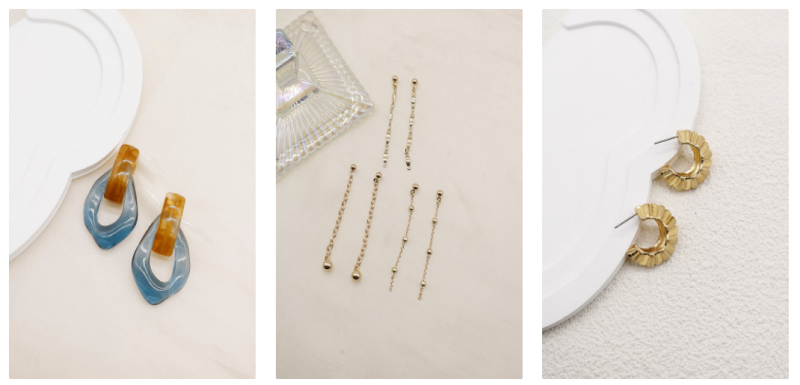
Sculptural forms, warm metallics—custom-crafted by OKA.
The Ultimate Checklist: Vetting Your Fashion Jewelry Supplier in 2026
In the fast-paced world of fashion retail, your choice of a wholesale jewelry supplier can be the difference between a best-selling collection and a costly misstep. With countless options available, how do you ensure you’re partnering with a reliable, high-quality, and innovative manufacturer? This definitive checklist is your roadmap to making a confident, informed decision in 2026.
Why a Checklist Matters
Gone are the days of simply comparing prices on a spreadsheet. Today’s successful brands demand partners who are extensions of their own creative and operational teams. A thorough vetting process protects your brand reputation, ensures on-time delivery for critical selling seasons, and guarantees the quality your customers expect.
Your Step-by-Step Vetting Process
Phase 1: Initial Screening & Credentials
Before diving deep, verify the basics.
Business Legitimacy: Can they provide a valid business license and proof of export capabilities?
Compliance Certifications: Do they have up-to-date test reports for key markets (e.g., REACH for Europe, CPSIA for the USA)? Ask for their latest lab pass rate.
Market Proof: Do they have a portfolio of past or current clients, especially recognizable brands? (For example, Qingdao OKA Arts and Crafts Co., Ltd proudly lists partners like Pull&Bear and Urban Outfitters).
Phase 2: Deep Dive into Capabilities
This is where you assess if they can truly meet your needs.
Design & Development: Do they have an in-house design team? Where are they located? A global perspective (like a London design hub) is a huge plus for trend forecasting.
Customization Flexibility: Can they work from your concept sketches, or are they limited to catalog items? What is their MOQ (Minimum Order Quantity)? An MOQ of 200 pieces, like OKA’s, allows for greater testing and flexibility.
Material Transparency: Can they provide a detailed breakdown of the base metals, plating types (e.g., IP plating), and stones they use? Do they offer sustainable material options?
Production Capacity & Lead Times: What is their realistic lead time from sample approval to bulk delivery? Is it consistent? A standard 5-6 week turnaround is highly competitive.
Quality Control Protocol: Is their QC process just a final check, or is it integrated throughout production? Do they perform 100% inspection, or just random sampling?
Phase 3: Red Flags to Watch For
Trust your instincts. If you encounter any of these, proceed with extreme caution.
Unwillingness to Video Call/Show Factory: A legitimate factory will be proud to show you their facilities.
Vague Answers on Compliance: They should be able to speak confidently about safety standards.
Pricing That’s Too Good to Be True: Extremely low prices often signal poor materials, hidden costs, or sub-contracting to unknown third parties.
No Clear Contract or Terms: Professionalism starts with clear, written agreements on payment, timelines, and liability.
By using this checklist, you move beyond guesswork and build a partnership on a foundation of trust, transparency, and shared success.
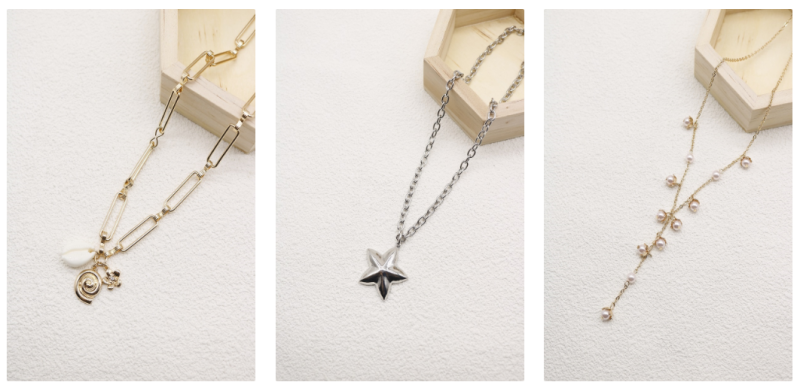
Nature-inspired storytelling meets modern minimalism: organic motifs and modular pieces for personalized style.
Your Step-by-Step Roadmap to Sourcing Wholesale Fashion Jewelry
Sourcing isn't just about finding the lowest price. It's a strategic process that, when done right, becomes a powerful competitive advantage. Here’s your actionable plan.
Step 1: Define Your Brand’s Jewelry Identity
Before you contact a single supplier, get crystal clear on your own needs.
Who is your customer? Are they Gen Z trendsetters, professional women, or luxury seekers?
What’s your aesthetic? Minimalist, maximalist, boho, Y2K revival, or coastal grandmother chic?
What’s your price point? This will dictate your material choices and production complexity.
Having these answers will make your conversations with manufacturers far more productive.
Step 2: Know What to Look for in a Wholesale Partner
Not all manufacturers are created equal. In 2026, your ideal partner should offer more than just production capacity. They should be an extension of your creative and operational team.
Here’s a breakdown of the core competencies you should evaluate, using OKA Accessories as a benchmark for excellence.
Design & Trend Intelligence: Your Secret Weapon
Your jewelry must be on-trend the moment it launches. A great partner has its finger on the pulse of global fashion.
Dedicated Design Hubs: OKA operates a London Design Center with 12 years of experience serving mainstream European and American retailers. This gives them direct access to the epicenters of fashion forecasting.
Local Market Integration: Their Qingdao design team is embedded in China’s massive raw material market, allowing them to source new components and finishes in real-time, ensuring your collection uses the latest materials.
Hybrid Design Process: They combine CAD (Computer-Aided Design) for precision with manual sketching for creative flair. This blend ensures designs are both manufacturable and artistically fresh.
This dual-hub, tech-meets-craft approach is a significant advantage over competitors who rely solely on one method or location.
Production Power & Reliability: From Sample to Shelf
Speed and consistency are non-negotiables in fast fashion.
Scalability: OKA boasts a monthly sample capacity of 1,000+ and an annual production capacity of 5-7 million pieces. This means they can handle everything from a small test run to a full-blown seasonal launch.
Speed-to-Market: Their standard lead time is 5-6 weeks after sample confirmation, which is highly competitive for the quality they deliver.
Vertical Integration: They own their mold workshop and casting room. This in-house control eliminates third-party delays and quality issues, a common pain point with many other suppliers.
This level of control over the entire production chain is a major differentiator that directly impacts your ability to meet tight retail deadlines.
Uncompromising Quality Control: Building Trust with Your Customers
One bad batch of jewelry can destroy your brand’s reputation. Your manufacturer must have a rigorous, transparent QC process.
100% Inspection: Every single piece is inspected before shipment, not just a random sample. A management signature is required for release, adding a layer of accountability.
Lab Testing: Their laboratory test pass rate is an impressive 98%, consistently meeting the stringent safety and material standards of Europe and North America (like REACH and CPSIA).
This commitment to quality ensures your customers receive products that are safe, durable, and beautiful, fostering long-term loyalty.
Step 3: Navigate the Order Process Smoothly
Understanding the typical workflow will help you manage expectations and timelines.
Initial Consultation: Share your brand vision, target audience, and any specific design ideas or mood boards.
Design & Development: The manufacturer’s design team will create initial concepts and technical drawings based on your input.
Sampling: A physical sample is produced for your approval. This is your chance to check the look, feel, weight, and finish.
Production: Once the sample is approved, full-scale production begins.
Quality Control & Shipment: The finished goods undergo final inspection and are shipped according to your agreed terms.
Key Term to Note: OKA’s minimum order quantity (MOQ) is 200 pieces per design. This is a very accessible entry point for most businesses, allowing you to test multiple SKUs without a massive upfront investment.
Material Matters: A 2026 Guide to Plating, Alloys, and Stones for Fashion Jewelry
Understanding the materials behind your jewelry is not just technical jargon—it’s the foundation of quality, durability, and customer satisfaction. In 2026, informed buyers know exactly what they’re getting. This guide breaks down the key components of fashion jewelry so you can make the best choices for your brand.
The Foundation: Base Metals
The core of most fashion jewelry is a non-precious metal alloy. The choice impacts weight, cost, and potential for skin sensitivity.
Brass: The industry standard. It’s an alloy of copper and zinc, offering excellent malleability for intricate designs, a good weighty feel, and a warm undertone that works well under gold plating. It’s generally hypoallergenic for most people.
Zinc Alloy: Lighter and cheaper than brass, but more brittle. Best for simple, chunky designs rather than delicate pieces. Can sometimes contain nickel, a common allergen.
Stainless Steel: Highly durable and naturally corrosion-resistant. Ideal for modern, minimalist designs. It’s a great choice for customers with sensitive skin as it’s typically nickel-free.
The Finish: Plating Technologies
Plating gives your jewelry its final color and luster. The method matters immensely for longevity.
Traditional Electroplating: The most common method. A layer of precious metal (like gold or silver) is deposited onto the base metal using an electric current. Thickness varies; look for suppliers who specify micron thickness (e.g., 0.5-1.0 microns is standard for fashion).
IP (Ion Plating): A far superior technology. The metal is vaporized in a vacuum chamber and bonded to the base at a molecular level. The result is a coating that is 5-8 times harder and more wear-resistant than traditional plating. It’s the gold standard for high-end fashion jewelry and is perfect for pieces that will see daily wear.
E-Coat (Electrophoretic Coating): Often used as a protective top layer over plating. It’s a clear lacquer that seals the metal, preventing tarnish and fading from sweat and cosmetics.
The Sparkle: Stones & Embellishments
From classic to contemporary, your choice of stone sets the tone.
Cubic Zirconia (CZ): The go-to for diamond-like brilliance. High-quality CZ is flawless, has excellent fire (dispersion of light), and is very affordable. It’s ideal for statement pieces.
Glass: Offers a beautiful, smooth finish and can be made in virtually any color. It’s less sparkly than CZ but has a more organic, vintage feel. Great for beads and cabochons.
Acrylic: Lightweight and inexpensive, perfect for bold, colorful, and trendy pieces where weight is a concern (like large earrings). Not as durable as glass or CZ.
Natural Semi-Precious Stones: A growing trend for 2026. Materials like freshwater pearls, howlite, or agate add a unique, earthy authenticity to a collection. They require more careful sourcing and handling.
2026 Trend Spotlight: Warm Metallics & Textures
This season, antique gold, burnished bronze, and matte/satin finishes are dominating. These looks are best achieved with a brass base and a thick, high-quality IP plating process, followed by a subtle brushing or sandblasting for texture. A knowledgeable partner like OKA can guide you through these nuanced material choices to bring your trend vision to life.
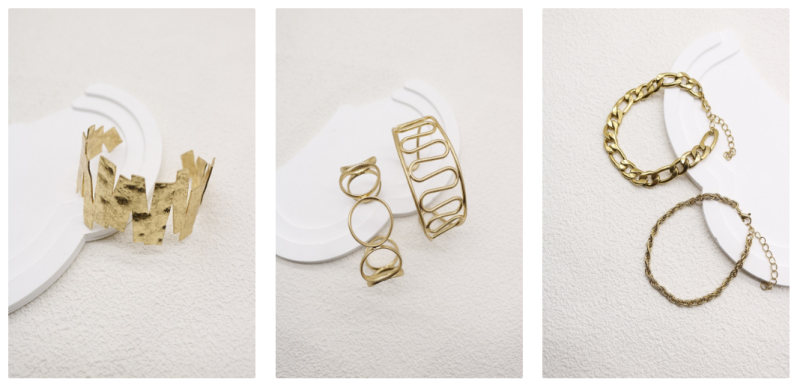
Wearable art for the wrist and hand—designed by OKA for effortless stacking and bold self-expression.
Your 2026 Holiday Buying Calendar: When to Order Fashion Jewelry for Q4 Success
The holiday season (Q4) is the most critical sales period of the year for fashion retailers. Missing the boat on inventory can mean missing out on the majority of your annual profit. To ensure your shelves are stocked with the season’s hottest jewelry in time for Black Friday and Christmas, you need a precise buying calendar. Here’s your month-by-month action plan for 2026.
The Golden Rule: Start Now
If you’re reading this in June or July 2026, you are right on schedule. Waiting until August is cutting it dangerously close.
| Month | Key Action | Why It’s Critical |
|---|---|---|
| June - July 2026 | Finalize Designs & Place Sample Orders. Work with your supplier to lock in your holiday collection. This includes selecting trends, approving tech packs, and ordering physical samples. | This is your last chance to make changes. Factories begin to book up for Q4 production in July. |
| Early August 2026 | Approve Samples & Place Bulk Production Order. Once you’ve received and approved your samples, issue the official purchase order for bulk production. | This triggers the factory’s production queue. A reliable partner like OKA will confirm a delivery date based on their 5-6 week production cycle. |
| Mid-August - September 2026 | Production Phase. Your supplier is now in full production. Maintain open communication for any updates. | This is the longest phase. Trust your supplier’s timeline, but stay in the loop. |
| Late September - October 2026 | Quality Control & Shipment. Your order undergoes final inspection and is shipped. Factor in 4-6 weeks for sea freight to major markets (USA, Europe). | Shipping lines get congested in Q4. Air freight is an option but is exponentially more expensive. Sea freight is the standard for planned inventory. |
| Early - Mid November 2026 | Goods Arrive in Your Warehouse. Your inventory is now in your possession, ready for your holiday marketing blitz and sales events. | You need this buffer to receive, check, tag, and display your stock before the Black Friday rush begins. |
Critical Risks of Delaying Your Order
Factory Backlogs: Top factories are fully booked by late July. A late order might not start production until October, missing the holiday window entirely.
Shipping Delays & Costs: Peak season shipping rates can double, and port congestion can add weeks to your transit time.
Missed Sales: Without inventory, you can’t capitalize on the highest-spending period of the year.
By following this calendar, you transform the chaotic holiday rush into a well-orchestrated campaign for success. Partnering with a manufacturer known for its reliability and speed, like OKA Accessories, is the final piece of the puzzle to guarantee your Q4 wins.
Case Study: How "Luna & Co." Scaled Its Jewelry Line with OKA Accessories
Client Profile: Luna & Co., a boutique retailer based in Berlin, Germany, known for its curated selection of contemporary European fashion. They had a loyal local customer base but wanted to launch their first-ever private label jewelry collection to increase margins and brand identity.
The Challenge
Luna & Co. had a clear vision: a small, 12-piece capsule collection for Fall/Winter 2025 that embodied their minimalist-yet-bold aesthetic. However, they faced significant hurdles:
Tight Timeline: They needed the collection ready for their October launch event.
Limited Budget: As a first-time venture, they couldn't commit to large MOQs.
Zero Manufacturing Experience: They had no existing relationships with factories in Asia.
The Solution: A Partnership with OKA Accessories
Luna & Co. reached out to OKA Accessories after seeing their work with other European retailers. Here’s how OKA addressed each challenge:
Accelerated Design & Development: OKA’s London Design Center was a game-changer. They took Luna & Co.’s mood board—featuring sculptural gold tones and organic pearls—and translated it into technical drawings within a week. The proximity and shared time zone made communication seamless.
Flexible Sampling & Low MOQ: OKA produced 3 initial samples for review. After minor tweaks, Luna & Co. felt confident to proceed. The 200-piece MOQ per SKU allowed them to order a full range without overcommitting financially.
Guaranteed Quality & On-Time Delivery: OKA’s promise of a 5-6 week production window post-sample approval gave Luna & Co. the certainty they needed. Their rigorous 100% inspection process ensured that every piece met their high standards, eliminating the risk of customer returns.
The Results
On-Time Launch: The entire collection arrived in Berlin 4 days ahead of schedule, allowing ample time for photoshoots and marketing.
Commercial Success: The collection sold out within 8 weeks, with a 75% sell-through rate on the first shipment.
Stronger Brand Identity: Customers loved the unique, high-quality pieces, leading to a 30% increase in social media engagement and numerous inquiries about future collections.
Ongoing Partnership: Based on this success, Luna & Co. has already commissioned OKA to develop their Spring/Summer 2026 line.
This case study demonstrates that with the right partner, even a small boutique can execute a professional, on-trend, and profitable private label jewelry line.
Competitive Analysis: How Top Manufacturers Stack Up
To truly understand OKA’s position, let’s compare them against common types of competitors in the wholesale jewelry space.
| Feature / Capability | Qingdao OKA Accessories | Generic Alibaba Supplier | Large, Established Factory | Boutique Design Studio |
|---|---|---|---|---|
| Design Expertise | High. Dual hubs (London/Qingdao), trend-focused, hybrid CAD/manual process. | Low. Usually offers pre-made catalog items with limited customization. | Medium. May have a design team, but often slower to adapt to micro-trends. | Very High. Strong artistic vision, but may lack commercial scalability. |
| Customization | Full Custom. Works from concept to completion, tailoring to your brand’s aesthetic. | Limited. Minor changes to existing designs (e.g., plating color). | Partial. Can customize, but MOQs are often very high (5k-10k+ pcs). | Full Custom. Highly personalized, but not built for large-volume retail. |
| Production Capacity | High. 5-7M pcs/year, suitable for major retailers. | Variable. Often acts as a middleman; actual capacity is unclear. | Very High. Built for massive orders from mega-brands. | Low. Focuses on small batches or one-off pieces. |
| Lead Time | Fast. 5-6 weeks post-sample. | Unpredictable. Can be fast for stock items, slow and opaque for custom work. | Slow. Long queues and complex processes can lead to 12+ week lead times. | Variable. Can be fast for small jobs, but not optimized for speed at scale. |
| Quality Control | Rigorous. 100% inspection, 98% lab pass rate, management sign-off. | Minimal. Often relies on buyer’s own QC or third-party inspectors. | Structured. Has formal QC, but may cut corners on lower-tier orders. | High. Meticulous attention to detail on each piece. |
| Ideal For | Global retailers, growing brands, and established boutiques needing a balance of speed, quality, customization, and scale. | Small businesses or individuals needing a few stock items quickly and cheaply. | Major global brands (e.g., H&M, Zara) placing enormous, standardized orders. | Luxury brands or designers creating exclusive, high-end collections. |
As the table shows, OKA Accessories occupies a powerful “sweet spot” in the market. They offer the design sophistication and customization of a boutique studio, combined with the production scale and reliability of a large factory, all at a price point and MOQ accessible to a wide range of serious businesses.
Top 5 Fashion Jewelry Trends for Fall/Winter 2026
Now, let’s talk specifics. Based on insights from the Couture jewelry show in Las Vegas and global retail forecasts, here are the top trends your wholesale collection should embrace.
1. Sculptural & Architectural Forms
Move over, dainty chains. Bold, three-dimensional shapes inspired by modern art and architecture are taking center stage. Think geometric hoops, abstract pendants, and earrings with strong lines and negative space. This trend is perfect for making a confident statement.
2. Rich, Warm Metallics
While silver and white gold remain staples, the spotlight is on antique gold, burnished bronze, and deep copper. These warm, earthy tones add a sense of richness and vintage charm that pairs beautifully with fall and winter wardrobes.
3. Natural & Organic Motifs
There’s a strong pull towards nature. Expect to see jewelry featuring pearls (both classic and baroque), carved wood accents, stone inlays, and motifs like leaves, shells, and celestial bodies. This trend speaks to a desire for authenticity and connection to the natural world.
4. Maximalist Layering
More is more. The trend is towards creating a curated, layered look with multiple necklaces of varying lengths, stacked rings, and a mix of earring styles (think a stud in one lobe and a dramatic drop in the other). Your wholesale line should include versatile pieces designed to be mixed and matched.
5. Personalized Touches
Even in a wholesale context, personalization is key. This doesn't always mean engraving. It can be achieved through modular designs (e.g., charms that can be added to a base chain) or offering a core collection with a variety of interchangeable elements (different gemstone colors, pendant shapes, etc.).
A strong manufacturing partner like OKA can help you execute these trends flawlessly, from sourcing the perfect antique gold plating to creating intricate sculptural molds.
Your Action Plan: From Reading to Doing
You now have a wealth of information. Here’s how to put it into action.
Audit Your Current Line: Does it reflect the 2026 trends? Where are the gaps?
Shortlist Partners: Use the criteria in this guide to evaluate potential manufacturers. Look for their design capabilities, production transparency, and quality certifications.
Request a Consultation: Reach out to a top contender like OKA Accessories. Come prepared with your brand book, target customer profile, and initial ideas.
Start Small: Place a test order on a few key pieces that align with the top trends. Evaluate their communication, speed, and the quality of the final product.
Build a Relationship: The best partnerships are collaborative. Share your sales data and customer feedback with your manufacturer so they can help you refine future collections.
By following this guide, you’re not just buying jewelry; you’re investing in a strategic partnership that will keep your brand relevant, desirable, and profitable in the dynamic world of 2026 fashion.
Beyond Earrings: Building a Cohesive Wholesale Hair Accessories Collection
Your customers don’t just buy an earring; they buy a complete look. In 2026, the most successful accessory brands are those that offer a head-to-toe styling solution. Expanding your wholesale line to include hair accessories isn't just a smart cross-sell—it's a strategic move to increase your average order value and solidify your brand as a one-stop shop for curated style.
Why Hair Accessories Are a Natural Extension
Shared Aesthetic: The same design language that defines your jewelry—sculptural forms, warm metallics, pearl accents—translates beautifully to hair clips, pins, and bands.
Identical Customer: The woman shopping for your gold hoops is also looking for the perfect pearl-adorned claw clip to finish her outfit.
Higher Margins: Hair accessories often have a lower material cost than metal jewelry but can command a similar retail price point, boosting your profitability.
Top 5 Hair Accessory Trends for Fall/Winter 2026
Pearl Everything: From single freshwater pearls on minimalist barrettes to clusters of faux pearls on oversized scrunchies.
Sculptural Metal: Geometric hair cuffs, abstract bobby pins, and architectural headbands that mirror the bold jewelry trends.
Velvet & Satin: Rich, tactile fabrics in deep jewel tones (emerald, burgundy) for hair ties and padded headbands.
Y2K Revival: Playful butterfly clips and beaded hair chains are back, but with a more refined, luxurious execution.
The “Effortless” Claw Clip: Oversized, high-grip claw clips in tortoiseshell, matte black, or metallic finishes remain a staple for their practicality and chicness.
How to Build a Cohesive Collection with OKA Accessories
OKA’s expertise in both jewelry and hair accessories makes them an ideal partner for this expansion. Here’s how to leverage their capabilities:
Unified Design Language: Work with their London design team to create a mood board that encompasses both jewelry and hair. Use the same signature elements—like a specific pearl size or a unique metal finish—across both categories.
Modular Designs: Create a “core” hair piece (e.g., a simple metal barrette) that can be paired with interchangeable decorative elements (a pearl charm, a crystal cluster) that match your jewelry pendants or earrings.
Efficient Sourcing: By ordering both categories from the same supplier, you streamline your supply chain, reduce logistics complexity, and can often negotiate better overall terms.
Don’t leave money on the table. By offering a complete accessory story, you give your customers more reasons to love your brand and spend more per visit.