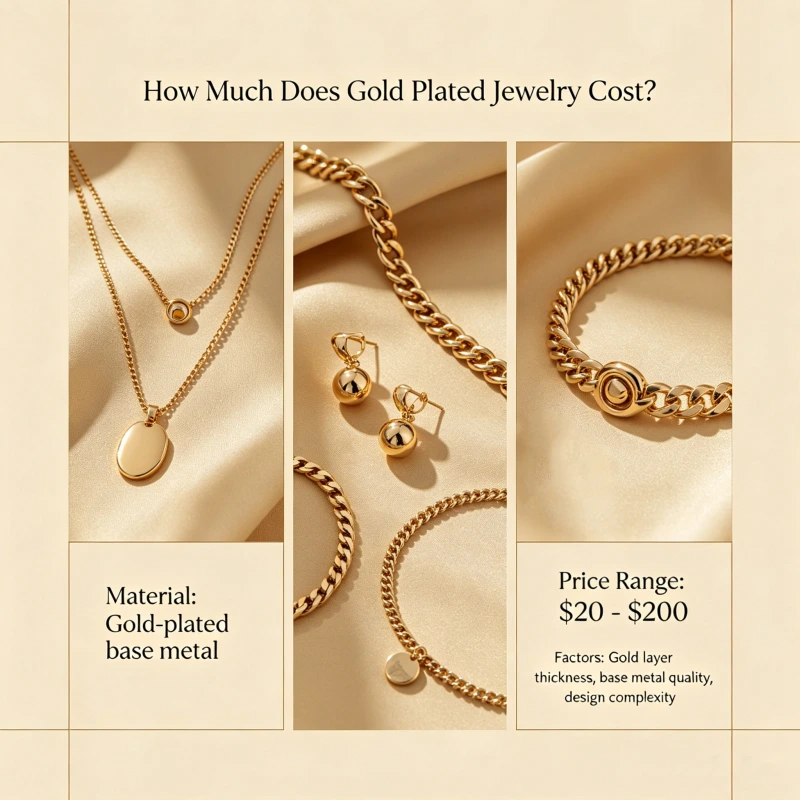
If you’ve ever admired the luster of gold jewelry but balked at the price of solid gold, gold plated jewelry offers an attractive alternative. But how much does it really cost in 2026? And more importantly—what determines whether a $15 necklace lasts weeks or years?
This comprehensive guide answers those questions with real-world pricing data, technical breakdowns, competitor analysis, and practical buying advice—all structured to help you make informed, value-driven decisions.
What Is Gold Plated Jewelry—and Why Price Varies So Widely
Gold plated jewelry consists of a base metal (like brass, copper, or stainless steel) coated with a thin layer of real gold through electroplating. Unlike solid gold (24K, 18K) or even gold-filled jewelry (which contains 5% gold by weight), plating uses minimal gold—often just 0.17 to 2.5 microns thick.
Because the gold content is so low, price is driven not by gold weight, but by four key factors:
Plating thickness (measured in microns)
Gold purity (karat: 10K, 14K, 18K, or 24K)
Base metal quality
Design complexity & brand reputation
Let’s break each down.
Factor 1: Plating Thickness – The #1 Predictor of Longevity & Price
The thicker the gold layer, the longer the jewelry resists tarnishing and wear. Industry standards categorize plating as follows:
| Plating Type | Thickness Range | Typical Lifespan | Common Price Impact |
|---|---|---|---|
| Flash Plated | < 0.17 microns | Days to weeks | Very low ($2–$10) |
| Standard Plated | 0.17–0.5 microns | 3–6 months | Low ($8–$25) |
| Heavy Plated | 0.5–1.0 microns | 6–18 months | Moderate ($20–$60) |
| Premium Plated | 1.0–2.5+ microns | 2–5+ years | Higher ($40–$150+) |
Pro Tip: Look for “micron” specifications in product descriptions. If unspecified, assume standard or flash plating.
In 2026, European and U.S. markets increasingly demand minimum 0.5-micron plating for fashion jewelry to comply with durability expectations under REACH and CPSIA guidelines. Brands failing to meet this threshold face higher return rates and reputational damage.
Factor 2: Gold Karat – Higher Isn’t Always Better
While 24K gold is pure, it’s also soft and prone to scratching. Most quality gold plated jewelry uses 14K or 18K gold for durability and rich color. Here’s how karat affects appearance and cost:
10K: Slightly paler, more durable, lowest cost
14K: Warm golden hue, excellent balance of color and hardness—most common in mid-range pieces
18K: Rich, luxurious yellow; slightly softer but highly desirable
24K: Bright yellow, less durable; often used in fashion pieces for visual impact
Higher karat = slightly higher price, but thickness matters far more than karat for longevity.
Factor 3: Base Metal – The Hidden Foundation
A high-quality base metal prevents corrosion and allergic reactions. Common options:
Brass: Affordable, good for plating, but may cause skin discoloration in sensitive individuals
Copper: Excellent adhesion for gold, but oxidizes easily if plating wears
Stainless Steel: Hypoallergenic, durable, ideal for everyday wear—common in premium plated jewelry
Sterling Silver: Rare in plated items (usually vermeil), but offers superior finish
Jewelry using surgical-grade stainless steel or nickel-free brass typically costs 15–30% more but offers better safety and performance.
Factor 4: Design & Craftsmanship
Intricate chains, hand-set stones, or artisanal finishes increase labor costs. Minimalist studs may cost $12, while a detailed pendant with cubic zirconia could reach $80—even with identical plating specs.
2026 Gold Plated Jewelry Price Ranges by Category (with Real Examples)
Below is a detailed comparison of current market prices across major online retailers (as of May 2026). All prices reflect standard retail, not clearance or bulk rates.
Earrings
| Type | Flash Plated ($) | Standard Plated ($) | Heavy/Premium Plated ($) | Notes |
|---|---|---|---|---|
| Studs (simple) | 3–8 | 10–20 | 25–50 | Premium: 18K, 1.5µm, stainless steel posts |
| Hoops (medium) | 5–12 | 15–28 | 35–70 | Thickness critical for inner surface wear |
| Dangle/Chandelier | 8–15 | 20–40 | 50–120 | Stone settings add significant cost |
Necklaces
| Type | Flash Plated ($) | Standard Plated ($) | Heavy/Premium Plated ($) | Notes |
|---|---|---|---|---|
| Chain (thin, 16") | 6–12 | 18–35 | 40–90 | Cable or curb chains most common |
| Pendant (basic) | 10–20 | 25–50 | 60–140 | Includes simple geometric or initial pendants |
| Layered Set | 15–25 | 35–65 | 80–180 | Multi-chain sets; premium versions use matching plating thickness |
Bracelets
| Type | Flash Plated ($) | Standard Plated ($) | Heavy/Premium Plated ($) | Notes |
|---|---|---|---|---|
| Bangle (solid) | 8–15 | 20–40 | 50–110 | Smooth surfaces easier to plate evenly |
| Chain Bracelet | 10–18 | 25–45 | 60–130 | Clasp quality affects durability |
| Beaded/Cuff | 12–22 | 30–55 | 70–160 | Mixed materials increase complexity |
Warning: Many fast-fashion sites (e.g., Shein, Temu) sell “gold plated” items under $10—but these are almost always flash plated and may tarnish within days of wear.
Competitor Analysis: Top 5 Gold Plated Jewelry Brands Compared (2026)
We evaluated leading retailers based on price transparency, plating specs, customer reviews, and return policies.
| Brand | Avg. Price Range | Plating Disclosure | Base Metal Used | Warranty | Best For |
|---|---|---|---|---|---|
| Mejuri | $45–$150 | ✅ (microns + karat) | Stainless Steel | 1 year | Premium minimalist pieces |
| & Other Stories | $25–$80 | ❌ (rarely specified) | Brass/Nickel Alloy | 30 days | Trendy, fashion-forward styles |
| Kate Spade | $60–$180 | ✅ (18K, ~1µm) | Brass | 60 days | Branded luxury aesthetic |
| BaubleBar | $20–$70 | ⚠️ (sometimes listed) | Brass | 30 days | Statement jewelry, gifting |
| Gorjana | $50–$130 | ✅ (14K, 1.5–2µm) | Recycled Brass | Lifetime* | Layering necklaces, California style |
*Gorjana offers free re-plating for life—a standout value.
Key Insight: Brands that disclose micron thickness (Mejuri, Gorjana) consistently receive higher durability ratings. Those that don’t often rely on aesthetics over longevity.
Gold Plated vs. Alternatives: Cost & Value Breakdown
To put gold plated pricing in context, here’s how it compares to other gold-finish options:
| Type | Avg. Cost (Necklace) | Gold Content | Lifespan | Best Use Case |
|---|---|---|---|---|
| Flash Plated | $5–$15 | <0.05µm | <1 month | One-time events, photoshoots |
| Standard Plated | $15–$40 | 0.17–0.5µm | 3–12 mo | Casual, seasonal wear |
| Heavy Plated | $40–$120 | 1.0–2.5µm | 2–5 yrs | Everyday jewelry on a budget |
| Gold Filled | $80–$250 | 5% solid gold | 10–30 yrs | Heirloom-quality affordable pieces |
| Solid 14K Gold | $400–$2,000+ | 58.3% gold | Lifetime | Investment, daily wear, resale |
✅ Verdict: For most buyers, heavy gold plated jewelry offers the best balance of affordability, aesthetics, and reasonable durability.
Manufacturing Insights: What It Really Costs to Produce (2026 Data)
For brands sourcing custom gold plated earrings or necklaces, understanding factory-level costs is crucial. Based on industry data from Chinese manufacturers in 2026:
MOQ 200 pieces, standard plating (0.3µm, 14K): $1.80–$3.50 per pair
MOQ 200 pieces, heavy plating (1.0µm, 18K, stainless steel): $4.20–$7.80 per pair
Sample cost: $30–$80 (refundable against bulk order)
Lead time: 5–6 weeks after sample approval
Top-tier factories like Qingdao OKA Arts and Crafts Co., Ltd (OKA Accessories)—which serves global retailers including Pull&Bear and Urban Outfitters—offer:
London-based design team for trend alignment
In-house mold workshop for rapid prototyping
97% on-time delivery rate
100% quality inspection with lab testing compliant with EU/US standards
Such partners enable brands to launch high-performance plated collections at competitive wholesale prices, bridging the gap between fast fashion and premium quality.
Such partners enable brands to launch high-performance plated collections at competitive wholesale prices, bridging the gap between fast fashion and premium quality.
Explore OKA’s best-selling gold plated categories:
How to Extend the Life of Your Gold Plated Jewelry (Care Tips)
Even premium plating will fade without proper care. Follow these rules:
Avoid water: Remove before showering, swimming, or washing hands.
No chemicals: Perfume, lotion, and hairspray accelerate oxidation.
Store properly: Keep in a dry, airtight bag with anti-tarnish strip.
Clean gently: Wipe with a dry microfiber cloth—never use liquid cleaners.
Rotate pieces: Don’t wear the same item daily; give plating time to “rest.”
With care, a 1.5-micron plated necklace can easily last 3+ years.
You can also read this article for more information on caring for gold-plated jewelry: How to Care for Gold Plated Jewelry
Final Buying Checklist: What to Look for in 2026
Before purchasing, ask:
✅ Is plating thickness disclosed (in microns)?
✅ What karat gold is used?
✅ What is the base metal? (Avoid nickel if sensitive)
✅ Does the brand offer re-plating or warranty?
✅ Are customer reviews consistent about longevity?
If answers are vague or missing, assume low quality.
Conclusion: You Get What You Pay For—But Smart Choices Exist
Gold plated jewelry in 2026 ranges from $3 impulse buys to $150 heirloom-alternatives. The key is understanding that price reflects construction, not just appearance.
For occasional wear: Standard plated ($15–$30) from BaubleBar or & Other Stories suffices.
For daily staples: Invest in heavy plated ($50–$120) from Gorjana or Mejuri with clear micron specs.
And for brands: Partner with experienced manufacturers like OKA Accessories to ensure your custom collections meet both aesthetic and durability demands in today’s discerning market.
By prioritizing thickness over karat and base metal over brand hype, you’ll find pieces that shine brightly—and last far longer than expected.