The global fashion jewelry market is a dynamic and ever-evolving industry, with brooches experiencing a notable resurgence as versatile accessories for both personal style and commercial resale. For retailers, boutique owners, event planners, or entrepreneurs looking to enter this space, sourcing high-quality brooches at competitive wholesale prices is the critical first step. This guide provides a detailed roadmap on where to buy wholesale brooches in bulk, backed by market data, practical advice, and a clear comparison of your best options.
The Global Wholesale Fashion Jewelry Market: Context for Brooch Buyers
Before diving into specific suppliers, it's essential to understand the broader market landscape. The fashion jewelry segment, which includes brooches, is a significant part of the global accessories trade.
According to recent industry analyses, the global women's jewelry market is projected to reach a staggering $1.286 trillion by 2031, growing at a Compound Annual Growth Rate (CAGR) of 7.5% from 2025 to 2031. While this figure encompasses all types of women's jewelry, it highlights a robust and expanding market for affordable, stylish pieces—a category where brooches firmly belong.
This growth is fueled by several key trends:
Personalization: Consumers increasingly seek unique pieces that reflect their individuality.
Versatility: Accessories like brooches can be used on clothing, bags, hats, and even as hair ornaments, increasing their value.
Fast Fashion Cycles: The rapid pace of fashion trends drives demand for new, on-trend accessories at accessible price points.
For a bulk buyer, this means there is a strong and sustained market for well-sourced brooches. Your success will depend not just on finding a supplier, but on finding the right one that aligns with your quality standards, budget, and target customer.
2026’s Hottest Wholesale Brooch Styles and Material Trends
As we move deeper into 2026, the brooch—once considered a vintage accessory—is experiencing a powerful renaissance in the global fashion jewelry market. Driven by Gen Z’s love for personalization, the rise of “quiet luxury,” and a growing demand for versatile, statement-making accessories, brooches are now a staple in both fast-fashion collections and independent boutiques. For wholesale buyers, staying ahead of these trends is crucial to sourcing products that resonate with today’s consumers. Here’s a breakdown of the most in-demand brooch styles and materials shaping the 2026 market.
Top Brooch Styles Dominating 2026
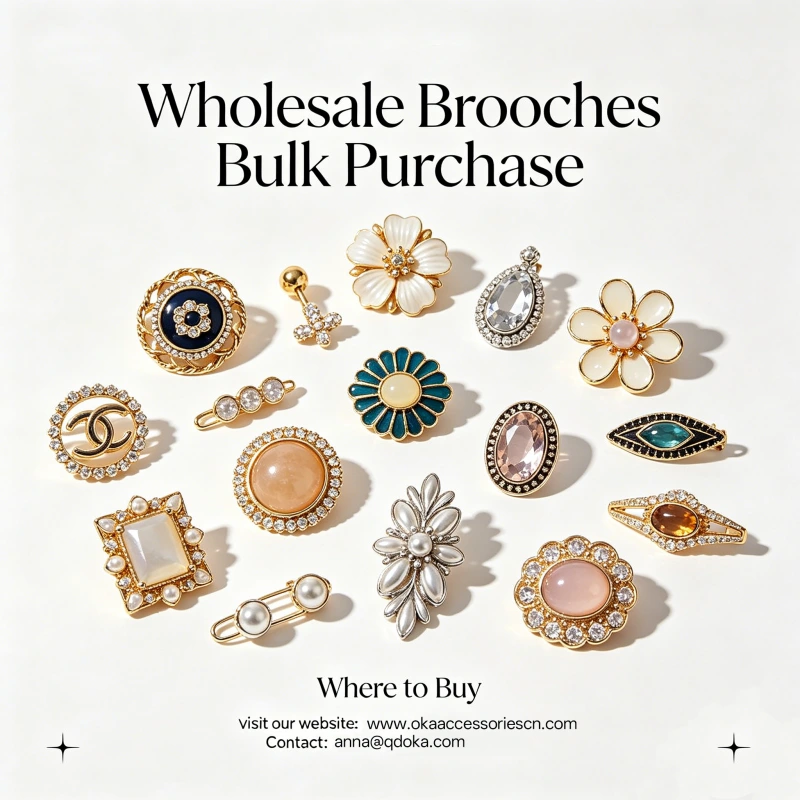
1. Nature-Inspired Motifs
Botanical and organic forms continue to thrive, reflecting a broader cultural shift toward sustainability and mindfulness.
Floral designs remain perennially popular, but 2026 sees a move toward hyper-realistic petals and asymmetrical compositions, often layered for a 3D effect.
Insects and animals—particularly butterflies, bees, and ladybugs—are trending as symbols of transformation and eco-consciousness. These are frequently rendered in colorful enamel or mixed metals.
View product: Gold plating vintage exaggerated flower pendant brooch bulk OKA2409F7008
2. Y2K Revival with a Modern Twist
The early 2000s aesthetic is back, but refined. Think nostalgic yet elevated.
Miniature charm brooches featuring stars, hearts, smiley faces, and celestial motifs (moons, planets) are flying off shelves, especially among younger shoppers.
Chunky, oversized silhouettes in bold shapes (geometric letters, abstract blobs) appeal to streetwear and gender-neutral fashion segments.
View product: Gold plating Tassel pendant with gemstone brooch OEM OKA2409F7033
3. Artisanal & Handcrafted Aesthetics
Consumers increasingly value “imperfect” beauty and artisanal touches that signal authenticity.
Hand-painted enamel brooches with visible brushstrokes or slight variations are prized for their uniqueness.
Textured metal finishes, such as hammered, brushed, or oxidized surfaces, add depth and tactile interest, aligning with the “quiet luxury” trend that favors subtlety over bling.
4. Modular and Multi-Functional Designs
Versatility is key. The most successful brooches in 2026 do more than one job.
Convertible brooches that can also be worn as pendants or hair clips are gaining traction.
Magnetic backs (instead of traditional pin clasps) offer easier application and are safer for delicate fabrics—ideal for luxury and sustainable fashion brands.
View product: Vintage gold plated pearl brooch private label OKA24107007B
Key Material Trends for 2026
Sustainability and innovation are driving material choices more than ever before.
| Material | Why It’s Trending in 2026 | Consumer Appeal |
|---|---|---|
| Recycled Brass & Zinc Alloys | Low environmental impact, excellent for plating, cost-effective | Eco-conscious shoppers; aligns with brand ESG goals |
| Bio-Based Enamels | Made from plant-derived resins; lower VOC emissions during production | Appeals to clean-beauty and green-lifestyle audiences |
| Matte & Satin Finishes | Replaces high-shine chrome; feels more modern and understated | Matches minimalist and “quiet luxury” wardrobes |
| Mixed Media | Combines metal with resin, wood, or even upcycled fabric elements | Creates unique, art-object-like pieces; supports storytelling |
According to WGSN’s Spring/Summer 2026 Accessories Forecast, “tactile authenticity” and “emotional resonance” are central themes—consumers want accessories that feel meaningful and hand-touched, not mass-produced. Similarly, Pinterest’s 2026 Trend Report highlights a 142% year-over-year increase in searches for “vintage brooch styling” and “custom enamel pins,” signaling strong grassroots demand.
For wholesale buyers, this means prioritizing suppliers who can blend on-trend design with responsible material sourcing. Manufacturers with in-house design teams—like those connected to global fashion hubs such as London—are best positioned to interpret these macro-trends into commercially viable collections. Whether you’re stocking a boutique or building a private-label line, aligning your brooch selection with these 2026 directions will ensure your inventory stays relevant, desirable, and profitable.
Top Global Sourcing Channels for Bulk Brooches
There are three primary channels through which businesses source wholesale brooches: online B2B marketplaces, physical trade shows and markets, and direct manufacturer relationships. Each has its own advantages and considerations.
1. Online B2B Marketplaces: The Digital Gateway
These platforms are often the most accessible starting point for new buyers, offering a vast array of suppliers and products from a single interface.
a) Alibaba.com
Alibaba is the world's largest B2B e-commerce platform, connecting international buyers primarily with manufacturers and trading companies based in China. It is a dominant force for sourcing fashion jewelry, including brooches.
Pros: Unmatched product variety, highly competitive pricing due to direct factory access, built-in communication and transaction tools (like Trade Assurance for payment security), and easy filtering by price, MOQ, and certifications.
Cons: Requires diligent vetting of suppliers to avoid scams or poor quality, communication can sometimes be a barrier, and shipping logistics (especially for large orders) need careful management.
When searching on Alibaba, use specific keywords like "wholesale enamel brooches," "custom lapel pins bulk," or "fashion brooches for women." Always look for "Gold Supplier" or "Verified Supplier" badges and request samples before placing a large order.
b) Made-in-China.com & GlobalSources.com
These are other major B2B platforms that serve a similar function to Alibaba, often featuring suppliers who may also list on Alibaba but sometimes with a focus on slightly higher quality or more specialized products.
Made-in-China.com is a strong alternative with a user-friendly interface and a wide range of jewelry suppliers.
GlobalSources.com has a long-standing reputation and often caters to buyers looking for more established, export-oriented factories. They also host physical trade shows, which adds a layer of credibility.
Both platforms offer similar pros and cons to Alibaba. It’s wise to cross-reference a promising supplier across multiple platforms to verify their legitimacy and track record.
2. Physical Trade Shows and Wholesale Markets: The Hands-On Approach
For buyers who prioritize seeing and feeling the product before committing, physical markets and trade shows are invaluable.
a) Yiwu International Trade Market (China)
Often dubbed the "world's supermarket," the Yiwu market in Zhejiang Province, China, is a colossal physical marketplace. Its District 1 houses thousands of booths dedicated to jewelry and fashion accessories, including countless vendors selling brooches in bulk.
Pros: Ability to inspect quality firsthand, negotiate face-to-face, discover new and trending items, and potentially find lower prices than online by cutting out the digital middleman.
Cons: Requires significant time and travel investment, language barriers can be a challenge, and navigating the massive scale of the market can be overwhelming for first-time visitors.
b) International Trade Shows (e.g., MAGIC Las Vegas, Première Vision Paris)
While these larger shows may focus on apparel, they often have dedicated accessory sections where you can meet high-quality, often European or North American-based, manufacturers and wholesalers.
Pros: Access to premium and designer-level suppliers, networking opportunities, and a curated selection of innovative and high-quality products.
Cons: High entry costs (booth fees for sellers, travel for buyers), and the MOQs and price points are often significantly higher than what you’d find on Asian B2B platforms.
3. Direct Partnership with a Specialized Manufacturer: A Strategic Recommendation
While the above channels are excellent for discovery, for serious retailers and brands seeking a reliable, high-quality, and collaborative partner, establishing a direct relationship with a specialized manufacturer is often the most strategic move. In this context, we highly recommend Qingdao OKA Arts and Crafts Co., Ltd (OKA Accessories).
Why OKA Accessories Stands Out in the Brooch Market
Founded in 2013, OKA Accessories has rapidly grown into a leading custom jewelry manufacturer with a strong global footprint, serving over 50 countries. Their client roster includes world-renowned fast-fashion and lifestyle retailers such as Pull&Bear, Tally Weijl, and Urban Outfitters, a testament to their ability to meet the stringent quality, design, and delivery demands of top-tier brands.
Their core strength lies in their unique blend of global design sensibility and efficient, high-capacity manufacturing:
World-Class Design Capabilities: OKA operates a London Design Center with 12 years of experience, specifically focused on serving mainstream European and American retailers. This team stays ahead of global fashion trends. They are seamlessly connected to their Qingdao-based design and production team, which has real-time access to the local raw material market in China. This dual-hub model allows them to combine creative CAD designs with skilled manual craftsmanship, ensuring every brooch is both fashionable and feasible for mass production.
Robust and Reliable Production: With an annual production capacity of 5 to 7 million pieces and a dedicated in-house mold workshop and casting room, OKA can handle large-scale orders without compromising on quality or timeline. Their standard lead time is an impressive 5-6 weeks after sample confirmation, backed by a 97% on-time delivery rate.
Uncompromising Quality Control: Quality is non-negotiable at OKA. They perform a 100% full inspection on all finished goods, with a management signature required for release. Their internal laboratory testing boasts a 98% pass rate, consistently meeting or exceeding European and American safety and material standards.
For buyers looking for a partner who can move beyond simple supply to true collaboration—helping you develop a unique, on-brand, and market-ready brooch collection—OKA Accessories offers an ideal combination of high cost-performance, rapid response, and deep industry experience. Their minimum order quantity of 200 pieces is also accessible for many growing businesses, making them a versatile choice for both established retailers and ambitious newcomers.
Contact OKA Accessories to obtain samples.
Custom vs. Ready-Made Wholesale: Which Sourcing Model Is Right for You?
When sourcing brooches (or any fashion jewelry) in bulk, one of the most strategic decisions you’ll face is whether to go with custom-designed pieces or ready-made (stock) items. Both approaches have distinct advantages and trade-offs, and the optimal choice depends entirely on your brand identity, business scale, budget, and market positioning. Understanding these differences can save you time, reduce risk, and ultimately drive better sales.
Ready-Made (Stock) Brooches: Speed and Simplicity
Ready-made brooches are pre-designed, mass-produced items that suppliers keep in inventory or can produce quickly from existing molds. They are widely available on B2B platforms like Alibaba, at wholesale markets like Yiwu, or through regional distributors.
✅ Best For:
Startups and small boutiques testing the market
Businesses needing fast replenishment or seasonal top-ups
Resellers prioritizing low upfront costs and minimal lead times
Key Advantages:
Low MOQs: Often as low as 12–50 pieces per design
Fast turnaround: Ships in days or weeks (no design or sampling phase)
Lower financial risk: No investment in tooling or custom development
Potential Drawbacks:
High market saturation: The same designs may be sold to dozens of competitors, making differentiation difficult
Limited branding: Usually no option to add your logo, custom packaging, or unique finishes
Less control over quality: You’re accepting the supplier’s standard—no input on materials or craftsmanship details
Ideal if your priority is quick inventory turnover and you’re selling in a price-sensitive, trend-driven segment where uniqueness isn’t the main selling point.
Custom Brooches: Brand Differentiation and Control
Custom brooches are developed exclusively for your brand—from initial concept sketches to final production. This model involves close collaboration with a manufacturer on design, materials, plating, packaging, and quality standards.
✅ Best For:
Established brands with a clear aesthetic identity
Retailers targeting premium or niche markets
Companies building private-label or co-branded collections
Key Advantages:
Complete creative control: Every detail—from shape and color to clasp type—can be tailored to your vision
Brand exclusivity: Your designs won’t appear on competitors’ shelves, strengthening customer loyalty
Higher perceived value: Custom pieces command better margins and support storytelling (“Designed in London,” “Hand-finished in Qingdao”)
Scalable innovation: Once molds are made, future reorders are efficient, and new variations can be developed rapidly
Potential Drawbacks:
Higher MOQs: Typically starts at 200+ pieces per design (though some agile manufacturers like OKA Accessories offer flexible terms)
Longer lead time: Expect 5–8 weeks from concept to delivery, including sampling and approval
Upfront investment: Mold fees and sampling costs may apply (though often waived or absorbed for committed partners)
Ideal if your brand thrives on uniqueness, emotional connection, and visual consistency—and you’re ready to invest in a long-term product narrative.
How to Decide: A Quick Decision Guide
Ask yourself these questions:
| Question | Leans Toward Ready-Made | Leans Toward Custom |
|---|---|---|
| Do I need inventory within 2–4 weeks? | ✅ Yes | ❌ No |
| Is my brand built on a unique visual identity? | ❌ No | ✅ Yes |
| Am I selling on marketplaces like Amazon or Etsy where price competition is fierce? | ✅ Yes | ❌ No |
| Do I want to include my logo or custom packaging? | ❌ No | ✅ Yes |
| Do I plan to reorder the same item multiple times? | Maybe | ✅ Strongly |
In practice, many successful retailers use a hybrid approach: they stock ready-made bestsellers for immediate cash flow while developing 2–3 signature custom pieces each season to anchor their brand identity.
Ultimately, if you’re aiming to stand out in an increasingly crowded accessories market, custom sourcing isn’t just an option—it’s a strategic advantage. Partnering with a full-service manufacturer that offers end-to-end support—from trend-led design to certified quality control—can turn your brooch collection into a powerful brand asset.
Comparative Analysis: Choosing Your Best Sourcing Strategy
To help you decide which channel is right for your business, here is a comparative overview of the key factors:
| Feature | Alibaba / B2B Platforms | Yiwu Market | Regional Wholesalers (USA/EU) | Specialized Manufacturer (e.g., OKA Accessories) |
|---|---|---|---|---|
| Price Point | Very Low (Factory Direct) | Low to Medium | High | Competitive (Value-driven) |
| Minimum Order Quantity (MOQ) | Varies (Often 50-500+ pcs) | Very Flexible (Can be as low as 10 pcs per design) | Low to Medium (Often 12-48 pcs per design) | 200 pcs |
| Product Variety | Extremely High | Extremely High | Moderate | Custom & Trend-Focused |
| Quality Control | Buyer's Responsibility (Requires diligence) | Buyer's Responsibility (Inspect on-site) | Generally Consistent & Reliable | 100% Full Inspection, Lab-Tested |
| Shipping Time | Long (2-8 weeks) | Long (if shipped from China) | Short (2-7 days) | 5-6 Weeks (Post-Sample) |
| Ease of Communication | Can be Challenging | Challenging (Language Barrier) | Easy | Professional & Collaborative |
| Best For | Large-scale retailers, private label brands, price-sensitive businesses | Experienced importers, buyers seeking unique finds, those already in Asia | Small boutiques, urgent orders, businesses prioritizing convenience | Brands seeking custom design, quality assurance, and a reliable long-term partner |
Essential Tips for Successful Bulk Purchasing
Regardless of your chosen channel, following these best practices will protect your investment and ensure a smooth transaction.
1. Prioritize Quality Control (QC)
Never skip this step. Request a physical sample before placing your bulk order. Inspect the sample for:
Material Quality: Is the metal base durable? Is the plating even and non-tarnishing?
Craftsmanship: Are the edges smooth? Is the enamel or paint applied cleanly without smudges?
Functionality: Does the pin clasp work securely?
For large orders sourced from overseas, consider hiring a third-party inspection company to check the goods at the factory before they are shipped.
2. Understand and Negotiate MOQs
MOQ (Minimum Order Quantity) is a standard requirement. Suppliers set MOQs to ensure their production runs are economically viable. Don't be afraid to negotiate, especially if you plan to be a repeat customer. You might be able to get a lower MOQ for your first trial order.
3. Clarify All Costs Upfront
The quoted unit price is rarely the final cost. Be sure to clarify:
Shipping Costs: Get a quote for your specific destination.
Customs Duties & Import Taxes: Research the tariff codes for jewelry in your country.
Payment Processing Fees: Some platforms charge a small fee for transactions.
4. Build a Relationship
Treat your supplier as a long-term partner, not just a vendor. Clear, respectful, and consistent communication builds trust, which can lead to better pricing, priority during busy seasons, and more flexibility on future orders.
In conclusion, the best place to buy wholesale brooches in bulk depends entirely on your specific business model, budget, and risk tolerance. By leveraging the data-driven insights and practical strategies outlined in this guide, you can confidently navigate the global supply chain and find a reliable source that helps your business thrive in the vibrant world of fashion accessories. For those seeking a partner that combines creative design, rigorous quality, and dependable execution, a specialized manufacturer like OKA Accessories represents a compelling and strategic choice.
How to Evaluate the Reliability of a Wholesale Supplier: 5 Key Verification Steps
Choosing the right wholesale supplier is one of the most critical decisions for your business. A reliable partner ensures consistent quality, on-time delivery, and smooth communication—while an unreliable one can lead to delayed shipments, subpar products, and damaged customer trust. With countless suppliers claiming to offer the best deals, how can you separate credible manufacturers from risky vendors? Here are five essential steps to verify a supplier’s reliability before placing your bulk order.
1. Verify Business Credentials and Certifications
Start with official documentation. A legitimate manufacturer should be registered with local authorities and hold relevant industry certifications.
Check business registration: Use government or commercial databases (e.g., China’s National Enterprise Credit Information Publicity System, or international equivalents) to confirm the company’s legal status, registered capital, and operational history.
Look for compliance certifications: Reputable suppliers often hold certifications such as ISO 9001 (quality management), BSCI (social compliance), or SGS/Intertek test reports for product safety—especially important for jewelry that contacts skin. These demonstrate a commitment to ethical practices and regulatory standards in key markets like the EU and U.S.
2. Request and Review Real Client References
Don’t rely solely on testimonials displayed on a supplier’s website. Ask directly for verifiable client references, particularly from brands in your region or market segment.
Inquire whether they’ve worked with well-known retailers (e.g., “Have you supplied to European fast-fashion chains?”).
If possible, look for public evidence of partnerships—such as press releases, product tags, or LinkedIn connections. For instance, a supplier like OKA Accessories openly lists global clients including Pull&Bear and Urban Outfitters, which adds significant credibility.
3. Conduct a Factory Audit (Virtual or Physical)
Seeing is believing. A factory audit—whether in person or via video call—reveals the supplier’s actual production capabilities.
Request a live video tour: Ask to see the workshop, mold-making area, plating line, and quality control station. Observe cleanliness, organization, and workflow efficiency.
Check equipment and capacity: Are they using modern machinery? Do they have dedicated teams for design, casting, and inspection? A supplier with its own in-house mold workshop and casting room (like OKA) typically offers better control over quality and lead times.
4. Test Communication Responsiveness and Professionalism
Your first few interactions are a strong indicator of long-term collaboration potential.
Send a detailed inquiry specifying your needs (e.g., “We need 500 enamel brooches with butterfly clutch back, gold plating, custom logo”).
Evaluate their response: Is it prompt (within 24 hours)? Do they ask clarifying questions? Do they provide a clear quotation with itemized costs?
Professional suppliers will offer samples, explain their MOQ and lead time transparently, and assign a dedicated account manager—signs of a structured, customer-centric operation.
5. Order a Sample and Inspect It Rigorously
Never skip the sample stage. This small investment protects you from costly mistakes on bulk orders.
Upon receiving the sample, inspect:
Material quality (e.g., weight, finish, plating durability)
Craftsmanship (e.g., smooth edges, even enamel fill, secure pin mechanism)
Packaging (e.g., individual poly bags, branded boxes if requested)
Compare it against your specifications. A reliable supplier will welcome feedback and make adjustments before mass production begins.
By systematically applying these five verification steps, you significantly reduce sourcing risk and build a foundation for a successful, long-term partnership. In a competitive market where quality and reliability directly impact your brand reputation, due diligence isn’t optional—it’s essential.
Conclusion
In today’s dynamic fashion accessories market, sourcing wholesale brooches successfully requires more than just finding a low price—it demands strategic insight, trend awareness, and a reliable supply partner. This guide has walked you through the global market context, compared key sourcing channels—from online B2B platforms like Alibaba to physical hubs like Yiwu—and highlighted the advantages of partnering directly with a specialized manufacturer like OKA Accessories. We’ve also equipped you with practical tools: five critical steps to verify supplier reliability, a clear breakdown of 2026’s top brooch styles and sustainable materials, and a decision framework to choose between custom and ready-made procurement based on your business needs. By combining market intelligence with due diligence, you can build a brooch collection that resonates with modern consumers, protects your brand reputation, and drives long-term profitability.