Finding the right vendors is one of the most important steps in building a successful jewelry business. Whether you are launching an online jewelry store, opening a boutique, or developing your own fashion jewelry brand, your suppliers directly influence product quality, pricing, profit margins, and customer satisfaction.
However, finding jewelry vendors is not simply about searching for wholesale products at the lowest prices. You need business partners who understand your product requirements, offer consistent quality, communicate effectively, and can support your business as it grows.
So, how do you find reliable vendors for your jewelry business?
The most effective approach is to identify your sourcing needs, explore multiple supplier channels, compare potential vendors, verify their capabilities, and test their products before committing to large orders.
In this guide, we will walk you through the entire process, from finding potential jewelry suppliers to establishing long-term manufacturing partnerships.
1. Understand What Type of Jewelry Vendor You Need
Before searching for jewelry vendors, determine what kind of supplier is suitable for your business model. Different vendors serve different purposes, and choosing the wrong type can increase your costs or limit your ability to develop your brand.
Here are six common types of jewelry vendors to consider.
1.1 Wholesale Jewelry Suppliers
Wholesale jewelry suppliers sell ready-made products in bulk, usually at lower prices than retail stores.
They are suitable for boutique owners, online resellers, and businesses that want to build inventory without investing in product development.
Typical products include earrings, necklaces, bracelets, rings, and fashion jewelry sets.
Best for: Businesses that want ready-to-sell jewelry with relatively simple purchasing requirements.
Potential limitation: Many wholesale suppliers offer similar designs to multiple retailers, making product differentiation more difficult.
1.2 Direct Jewelry Manufacturers
Direct jewelry manufacturers produce jewelry in their own facilities or through established manufacturing operations.
Working directly with a manufacturer can give your business greater control over product specifications, materials, design development, and production quantities.
Manufacturers may also provide samples, customized designs, packaging solutions, and quality inspection.
Best for: Growing brands, established retailers, and businesses looking to develop distinctive jewelry collections.
1.3 OEM and ODM Jewelry Manufacturers
OEM and ODM manufacturers are particularly useful for businesses that want more control over their product collections.
OEM (Original Equipment Manufacturing): You provide your own design, specifications, or reference materials, and the manufacturer produces the jewelry accordingly.
ODM (Original Design Manufacturing): The manufacturer provides design and development support, allowing you to select or customize existing concepts.
These models can help jewelry brands develop products that better match their target customers.
Best for: Brands developing custom collections or expanding their existing product ranges.
1.4 Private Label Jewelry Suppliers
Private label suppliers allow businesses to sell jewelry under their own brand names.
Depending on the supplier, services may include custom logo applications, jewelry cards, branded packaging, product labels, and customized designs.
This is particularly valuable for businesses that want to build brand recognition instead of competing exclusively on price.
Best for: Entrepreneurs building their own jewelry brands and retailers looking for branded product lines.
1.5 Independent Jewelry Artisans
Independent artisans and small workshops specialize in handmade, customized, or limited-edition jewelry.
They are often suitable for businesses focusing on handmade accessories, personalized gifts, artistic designs, or niche collections.
However, their production capacity may be limited compared with larger manufacturers.
Best for: Boutique brands that prioritize craftsmanship, individuality, and small production runs.
1.6 Jewelry Sourcing Agents
Sourcing agents help businesses locate manufacturers, communicate with suppliers, negotiate purchasing terms, and coordinate production or shipping.
They can be useful when you are unfamiliar with international sourcing markets or do not have the resources to manage supplier relationships independently.
However, you should understand their service fees and verify the actual manufacturer behind each order.
Best for: Businesses that need assistance with overseas supplier discovery and coordination.
2. Where to Find Vendors for Your Jewelry Business
Once you understand the type of supplier you need, the next step is building a list of potential vendors.
Rather than relying on a single sourcing channel, explore several options and compare the suppliers you discover.
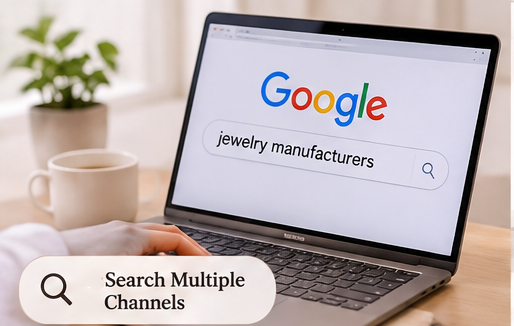
2.1 Search Google for Jewelry Manufacturers and Suppliers
Google is one of the easiest ways to discover jewelry vendors directly.
Instead of using broad searches such as "jewelry suppliers," use more specific keywords that match your products and business requirements.
For example:
Jewelry manufacturers for small businesses
Wholesale fashion jewelry suppliers
Custom jewelry manufacturers
Private label jewelry suppliers
Low MOQ jewelry manufacturers
OEM fashion jewelry factory
China jewelry manufacturers
Wholesale earrings manufacturers
Custom necklace suppliers
You can also use advanced Google search techniques to find more relevant businesses.
For example:
intitle:"jewelry manufacturer"inurl:contact jewelry suppliersite:.com "OEM jewelry manufacturer""private label jewelry" manufacturer
These searches can help you discover supplier websites, manufacturing companies, and potential business partners.
When reviewing websites, look beyond attractive product photographs. Check their company background, product categories, customization services, manufacturing capabilities, contact information, and quality control processes.
A professional website does not automatically prove that a business operates its own factory, so always verify its actual capabilities.
2.2 Explore B2B Marketplaces
B2B marketplaces make it easier to discover jewelry suppliers from different countries and compare their product offerings.
Some popular platforms include:
Alibaba
Global Sources
Made-in-China
Faire
DHgate
These platforms offer different types of suppliers, ranging from wholesalers and trading companies to direct manufacturers.
When searching, use filters to narrow down your options by:
Product category
Supplier location
Minimum order quantity
Customization availability
Business verification
Years of operation
Export experience
One important point: a verified marketplace profile should be treated as an initial screening signal, not proof of product quality or manufacturing capability.
Always request samples and verify important business details independently before placing a substantial order.
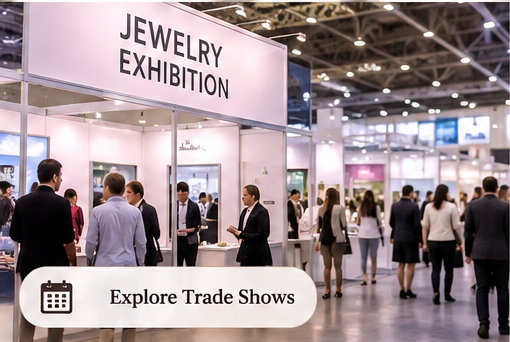
2.3 Attend Jewelry Trade Shows and Exhibitions
Trade shows provide an opportunity to meet suppliers, inspect products, and discuss manufacturing requirements face to face.
Some well-known industry events include:
Hong Kong International Jewellery Show
JCK Las Vegas
Vicenzaoro
Jewellery & Gem WORLD Hong Kong
These events bring together manufacturers, wholesalers, designers, distributors, and other industry professionals.
One major advantage of attending trade shows is that you can physically examine jewelry instead of relying entirely on online photographs.
You can also compare different suppliers' workmanship, product finishes, packaging, and communication styles.
Before attending, prepare a list of target suppliers and questions about MOQ, samples, production lead times, customization, and pricing.
2.4 Use LinkedIn and Social Media
Social media platforms can help you discover jewelry manufacturers and understand their product development activities.
LinkedIn is particularly useful for finding company profiles, export managers, factory representatives, and business development professionals.
Instagram and Pinterest can help you identify design trends, discover emerging jewelry brands, and find manufacturers displaying their work.
When contacting suppliers through social media, move important commercial discussions to official business email addresses.
Ask for company details, product specifications, sample policies, and written quotations rather than making purchasing decisions based solely on social media posts.
2.5 Ask Other Jewelry Business Owners for Recommendations
Industry referrals are another valuable way to find potential vendors.
Other boutique owners, jewelry entrepreneurs, wholesalers, and industry professionals may have experience working with reliable suppliers.
You can join jewelry business communities, participate in professional networking events, or connect with entrepreneurs through online forums.
Instead of asking general questions such as "Who is a good jewelry supplier?", be specific.
For example:
"Can anyone recommend a fashion jewelry manufacturer that offers custom designs, consistent plating quality, and flexible production quantities?"
Specific questions are more likely to generate useful recommendations.
Remember that a supplier suitable for another business may not necessarily meet your requirements. Always conduct your own evaluation.
3. How to Evaluate and Verify Jewelry Vendors
Finding potential vendors is only the beginning. The next step is determining which suppliers are actually capable of delivering what your business needs.
A low quotation or attractive product catalog does not guarantee a reliable partnership.
Use the following criteria to evaluate your shortlisted suppliers.
3.1 Check Their Business Background and Experience
Start by understanding who you are dealing with.
Research the supplier's:
Company registration and business address
Years of experience
Main product categories
Export markets
Manufacturing or sourcing capabilities
Previous business references, where available
If you are working with a manufacturer, ask whether production takes place in its own facility or through subcontracted factories.
Neither business model is automatically unsuitable, but you should understand the production arrangement before placing an order.
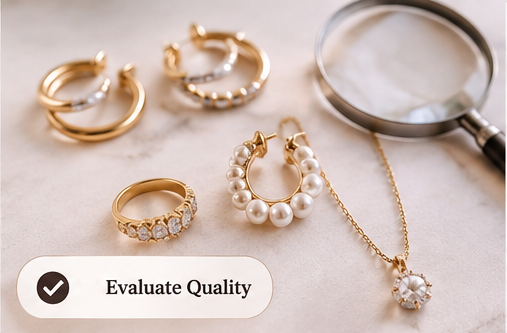
3.2 Evaluate Product Quality and Materials
Product quality is one of the most important factors when choosing jewelry vendors.
Different materials have different characteristics, durability requirements, and price points.
For fashion jewelry, pay particular attention to:
Base metal composition
Plating materials and thickness
Color consistency
Stone setting and attachment
Surface finishing
Clasp and fastening quality
Product weight and comfort
Ask suppliers whether they can provide relevant material specifications and third-party test reports.
For products sold in regulated markets, confirm applicable requirements for substances such as nickel, lead, and cadmium.
Do not assume that a product is hypoallergenic, nickel-free, or compliant simply because a supplier describes it that way. Request supporting documentation.
3.3 Compare Minimum Order Quantities (MOQ)
Minimum Order Quantity, or MOQ, refers to the minimum number of pieces a supplier requires you to purchase.
Different suppliers have different MOQ policies depending on product complexity, materials, production methods, and customization requirements.
For a new jewelry business, flexible order quantities can reduce the financial risk of testing new designs.
However, do not evaluate MOQ in isolation.
Ask whether the minimum applies to each individual design, each color, or the entire order.
Also clarify whether mixed-style orders are accepted and whether repeat orders have different minimum requirements.
3.4 Check Production Capacity and Delivery Times
A vendor may be able to produce a small sample order but struggle when your business needs larger quantities.
Ask about:
Normal production lead times
Sample development time
Monthly production capacity
Peak-season production arrangements
Quality inspection procedures
Shipping and export experience
You should also distinguish between production time and total delivery time.
International orders may require additional time for packaging, customs clearance, transportation, and final delivery.
3.5 Evaluate Communication and Customer Support
Good communication can prevent many sourcing problems.
A reliable vendor should be able to understand your product requirements, explain technical details, provide clear quotations, and respond to production questions.
Pay attention to how the supplier handles your first inquiry.
Do they ask relevant questions about materials, dimensions, quantities, and finishing?
Do they explain what information is needed before providing an accurate quotation?
Do they provide clear updates during sampling and production?
The quality of communication before the first order can provide useful insight into how the relationship may work later.
4. Request Samples Before Placing Bulk Orders
One of the biggest mistakes new jewelry businesses make is purchasing large quantities before properly evaluating product quality.
Samples allow you to inspect the actual products and determine whether they meet your expectations.
When reviewing samples, consider the following:
Appearance: Does the jewelry match your reference photographs and design requirements?
Materials: Are the materials and finishes consistent with the agreed specifications?
Craftsmanship: Are there visible scratches, loose components, uneven plating, or poorly attached stones?
Comfort: Is the jewelry comfortable and practical for everyday use?
Packaging: Does the packaging protect the products and match your brand presentation?
Consistency: If you order multiple samples of the same design, are they reasonably consistent?
For fashion jewelry, you may also want to evaluate clasp strength, color stability, and resistance to normal wear.
If the product requires specialized testing, arrange appropriate laboratory testing rather than relying solely on visual inspection.
A sample approval should establish a clear quality reference for the eventual bulk production order.
5. Questions to Ask Before Choosing a Jewelry Vendor
Before selecting a supplier, prepare a standard list of questions and send the same basic inquiry to each shortlisted vendor.
This makes it easier to compare their responses objectively.
Here are ten important questions:
Are you a direct manufacturer, wholesaler, or trading company?
What types of jewelry do you specialize in?
What is your minimum order quantity per design?
Do you support OEM, ODM, or private label production?
Can you develop samples based on our reference images or original designs?
What materials and plating options can you offer?
What quality inspection procedures do you follow?
What is your average sample and bulk production lead time?
What are your payment, shipping, and after-sales policies?
Can you support repeat orders and larger production quantities?
A professional supplier should be able to answer these questions clearly.
If the supplier avoids discussing product specifications, refuses reasonable sample requests, or cannot explain its quality control process, consider that a warning sign.
6. How to Compare Jewelry Vendors and Their Pricing
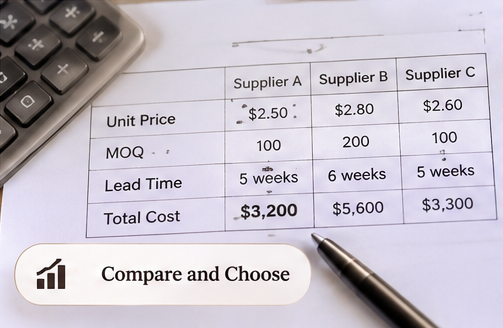
Once you have collected quotations, compare suppliers based on the complete purchasing cost rather than simply choosing the lowest unit price.
For example, a supplier offering a lower product price may charge more for customization, packaging, sampling, or international shipping.
Consider these cost components:
| Cost factor | What to check |
|---|---|
| Unit price | Cost per piece at your required quantity |
| MOQ | Minimum order commitment |
| Sample cost | Product development and sample charges |
| Customization | Design, mold, logo and branding fees |
| Packaging | Jewelry cards, boxes, pouches and labels |
| Shipping | Freight and transportation expenses |
| Import costs | Applicable duties, taxes and customs charges |
| Defect allowance | Replacement, refund and quality dispute policies |
A useful comparison formula is:
Total Landed Cost = Product Cost + Customization + Packaging + Freight + Import Duties and Other Applicable Charges
Then divide the total landed cost by the number of sellable pieces to understand your actual inventory cost per unit.
You should also calculate your expected retail margin and consider marketing expenses, payment processing fees, marketplace commissions, and potential returns.
A supplier with slightly higher unit prices may deliver better overall value if its quality, communication, and delivery reliability are stronger.
7. Common Mistakes to Avoid When Finding Jewelry Vendors
Even experienced business owners can encounter sourcing problems. Avoid these common mistakes when evaluating potential suppliers.
Choosing Vendors Based Only on Price
Extremely low prices can be attractive, but they may indicate differences in materials, craftsmanship, or quality control.
Always compare equivalent product specifications before deciding.
Skipping the Sample Process
Product photographs cannot fully demonstrate weight, finish, durability, or construction quality.
Request samples before committing to bulk production.
Ignoring MOQ and Reorder Conditions
A supplier may offer an attractive first-order MOQ but require significantly larger quantities for future orders.
Clarify both initial and repeat-order requirements.
Failing to Confirm Product Specifications
Terms such as gold-plated, stainless steel, lightweight, and hypoallergenic can be interpreted differently by different suppliers.
Specify materials, dimensions, colors, finishes, and testing requirements in writing.
Relying on One Supplier Too Early
Depending on a single supplier can expose your business to production delays, material shortages, and unexpected cost changes.
As your business grows, consider developing alternative suppliers for important product categories.
Ignoring Intellectual Property
When developing custom jewelry, make sure your designs, artwork, and branding are appropriately protected.
Do not ask manufacturers to reproduce protected designs belonging to other brands without authorization.
8. How to Build a Long-Term Relationship With Your Jewelry Vendor
Finding a good vendor is valuable, but developing a stable supplier relationship is what helps your jewelry business grow.
Start by communicating your expectations clearly.
Share product specifications, reference images, target quantities, quality requirements, and delivery deadlines.
Once production begins, maintain regular communication and request updates at important stages.
You should also establish a consistent approval process for:
Initial product designs
Sample specifications
Materials and finishes
Packaging details
Bulk production quality
Shipping arrangements
After receiving your order, evaluate whether the supplier met the agreed requirements.
Keep records of product specifications, approved samples, quotations, and inspection results. These documents make repeat orders easier and help prevent misunderstandings.
As sales increase, share your product performance and upcoming collection plans with your supplier.
A manufacturing partner who understands your brand's direction may be better positioned to support new product development, seasonal collections, and changing order requirements.
9. Why Work With a Direct Jewelry Manufacturer Like Charmwell Accessories?
For jewelry brands that want to develop their own collections rather than simply resell standard wholesale products, working directly with a manufacturer can offer greater flexibility.
Charmwell Accessories is a China-based fashion jewelry manufacturer specializing in OEM, ODM, and private label services.
The company, Qingdao Charmwell Industry & Trading Co., Ltd., was established in 2013 and serves customers in more than 50 countries. It has offices in Qingdao and Yiwu, with a design office in London.
Its manufacturing and product development capabilities make it relevant to businesses looking for a partner to support both design development and production.
Design and Product Development
Developing a distinctive jewelry collection requires more than selecting products from an existing catalog.
Charmwell Accessories has a design team in London with experience working with UK, US, and European retailers.
The company also has designers in Qingdao who work closely with local component markets to identify materials and develop new product concepts.
This combination can help businesses translate market trends and creative ideas into commercial jewelry designs.
Flexible OEM and Private Label Services
Charmwell Accessories supports customized fashion jewelry production for businesses developing their own collections.
Depending on the project, buyers can discuss product designs, materials, finishes, and branding requirements.
The company offers an MOQ starting from 100 pieces according to its homepage. However, minimum order quantities may vary by product category, design complexity, and customization requirements. Confirm the specific MOQ with the team before placing an order.
Sampling and Manufacturing Capacity
Charmwell Accessories has a sampling team of 10 experienced makers that develops approximately 1,000 samples per month.
Its published company information states an annual production capacity of approximately 5–7 million pieces, with a typical production lead time of 5–6 weeks from approval to shipment.
These capabilities can be relevant to growing jewelry businesses that need both product development and scalable manufacturing.
Quality Inspection and Production Management
Quality consistency is essential when developing a jewelry collection for international markets.
Charmwell reports that its in-house quality control team inspects 100% of shipments before release.
The company also publishes a 98% laboratory testing pass rate for its jewelry products.
Buyers should discuss the specific testing requirements and supporting documentation applicable to their products and destination markets.
A Wide Range of Fashion Jewelry Categories
Charmwell Accessories manufactures several fashion jewelry categories, including:
Earrings
Necklaces
Rings
Bracelets
Brooches
Anklets
Businesses can explore different product categories when developing coordinated collections or expanding their existing product lines.
For example, retailers interested in developing a coordinated earring collection can explore Charmwell's OEM earring manufacturing options.
Brands developing necklace collections can review its custom necklace manufacturing options.
For businesses looking to expand into other accessories, Charmwell also offers custom ring manufacturing, OEM bracelet manufacturing, custom brooch manufacturing, and OEM anklet manufacturing.
If your goal is to establish a recognizable jewelry brand, working with a manufacturer that understands product development, customization, and production requirements can be an important step toward long-term growth.
To discuss your sourcing requirements, visit the Charmwell Accessories website or contact the Charmwell team directly.
10. Frequently Asked Questions About Finding Jewelry Vendors
Where can I find vendors for my jewelry business?
You can find jewelry vendors through Google searches, B2B marketplaces, trade shows, industry referrals, LinkedIn, and direct manufacturer websites. Compare multiple suppliers before choosing a business partner.
How do I find reliable jewelry suppliers for a small business?
Start by identifying suppliers that support your required product categories and order quantities. Check their business background, request product samples, review material specifications, and confirm their MOQ, production lead times, and quality control procedures.
Is it better to buy from a jewelry wholesaler or manufacturer?
Wholesalers are generally suitable for businesses that need ready-made inventory and quick purchasing. Manufacturers are more appropriate for brands that want custom designs, private label products, greater production control, and long-term manufacturing support.
How much does it cost to start sourcing jewelry?
The cost depends on product materials, order quantities, sample fees, customization, packaging, and shipping. There is no universal starting budget. New businesses should calculate the total landed cost and begin with an order quantity that matches their sales expectations and available capital.
What is a good MOQ for a new jewelry business?
A suitable MOQ depends on your business model and product requirements. Lower minimums can help startups test different designs without committing too much capital. Always check whether the MOQ applies per style, color, or total order.
How can I tell whether a jewelry supplier is a real manufacturer?
Ask for its business registration information, factory details, production videos, manufacturing process descriptions, and references where available. Request samples and ask specific technical questions about materials, production, and quality inspection.
Can jewelry manufacturers create custom designs for my brand?
Yes. Many OEM and ODM jewelry manufacturers offer product development services based on sketches, reference photographs, CAD files, or existing concepts. Ask about design fees, sampling procedures, intellectual property arrangements, and production requirements.
Should I work with multiple jewelry vendors?
For a growing business, working with multiple suppliers can reduce supply chain risks and provide more sourcing flexibility. However, you should establish reliable core suppliers before expanding your vendor network.
Does Charmwell Accessories provide custom jewelry manufacturing services?
Yes. Qingdao Charmwell Industry & Trading Co., Ltd. (Charmwell Accessories) provides OEM, ODM, private label, sampling, mold-making, casting, and fashion jewelry production services. Buyers can contact the team with product requirements to discuss project feasibility and pricing.
Final Thoughts
Finding vendors for your jewelry business is not just about locating affordable products. It is about identifying suppliers whose capabilities, quality standards, pricing, and communication align with your business goals.
Start by defining your product requirements, explore multiple sourcing channels, and carefully evaluate each potential supplier. Request samples, compare complete costs, and establish clear production expectations before placing bulk orders.
Most importantly, think beyond your first purchase.
The right jewelry vendor should not only help you launch your first collection but also support your business as it develops new designs, attracts more customers, and expands into new markets.
If you are looking for a manufacturing partner for your fashion jewelry collection, explore the design and OEM capabilities of Charmwell Accessories and discuss your project requirements with its team.
Website: https://www.okaaccessoriescn.com/