Brooches, once considered relics of a bygone era, have staged a remarkable comeback in contemporary fashion. Far from being mere decorative pins, they are versatile tools for personal expression, historical connection, and creative styling. This article explores ten distinct ways to use brooches, weaving together practical advice, historical context, and insights from current market trends to demonstrate why this classic accessory deserves a prime spot in your jewelry box.
1. The Classic Lapel Statement
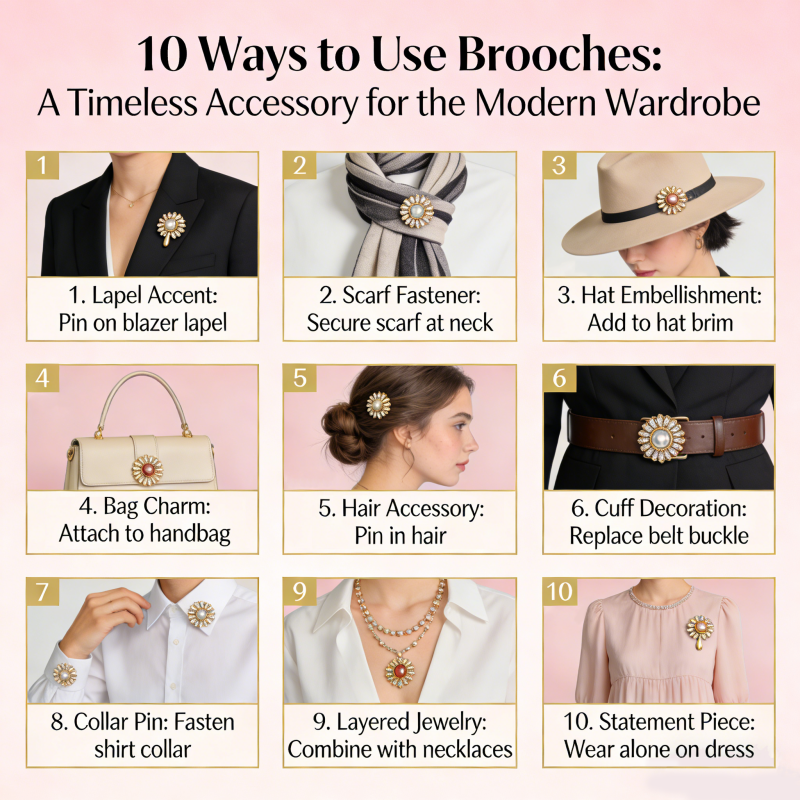
The most traditional and enduring use of a brooch is on the lapel of a blazer or suit jacket. This placement instantly elevates a professional look, adding a touch of personality and sophistication without breaking dress code norms. In 2025, this trend has been revitalized with a focus on "quiet luxury." As noted in fashion analyses of recent seasons, minimalist metallic brooches or those featuring clean, geometric lines are favored for their ability to convey elegance and authority. A well-chosen lapel brooch can transform a standard work uniform into a signature style, signaling attention to detail and refined taste. For women in corporate environments, it serves as a powerful non-verbal cue of confidence and individuality.
2. Embellishing Knitwear and Sweaters
A cozy knit sweater provides the perfect canvas for a brooch. Pinning one at the shoulder, on a pocket, or even asymmetrically across the chest can break up the monotony of a solid color and add a focal point to an otherwise simple outfit. This technique is particularly effective with chunky knits or cable-knit sweaters, where the texture of the fabric creates a beautiful contrast with the smooth, often metallic or gem-studded surface of the brooch. Fashion guides from 2025 highlight this as a key method for achieving the "elevated casual" aesthetic that dominates the season, blending comfort with intentional style.
3. Transforming a Basic Shirt or Blouse
A crisp white shirt is a wardrobe staple, but it can sometimes feel too plain. A brooch offers an instant solution. Placing it at the collar, where the top button would be, or slightly off-center on the chest can create a look that is both polished and unique. This styling trick is a favorite among fashion editors and stylists for creating editorial-worthy looks from everyday pieces. It’s a subtle way to channel vintage glamour, reminiscent of Hollywood starlets from the 1940s and 50s who used brooches to add drama to their on- and off-screen wardrobes.
4. Securing Scarves and Shawls with Flair
Before the modern safety pin, brooches were a primary functional tool for fastening cloaks, shawls, and scarves. This practical application remains just as relevant today. Instead of letting a silk scarf slip or a woolen shawl gape open, use a brooch to secure it in place. This not only serves a purpose but also turns the fastener itself into a piece of art. A large, ornate brooch can become the centerpiece of an outfit when used to anchor a flowing scarf, drawing the eye upward and framing the face beautifully.
5. Adding Dimension to Hats and Berets
Hats offer another excellent surface for brooch embellishment. A brooch pinned to the side of a felt fedora, on the band of a panama hat, or nestled in the fold of a beret adds a layer of character and charm. This styling choice has a distinctly European flair and is a popular trend seen on the streets of Paris and Milan. It’s a simple way to make a mass-produced hat feel custom-made and uniquely yours.
6. Creating a Focal Point on Bags and Purses
Your handbag doesn't have to be a blank slate. A brooch can be used to personalize a tote, clutch, or crossbody bag, turning it into a one-of-a-kind accessory. This is especially useful for updating a classic bag that you’ve had for years or for adding a pop of personality to a neutral-colored purse. The hardware on many modern bags provides a perfect anchor point for a brooch, ensuring it stays securely in place while you’re on the go.
7. Reviving Vintage and Heirloom Pieces
One of the most meaningful ways to wear a brooch is to honor its history. Many brooches are passed down through generations as family heirlooms. Wearing your grandmother’s or great-aunt’s brooch is a powerful way to connect with your personal history and keep a loved one’s memory close. Institutions like London's Victoria and Albert Museum house vast collections of historic jewelry, showcasing the evolution of the brooch from a purely functional item in antiquity to a high-art form in the Victorian and Art Deco eras. By wearing a vintage piece, you become a part of that long, rich narrative.
8. Crafting a Unique Hair Accessory
For a truly unexpected look, a brooch can be repurposed as a hair accessory. It can be used to secure a low chignon, hold back a side-swept fringe, or adorn a simple ponytail. This usage requires a brooch with a strong, secure pin mechanism, but the result is a head-turning blend of vintage romance and modern edge. This trend has been spotted on runways and red carpets, demonstrating its high-fashion credentials.
9. Personalizing Belts and Waistlines
A wide belt can serve as a runway for a statement brooch. Pinning a brooch at the center front of a belt worn over a dress or a long coat cinches the waist and creates a dramatic focal point. This styling technique is a masterclass in using accessories to manipulate silhouette and draw attention to your best features. It’s a favorite of stylists looking to add a final, polished touch to an editorial or celebrity look.
10. Expressing Identity and Values
Beyond aesthetics, a brooch can be a potent symbol. Throughout history, brooches have been used to signal allegiance, commemorate events, or express personal beliefs. From suffragette brooches in the early 20th century to modern enamel pins supporting social causes, this small object carries significant communicative power. Choosing a brooch that reflects your passions—be it a love for nature, a commitment to a cause, or an affinity for a particular artistic movement—is a quiet yet powerful form of self-expression.
Brooches in Different Cultures: A Global Perspective
The brooch is far more than a Western fashion accessory; it is a global phenomenon with deep cultural roots. Across continents and centuries, societies have developed their own unique forms of functional and decorative pins, each reflecting local aesthetics, social structures, and beliefs.
In Scotland, the kilt pin is a quintessential example. Worn on the lower right corner of the kilt’s apron, its primary function is to weigh down the heavy wool fabric, preventing it from flapping open in the wind. However, it is also a significant emblem of clan identity and personal style. Tradition dictates that the pin should be worn on the outer layer only, never through both layers, to avoid distorting the kilt’s pleats—a rule that underscores the balance between utility and respect for heritage.
Traveling back to the early medieval period in Scandinavia, Viking women relied on the "tortoise brooch" (or högrev bros). These large, oval-shaped brooches were not merely ornamental; they served a critical practical purpose. Worn in pairs at the front of a woman's dress, they functioned as clasps to hold up the straps of an undergarment called a smokkr. Often made of bronze or silver and intricately decorated with animal motifs or knotwork, these brooches were valuable possessions, frequently buried with their owners as grave goods, signifying their importance in both life and the afterlife.
In China, while not a direct equivalent to the European brooch, the yaopei (腰佩) or waist pendant served a similar role of adornment and symbolic meaning. Worn by both men and women during various dynasties, particularly the Ming and Qing, these pendants were hung from the belt or sash. They were often crafted from jade, a stone revered for its purity and connection to virtue. The yaopei was believed to suppress unruly thoughts and encourage moral conduct, its gentle clinking sound serving as a constant, subtle reminder to the wearer to move with grace and propriety. This transforms the accessory from a simple decoration into a tool for ethical self-cultivation.
These diverse examples—from the pragmatic kilt pin to the spiritual yaopei—demonstrate that the impulse to fasten, adorn, and signify with a pinned object is a universal human trait, expressed through the unique lens of each culture.
The Psychology of Wearing Brooches: Confidence and Identity
Wearing a brooch can be a powerful psychological act, influencing both how we see ourselves and how others perceive us. This concept is supported by the psychological theory of "enclothed cognition," pioneered by researchers Hajo Adam and Adam D. Galinsky in a landmark 2012 study. Their research demonstrated that the clothes we wear don't just influence our outward appearance but can directly impact our cognitive processes and behavior. In their famous experiment, participants who wore a white lab coat described as a "doctor's coat" exhibited significantly greater sustained attention than those who wore the same coat described as a "painter's smock" or merely saw it displayed.
This principle extends powerfully to accessories like brooches. When you pin on a piece that holds deep personal meaning—perhaps your grandmother’s heirloom, a symbol of a cause you champion, or an award you’ve earned—you are engaging in a form of enclothed cognition. The brooch becomes a physical anchor for a specific identity or set of values. It serves as a private reminder of your strength, your history, or your aspirations. This tangible connection can boost confidence, making you feel more grounded and authentic in your interactions. In a professional setting, a carefully chosen brooch can signal competence, attention to detail, and a unique point of view, helping you to stand out in a positive and memorable way. Thus, the brooch transcends its material form to become a wearable source of psychological empowerment.
Sustainable Fashion: Why Brooches Are an Eco-Friendly Accessory Choice
In an era of growing environmental awareness, the brooch stands out as a champion of sustainable fashion. Its very nature is antithetical to the wasteful cycle of "fast fashion," which is notorious for its devastating environmental footprint.
Fast fashion jewelry is typically made from low-quality, non-recyclable materials like plastic and base metals plated with toxic chemicals. The production process is resource-intensive, consuming vast amounts of water and energy, and often releasing harmful pollutants into waterways. According to industry analyses, the fashion industry is responsible for a significant portion of global wastewater and microplastic pollution, with cheap accessories being a major contributor due to their short lifespan and disposable nature.
In stark contrast, a well-made brooch is designed for longevity. Vintage and antique brooches, often crafted from precious metals and genuine stones, have already stood the test of time—sometimes for over a century—and can continue to be worn and cherished for generations. Even modern, high-quality brooches are built to last. By choosing a single, timeless brooch over a handful of trendy, disposable pieces, a consumer drastically reduces their demand for new resources and minimizes waste.
Furthermore, brooches are the ultimate tools for upcycling and garment revival. A simple pin can breathe new life into an old dress, a worn-out jacket, or a plain sweater, delaying its trip to the landfill. This practice of creative reuse aligns perfectly with the principles of a circular economy. The table below highlights the key differences in environmental impact between these two approaches to accessorizing.
| Feature | Fast Fashion Jewelry | Vintage/Quality Brooch |
|---|---|---|
| Materials | Plastic, low-grade alloys, toxic plating | Precious metals (gold, silver), genuine stones, quality enamel |
| Lifespan | Weeks to months | Decades to centuries |
| Production Impact | High water/energy use, chemical pollution | Lower relative impact (especially for vintage, as production cost is amortized over time) |
| End-of-Life | Landfill (non-biodegradable) | Recyclable, repairable, or passed on as an heirloom |
| Fashion Philosophy | Disposable, trend-driven | Timeless, investment-based, story-driven |
By embracing the brooch, consumers make a conscious choice for quality over quantity, heritage over disposability, and personal expression over mass consumption, making it a truly eco-conscious accessory.
How to Start a Brooch Collection: A Beginner’s Guide
Building a brooch collection is a rewarding journey that blends history, artistry, and personal taste. For beginners, the key is to start with curiosity and a clear focus. Begin by defining your interest: are you drawn to a specific era (like Art Deco or Victorian), a material (such as enamel, rhinestones, or sterling silver), or a theme (animals, florals, or geometric shapes)? This focus will help you navigate the vast market without feeling overwhelmed.
The best places to hunt for vintage brooches include estate sales, antique shops, flea markets, and reputable online platforms like Etsy, eBay, and 1stDibs. When shopping online, always request detailed photos of the back and clasp mechanism, as these can reveal the age and authenticity of the piece. Look for hallmarks or maker’s marks—such as “925” for sterling silver or the signature of renowned costume jewelry designers like Miriam Haskell or Trifari—which can significantly increase a brooch’s value.
Proper care is essential for preserving your collection. Store brooches individually in soft pouches or lined jewelry boxes to prevent scratches. Keep them away from direct sunlight and humidity to avoid tarnishing, especially for silver pieces. For cleaning, use a gentle jewelry cloth; avoid harsh chemicals that can damage delicate stones or finishes. Starting small with one or two meaningful pieces allows you to learn about quality and craftsmanship, laying a solid foundation for a collection that is both beautiful and historically informed.
Learn about some brooch-related products:
Vintage gold plated pearl brooch private label
Gold plating vintage exaggerated flower pendant brooch bulk
Gold plating Tassel pendant with gemstone brooch OEM
DIY Brooches: Crafting Your Own Statement Piece
Creating your own brooch is a deeply satisfying way to express individuality while engaging in a mindful, creative practice. The DIY approach democratizes design, allowing anyone to transform everyday materials into wearable art. Common techniques include using air-dry clay, resin casting, fabric collage, or upcycled components like old watch parts, buttons, or broken jewelry.
The process typically starts with a base—often a blank metal brooch pin backing available at craft stores—and builds upward with your chosen medium. For example, you might sculpt a miniature flower from polymer clay, embed dried flowers in clear resin, or stitch a tiny textile patch onto felt before attaching it securely to the pin. Online tutorials on platforms like YouTube and Pinterest offer step-by-step guidance for all skill levels, making this hobby highly accessible.
Beyond its aesthetic rewards, crafting has documented psychological benefits. Studies in art therapy have shown that hands-on creative activities can reduce stress, improve mood, and enhance cognitive flexibility. A 2023 survey by the Craft & Hobby Association found that over 68% of adults who engage in regular crafting report lower anxiety levels. A handmade brooch, therefore, becomes more than an accessory—it’s a testament to your creativity, patience, and personal narrative, worn proudly on your lapel.
Brooches on the Runway: High Fashion’s Love Affair with Pins
The runway has been a powerful catalyst in the brooch’s modern revival, with top designers consistently featuring them as central elements in their collections. Far from being relegated to the background, brooches have taken center stage as bold statements of heritage, rebellion, or avant-garde artistry.
In recent seasons, Chanel has paid homage to its founder, Coco Chanel, whose love for layered, ornate brooches was legendary. Under Virginie Viard, the house has reissued archival designs and introduced new pieces that echo the brand’s signature camellias and lion motifs, often pinned dramatically on tweed jackets or even on handbags. Similarly, Gucci, under Alessandro Michele’s direction, embraced maximalism by layering multiple vintage-inspired brooches on velvet blazers and silk dresses, creating a romantic, almost eccentric elegance that defined the brand’s aesthetic for nearly a decade.
More recently, Prada and Miu Miu have offered a minimalist counterpoint, using sleek, geometric metal brooches as subtle yet sophisticated accents on clean-lined outerwear. This duality—between opulent vintage revival and modern minimalism—demonstrates the brooch’s remarkable versatility. According to data from WGSN, a leading trend forecasting agency, mentions of “brooch styling” in fashion show reports increased by 42% between 2022 and 2025, signaling a sustained industry endorsement. By placing brooches on the runway, designers not only validate their timeless appeal but also inspire a new generation to see them not as relics, but as dynamic tools for contemporary self-expression.
Read this article to learn about the different types of vintage brooches: Types of Vintage Brooches: A Guide
The Enduring Appeal: A Look at the Market
The resurgence of the brooch is not just anecdotal; it is reflected in market data. While specific global market reports for brooches are often nested within broader "costume jewelry" or "fashion jewelry" categories, industry analyses point to a clear trend. The overall jewelry market continues to grow, with a notable shift towards pieces that offer versatility and personal meaning. A 2025 report on consumer trends highlighted a move away from conspicuous consumption ("face") towards intrinsic value ("li"), where items that tell a story or can be styled in multiple ways are highly prized. The brooch, with its rich history and myriad of uses, perfectly embodies this new consumer ethos.
In conclusion, the brooch is far more than a simple pin. It is a bridge between past and present, function and fashion, subtlety and statement. By exploring these ten ways to use a brooch, you unlock a world of creative possibilities, allowing this timeless accessory to become a dynamic and deeply personal element of your modern style.
Why Partner with OKA Accessories?
Looking to bring your unique jewelry vision to life? Qingdao OKA Arts and Crafts Co., Ltd (OKA Accessories) is your trusted global partner in custom jewelry manufacturing. Founded in 2013 and headquartered in Qingdao—with additional offices in Yiwu and a dedicated London Design Office—we specialize in high-quality, trend-driven accessories for the fast-fashion market.
We proudly serve over 50 countries and collaborate with renowned international retailers including Pull&Bear, Tally Weijl, and Urban Outfitters. Our strength lies in seamless customization: our experienced designers work closely with you from concept to completion, blending London-led trend forecasting with real-time access to China’s premium raw materials. Using both CAD precision and handcrafted detailing, we ensure every piece reflects your brand’s identity.
Our production capabilities are robust: with a monthly sample capacity of 1,000+ units and an annual output of 5–7 million pieces, we guarantee a 97% on-time delivery rate within 5–6 weeks post-sample approval. Quality is non-negotiable—every item undergoes 100% inspection, backed by lab testing that meets European and American safety standards (98% pass rate).
With a low MOQ of just 200 pieces, 15+ years of industry expertise, and a focus on cost efficiency without compromising quality, OKA Accessories empowers global brands to stand out in a competitive market. Let’s create something extraordinary—together. Contact OKA Accessories today!