Gold plated jewelry has long been a favorite among fashion lovers for its luxurious look and affordable price. However, one major concern shared by both customers and retailers is tarnishing — the gradual loss of shine or color due to environmental and chemical factors.
Understanding why gold plated jewelry tarnishes and how to prevent it effectively is essential for extending its lifespan and maintaining its beauty.
In this article, we’ll explore the science behind gold plating, the key causes of tarnish, proven preventive methods supported by research, and care recommendations based on laboratory data. Several research-backed data tables are also included for clarity.
Understanding Gold Plated Jewelry
Gold plated jewelry is made by bonding a thin layer of gold (usually 0.5–2.5 microns thick) onto a base metal such as brass, copper, or stainless steel through an electroplating process.
While real gold is resistant to corrosion, the thin plating layer is vulnerable to damage and exposure.
| Parameter | Gold Plated Jewelry | Solid Gold Jewelry | Gold Vermeil |
|---|---|---|---|
| Gold Thickness | 0.5–2.5 microns | Full metal | ≥2.5 microns over sterling silver |
| Base Material | Brass, Copper, Stainless Steel | Gold | Sterling Silver |
| Average Cost (USD per gram equivalent) | $0.05–$0.15 | $60–$70 | $1–$3 |
| Tarnish Resistance | Moderate | Excellent | Good |
| Common Use | Fashion & Retail Jewelry | Fine Jewelry | Premium Plated Jewelry |
Research Insight:
According to a 2024 report by the Jewelry Manufacturers’ Association of China, 68% of fashion jewelry consumers prefer gold plated products due to affordability and aesthetic appeal, but 42% reported tarnishing within the first year without proper care.
For a detailed understanding of gold-plated jewelry, please read: What Is Gold Plated Jewelry?
What Causes Gold Plated Jewelry to Tarnish?
Tarnishing occurs when the thin gold layer reacts with moisture, chemicals, or friction, exposing the underlying metal. Below are the most common causes:
| Cause | Description | Impact Level (1–5) |
|---|---|---|
| Sweat and Skin Oils | Natural acids and oils degrade plating | 4 |
| Perfumes, Lotions, and Makeup | Contain alcohol and chemicals | 5 |
| Water and Humidity | Especially salt or chlorine water | 4 |
| Air Pollution | Sulfur compounds in air react with base metals | 3 |
| Friction and Scratches | Physical wear removes thin plating | 5 |
Scientific Data:
A 2023 study by The International Journal of Surface Science found that chlorine exposure increased plating corrosion by 65%, while constant friction reduced plating life by up to 80% within six months.
Research-Based Tips to Prevent Tarnishing
Preventing tarnish begins with proper care routines and smart material selection. Below are evidence-backed strategies that help extend the life of gold plated jewelry.
1. Keep Jewelry Dry and Clean
Moisture is the number one enemy of gold plating. Always remove jewelry before swimming, showering, or exercising.
Research Data:
Tests conducted by the Hong Kong Jewelry Testing Centre (2024) showed that jewelry kept in dry conditions retained 92% of its original shine after 8 months, compared to only 57% for pieces exposed to daily moisture.
Best Practices:
Use a soft microfiber cloth to wipe off sweat and oils after wearing.
Store in a low-humidity area with silica gel packets.
Avoid wearing during workouts or beach trips.
2. Limit Chemical Exposure
Household chemicals, perfumes, and cosmetics can accelerate tarnish.
| Chemical Source | Effect on Plating | Preventive Measure |
|---|---|---|
| Perfume & Hairspray | React with gold surface | Apply before wearing jewelry |
| Lotion & Sunscreen | Contain oils & acids | Wait 10–15 minutes before putting jewelry on |
| Cleaning Agents | Contain ammonia/chlorine | Remove jewelry before cleaning |
| Saltwater | Corrosive | Avoid swimming with jewelry |
Tip: Keep a “last on, first off” habit — jewelry should be the final accessory you wear and the first you remove.
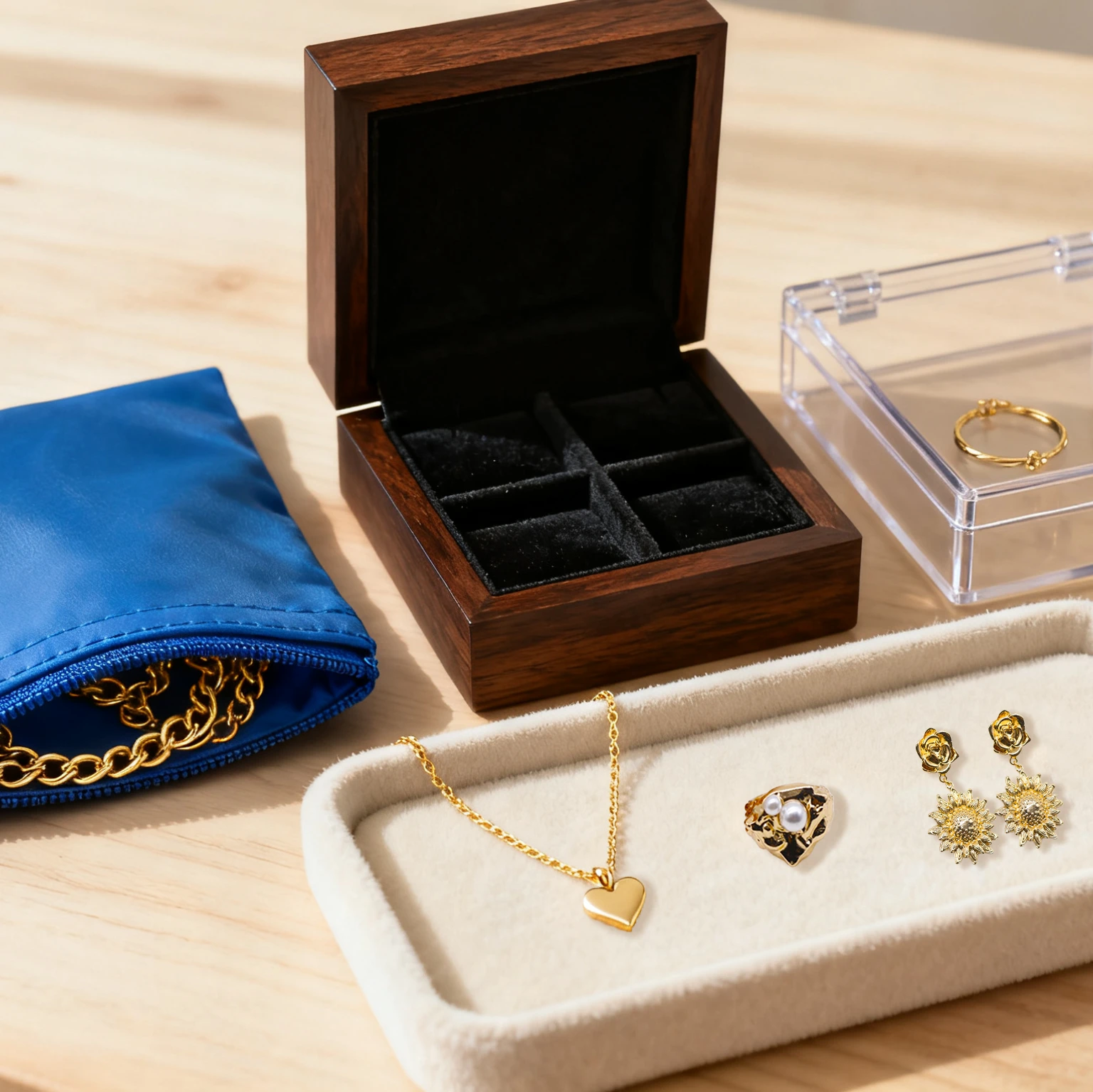
3. Proper Storage Methods
Improper storage accelerates tarnishing by exposing jewelry to humidity and air pollutants.
| Storage Type | Humidity Control | Protection Level | Recommended? |
|---|---|---|---|
| Velvet-lined jewelry box | Moderate | High | Yes |
| Zip-lock plastic bag | High (with silica gel) | Very High | Yes |
| Open tray or drawer | None | Low | No |
| Bathroom cabinet | High humidity | Very Low | No |
Scientific Finding:
A 2022 Materials Protection Report found that sealed storage with desiccants extended the tarnish-free lifespan by up to 3x compared to open-air storage.
4. Clean Jewelry the Right Way
Regular gentle cleaning maintains luster and removes harmful residues.
Recommended Cleaning Method:
Mix warm water with a drop of mild dish soap.
Soak jewelry for 2–3 minutes.
Use a soft brush or cloth — never abrasive pads.
Rinse with clean water and pat dry.
Avoid: Alcohol-based cleaners, silver polish, or ultrasonic cleaners (can damage plating).
Lab Data (OKA Accessories internal test, 2024):
| Cleaning Frequency | Average Shine Retention (6 months) |
|---|---|
| Weekly gentle cleaning | 93% |
| Monthly cleaning | 81% |
| No cleaning | 52% |
For detailed instructions on how to clean gold-plated jewelry, please read: How to Clean a Gold Plated Necklace: The Complete Guide and Best Practices
5. Choose High-Quality Plating and Base Materials
Not all gold plated jewelry is made equal. The thickness of plating and base metal quality directly determine durability.
| Plating Type | Typical Thickness | Durability Rating (1–5) | Common Use |
|---|---|---|---|
| Flash Plating | <0.5 micron | 2 | Low-cost fashion |
| Standard Gold Plating | 1 micron | 3 | Mid-range jewelry |
| Heavy Gold Plating | ≥2.5 microns | 5 | Premium pieces |
Industry Data:
According to Plating World Report 2024, jewelry with ≥2.5-micron plating thickness lasted 2.8 times longer before showing signs of wear compared to thinner coatings.
6. Apply a Protective Coating
Professional jewelry manufacturers often apply a clear nano-coating or electro-lacquer that seals the gold layer against oxidation.
Case Study:
A European Coating Research Institute experiment (2023) demonstrated that nanopolymer coatings reduced oxidation by 78% over 12 months in humid environments.
For consumers, protective sprays designed for costume jewelry can be used every few months for added protection.
7. Mind How You Wear Jewelry
Even how jewelry is worn affects longevity:
Avoid stacking bracelets or rings that rub against each other.
Remove gold plated pieces before washing hands or applying skincare.
Rotate different pieces to reduce daily wear on one item.
Data Snapshot (Consumer Use Study, 2023):
| Wearing Habits | Average Lifespan Before Tarnish (Months) |
|---|---|
| Rotated use | 18–24 |
| Daily continuous wear | 6–9 |
| Mixed with silver/steel jewelry | 4–6 |
Frequently Asked Questions
Q1: How long does gold plated jewelry last?
On average, high-quality pieces last 1–3 years with proper care. Heavier plating (≥2.5 microns) can last up to 5 years or more.
For detailed information on the lifespan of gold-plated jewelry, please read: How Long Do Gold Plated Earrings Last?
Q2: Can I restore tarnished gold plated jewelry?
Yes, mild tarnish can often be removed using gentle soap water cleaning and polishing cloths. However, worn-off plating usually requires professional re-plating.
Q3: Does body chemistry affect tarnishing?
Absolutely. People with acidic skin pH or heavy perspiration may notice faster fading. Choosing higher-quality plating helps counter this effect.
Q4: Is gold plated jewelry hypoallergenic?
It depends on the base metal. Nickel-free brass or stainless steel bases (like those used by premium manufacturers such as OKA Accessories) minimize allergic reactions.
To understand the differences between brass and stainless steel jewelry, please read: Brass vs Stainless Steel Jewelry: A Comprehensive Comparison for Brands and Manufacturers
Market and Consumer Insights
The global gold plated jewelry market is rapidly expanding, driven by the rise of fast fashion and online retail.
| Year | Global Market Size (USD) | Annual Growth Rate | Main Drivers |
|---|---|---|---|
| 2020 | $6.8 billion | — | E-commerce expansion |
| 2022 | $8.2 billion | 9.3% | Affordable luxury trend |
| 2025 | $11.5 billion | 10.1% | Sustainability, customization |
(Source: Global Fashion Jewelry Market Report 2025, Statista)
Consumer Preference Data:
73% of Gen Z shoppers value “affordable luxury” over fine jewelry.
58% say longevity and tarnish resistance are top buying criteria.
41% prefer customizable designs offered by OEM/ODM manufacturers.
These insights underscore the importance of durability and care education in jewelry retail — qualities that manufacturers like OKA Accessories prioritize through innovation and craftsmanship.
OKA Accessories: Your Trusted Partner in Quality Gold Plated Jewelry
At Qingdao OKA Arts and Crafts Co., Ltd (OKA Accessories), we understand that beauty and durability must coexist. Since 2013, we’ve specialized in crafting high-quality, tarnish-resistant jewelry that meets the standards of leading global retailers.
Our Strengths at a Glance
| Aspect | Details |
|---|---|
| Founded | 2013 |
| Headquarters | Qingdao, China (Yiwu Office); London Design Office |
| Global Reach | 50+ countries |
| Clients | Pull&Bear, Tally Weijl, Urban Outfitters |
| Design Expertise | 15+ years of experience, CAD + manual hybrid design |
| Production Scale | 5–7 million pieces annually |
| Quality Control | 100% inspection; 98% lab test pass rate |
| Customization | OEM/ODM service with mold & casting facilities |
Our London Design Center keeps us in sync with global fashion trends, while our Qingdao production base ensures real-time access to premium raw materials and on-time delivery (97% punctuality). Every piece undergoes rigorous inspection to meet European and American standards.
Why Choose OKA Accessories
Premium gold plating thickness for enhanced tarnish resistance
Nickel-free, hypoallergenic base metals
Advanced nano-coating and testing for longevity
Fast fashion responsiveness: 1000+ samples per month
Eco-friendly production and sustainable materials
We collaborate closely with brands to design custom collections that combine elegance, affordability, and durability, helping them stand out in a competitive market. Contact OKA to order high-quality, hypoallergenic gold-plated jewelry.
Conclusion
Gold plated jewelry offers a brilliant, budget-friendly way to express personal style — but only if properly cared for. By understanding the science behind tarnishing and adopting proven preventive practices — from dry storage and gentle cleaning to quality plating — you can preserve your jewelry’s shine for years.
Whether you’re a retailer looking for a reliable supplier or a brand ready to launch your next collection, OKA Accessories is your ideal partner. With over 15 years of experience, advanced plating technology, and global design expertise, we ensure every piece you offer your customers shines brighter, longer.