Starting a custom jewelry business is an exciting opportunity for entrepreneurs, designers, retailers, and e-commerce sellers who want to build their own jewelry brands. Unlike traditional jewelry reselling, a custom jewelry business allows you to create products that reflect your brand identity, target audience, and market positioning.
You do not necessarily need your own jewelry factory, expensive manufacturing equipment, or an experienced in-house design team to get started. Many successful jewelry brands work with professional manufacturers through OEM, ODM, and private label arrangements.
However, turning a jewelry idea into a profitable business involves more than finding attractive designs. You need to understand your target market, select the right product categories, develop manufacturable designs, calculate production costs, control product quality, and build reliable sales channels.
This guide explains how to start a custom jewelry business step by step, from choosing your business model and finding a jewelry manufacturer to developing your first collection and securing your first customers.
1. Choose the Right Custom Jewelry Business Model
Before investing in designs or inventory, decide how your jewelry business will operate. Your business model determines how much money you need, how much control you have over product development, and how complicated your supply chain will become.
There are four common ways to enter the custom jewelry market.
Handmade Jewelry Business
A handmade jewelry business involves designing and producing jewelry yourself or working with independent artisans.
This model is suitable for entrepreneurs who have jewelry-making skills and want complete creative control over their products.
Popular handmade products include:
Personalized name necklaces
Beaded bracelets
Handmade earrings
Gemstone jewelry
Customized wedding and anniversary gifts
The main advantages are creative freedom, small-batch flexibility, and direct relationships with customers.
However, production capacity can become a challenge as orders increase. Every additional order may require more labor, materials, and production time.
Private Label Jewelry Business
Private label jewelry is one of the most accessible options for entrepreneurs who want to establish a recognizable brand without developing every product from scratch.
You work with an existing manufacturer, select suitable jewelry designs, and customize certain elements, such as:
Brand logos and engravings
Plating colors
Decorative stones
Product combinations
Jewelry cards and packaging
Labels and branded gift boxes
This approach reduces product development complexity and helps new businesses test market demand before investing in completely original collections.
For example, you could select several existing necklace and earring designs, coordinate their finishes, add your brand identity, and introduce them as your first collection.
OEM Custom Jewelry Business
OEM (Original Equipment Manufacturing) means that a manufacturer produces jewelry according to your approved designs, drawings, samples, and specifications.
This is a suitable option when you already have a recognizable design concept and want greater control over the finished product.
You may provide:
Original sketches
CAD drawings
Reference photographs
Existing physical samples
Product dimensions and material requirements
The manufacturer then evaluates the design, develops samples, and produces the approved products.
OEM is particularly useful for brands that want distinctive designs rather than selling similar products available from multiple suppliers.
ODM Jewelry Business
ODM (Original Design Manufacturing) involves working with a manufacturer's design and development team to turn your ideas into finished products.
You might only have a mood board, a product reference, or a general collection concept.
The manufacturer helps translate these ideas into practical designs, recommend suitable materials, and develop samples.
For new entrepreneurs without technical jewelry design experience, ODM can reduce the complexity of product development.
| Business Model | Design Control | Initial Complexity | Best For |
|---|---|---|---|
| Handmade | Very high | Medium to high | Independent designers |
| Private Label | Moderate | Low to medium | New jewelry brands |
| OEM | High | Medium to high | Brands with original designs |
| ODM | Collaborative | Medium | Entrepreneurs needing design support |
My recommendation: Start with private label or ODM if you are new to the industry. Once you understand customer preferences and identify your best-selling products, gradually introduce more original OEM designs.

2. Identify Your Jewelry Niche and Target Customers
One of the biggest mistakes new jewelry entrepreneurs make is trying to sell everything to everyone.
A successful custom jewelry brand needs a clear market position. Instead of competing with established companies across every product category, focus on a specific audience and product style.
Identify Your Target Customers
Start by answering these questions:
Who will purchase your jewelry?
What age group are you targeting?
Are your customers buying jewelry for everyday wear, fashion, gifts, or special occasions?
What price range can they afford?
Where do they normally shop?
For example, different customer groups have different purchasing priorities.
| Target Market | Product Preferences | Important Buying Factors |
|---|---|---|
| Young fashion consumers | Trend-driven earrings and necklaces | Affordable prices and new designs |
| Professional women | Minimalist jewelry | Versatility and wearing comfort |
| Gift buyers | Personalized necklaces and bracelets | Packaging and emotional value |
| Boutique retailers | Coordinated jewelry collections | Wholesale pricing and product consistency |
| Online jewelry brands | Exclusive or branded collections | Differentiation and flexible sourcing |
Your product decisions should reflect the needs of your actual customers rather than simply following every jewelry trend.
Research Your Competitors
Research established jewelry brands, independent designers, online marketplaces, and retailers operating in your target market.
Pay attention to:
Best-selling product categories.
Popular materials and plating colors.
Customer reviews and complaints.
Common retail price ranges.
Product photography and packaging.
Design features that distinguish competing brands.
Customer reviews can be particularly useful.
For instance, repeated complaints about necklaces tangling, earrings being too heavy, or plating wearing off may reveal opportunities to improve your own products.
Validate Demand Before Manufacturing
Do not assume that a design will sell simply because you personally like it.
Test your ideas through social media polls, product mockups, landing pages, customer interviews, or small sample collections.
A practical approach is to present 5–10 design concepts to your potential customers and identify which ones receive the strongest purchase interest.
You should also test willingness to pay, not just aesthetic preferences.
The objective is to reduce the risk of investing in designs that generate attention but fail to convert into sales.
3. Develop Your First Custom Jewelry Collection
Once you understand your market, you can start planning your initial collection.
For a new jewelry brand, launching a focused collection is generally more manageable than introducing dozens of unrelated designs.
A practical starting structure is:
One signature product that represents your brand.
Two or three complementary products.
One or two products that encourage customers to purchase matching sets.
For example, a minimalist jewelry brand could introduce a coordinated collection containing a pendant necklace, matching earrings, a delicate bracelet, and a simple ring.
Choose Product Categories Carefully
Different product categories have different manufacturing requirements, price points, and customer expectations.
Earrings
Earrings are useful for building a diverse fashion jewelry collection because they support many different shapes, materials, finishes, and decorative elements.
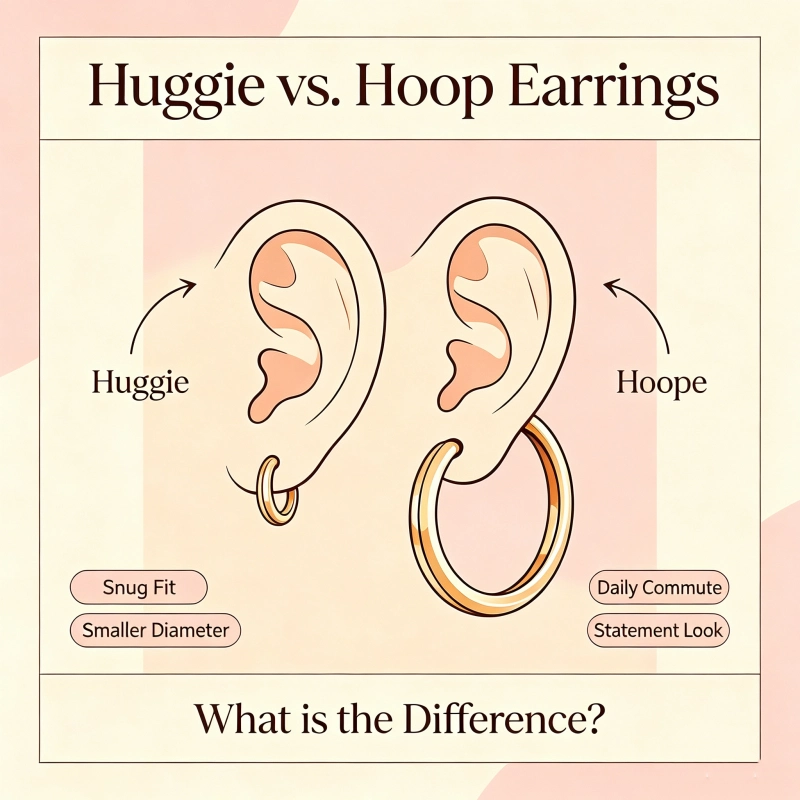
You can explore custom drop earrings, statement earrings, and custom hoop earrings when developing different design directions.
Necklaces
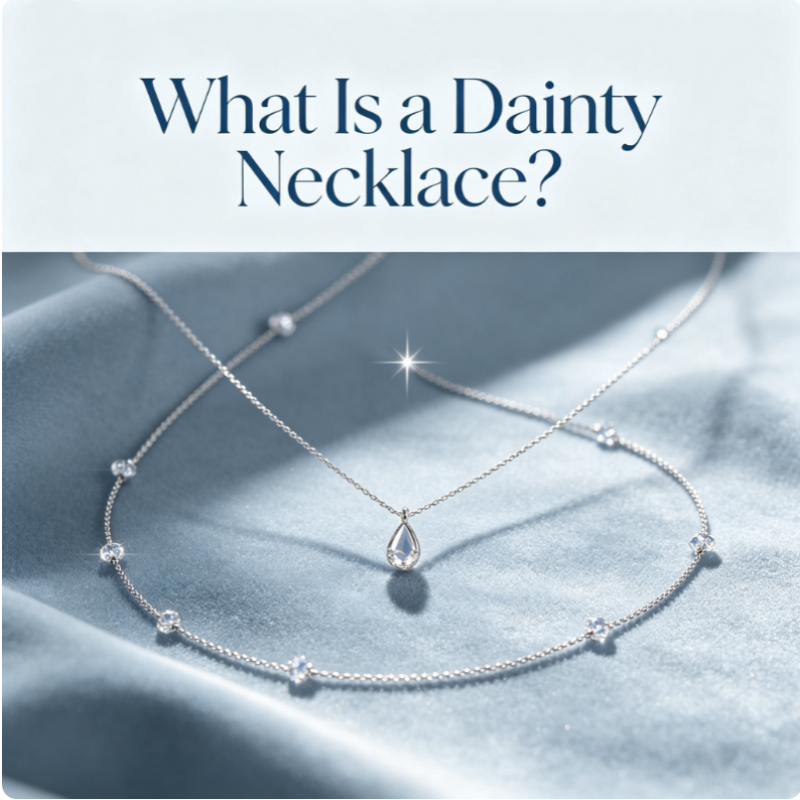
Necklaces offer opportunities to create coordinated collections through pendant shapes, chain designs, layering combinations, and adjustable lengths.
Consider developing:
Minimalist chain necklaces
Pendant necklaces
Layered necklaces
Y-shaped necklaces
Personalized necklaces
Explore different options such as chain necklace designs, layered necklaces, and Y-necklace designs.
Other Jewelry Categories
Rings, bracelets, brooches, and anklets can help expand your product range and increase opportunities for cross-selling.
You can explore custom and wholesale rings, bracelet collections, brooch designs, and anklet collections.
Build a Consistent Collection
Your first collection should have a recognizable design language.
Consider maintaining consistency in:
Metal colors and finishes
Decorative stones and embellishments
Shapes and proportions
Chain styles
Logo placement
Packaging design
This makes your brand easier to recognize and helps customers combine multiple products.
It also simplifies product development because related designs may share materials, components, and finishing processes.
4. Prepare Your Designs for Custom Jewelry Manufacturing
A good design concept is not automatically a manufacturable product.
One of the most important steps when starting a custom jewelry business is converting creative ideas into clear production requirements.
You do not need to be a professional jewelry engineer, but you should communicate your expectations accurately.
Prepare Product Reference Materials
Depending on the complexity of your design, manufacturers can work with several types of references.
| Reference Type | Information Provided | Best Application |
|---|---|---|
| Inspiration image | General appearance and style | Early design discussions |
| Hand sketch | Shape and basic structure | Initial product development |
| Technical drawing | Dimensions and construction | Manufacturing preparation |
| CAD file | Detailed 3D geometry | More precise product development |
| Physical sample | Actual appearance and construction | Product reproduction or modification |
If you do not have CAD files, ask whether the manufacturer's design team can assist with technical development.
Define the Important Product Specifications
Before requesting a quotation, prepare as many of the following details as possible:
1. Materials
Identify your preferred base material, such as stainless steel, brass, zinc alloy, sterling silver, or other suitable materials.
2. Surface Finish
Specify whether you require gold plating, silver plating, polished finishes, brushed textures, or other surface treatments.
3. Product Dimensions
For earrings, specify length, width, and approximate weight.
For necklaces, specify chain length, pendant dimensions, and clasp type.
For rings, provide ring sizes and band dimensions.
4. Decorative Details
Explain the colors, stones, resin components, pearls, enamel, engraving, or other decorative elements required.
5. Functional Details
Consider earring closures, necklace clasps, adjustable chains, bracelet extensions, and other components that affect daily use.
6. Branding and Packaging
Specify logo placement, jewelry cards, labels, pouches, gift boxes, barcodes, and retail packaging.
A detailed product brief reduces misunderstandings and makes it easier for manufacturers to evaluate feasibility and prepare accurate quotations.
5. Find a Reliable Custom Jewelry Manufacturer
Choosing the right jewelry manufacturer is one of the most important decisions when starting your business.
A low quotation does not necessarily mean a good supplier.
A manufacturer should be able to support your product development requirements, maintain consistent quality, communicate clearly, and deliver according to agreed specifications.
Evaluate Manufacturing Capabilities
Before selecting a supplier, examine the following areas.
Design and Product Development
Can the manufacturer work from sketches, pictures, technical drawings, and physical samples?
Does its design team understand commercial jewelry trends and product requirements?
Sampling Capabilities
Does it have an independent sampling team?
Can it develop prototypes and make revisions before bulk production?
Manufacturing Processes
Depending on your products, relevant capabilities may include:
Metal casting
Mold development
Cutting and forming
Stone setting
Polishing
Electroplating
Assembly
Packaging
Quality Control
Ask how the manufacturer checks product dimensions, plating, appearance, component stability, and finished product consistency.
Do not rely exclusively on statements such as "high quality." Request evidence of actual inspection procedures.
Production Capacity
Confirm whether the supplier can handle both your first order and potential repeat orders.
A factory that can produce a small initial order may still need additional capacity planning when your sales grow.
Check the Manufacturer's Experience
An experienced manufacturer should be able to explain its production process, identify potential design problems, and recommend practical improvements.
For example, Oka Accessories is a Chinese fashion jewelry manufacturer established in 2013. Its published company profile describes design and sampling teams, in-house mold making and casting capabilities, and inspection of finished shipments.
You can review its jewelry manufacturing capabilities and company background when evaluating whether its services fit your product development requirements.
Ask These Questions Before Choosing a Supplier
What is your minimum order quantity per design?
Can you develop samples from reference pictures?
Are sample fees and mold fees charged separately?
Can I customize the material, plating, colors, and dimensions?
Can you provide branded packaging?
What is the expected sampling and production lead time?
What quality inspections do you perform?
Who owns the custom design files and molds?
How are product defects or production deviations handled?
Can you support repeat orders with consistent specifications?
A professional supplier should be comfortable discussing these points before receiving a production order.
6. Develop and Approve Samples Before Mass Production
Never skip sample approval simply because a supplier has shown you attractive product photographs.
A photograph cannot always reveal the actual weight, dimensions, surface texture, clasp performance, or durability of a jewelry product.
Sampling is an opportunity to identify problems before committing to a larger investment.
The Custom Jewelry Sampling Process
A typical development workflow includes the following stages.
Step 1: Submit Your Design Requirements
Provide sketches, photographs, technical drawings, material preferences, dimensions, and expected order quantities.
Step 2: Receive the Initial Evaluation
The manufacturer checks whether your design can be produced using the required materials and manufacturing processes.
Step 3: Confirm the Development Cost
Discuss sample fees, mold costs, material costs, and the estimated development schedule.
Step 4: Develop the First Sample
The factory creates an initial sample according to the approved requirements.
Step 5: Review and Request Revisions
Check the product carefully and communicate any changes.
Step 6: Approve the Final Sample
Once all important details are confirmed, retain an approved reference sample for mass production.
What Should You Inspect?
Use a consistent inspection checklist.
| Inspection Item | What to Check |
|---|---|
| Dimensions | Length, width, thickness, and proportions |
| Weight | Comfort and suitability for daily wear |
| Material | Correct base material and components |
| Plating | Color consistency and surface appearance |
| Assembly | Secure connections and stable construction |
| Stones | Correct positioning and secure setting |
| Edges | Smooth surfaces without sharp or rough areas |
| Function | Clasp, hinge, hook, and adjustable mechanisms |
| Packaging | Correct logo, label, card, and box |
Keep a written record of approved specifications.
This is particularly important when different teams are responsible for product design, manufacturing, inspection, and shipping.
An approved sample should become the reference point for future production and repeat orders.
7. Calculate Custom Jewelry Startup Costs and Product Pricing
Understanding the actual cost of your products is essential for building a profitable custom jewelry business.
Many beginners only compare factory unit prices. However, the quoted manufacturing cost is not necessarily the total amount required to bring a product into your inventory.
Main Startup Expenses
Your initial investment may include:
| Cost Category | Examples |
|---|---|
| Product Development | Design work, CAD, samples, prototypes |
| Tooling | Molds and specialized manufacturing tools |
| Manufacturing | Materials, labor, assembly, plating |
| Branding | Logo design, labels, engraving |
| Packaging | Jewelry cards, pouches, boxes |
| Logistics | Freight, insurance, customs duties |
| Marketing | Photography, advertising, website |
| Business Operations | Registration, software, accounting |
The actual budget depends on your product materials, design complexity, order quantities, sales markets, and manufacturing model.
A handmade jewelry business may require more investment in tools and production equipment.
A private label business may require less product development expenditure, while a fully customized OEM collection may involve additional sampling and tooling costs.
How to Calculate Your True Unit Cost
Use the following formula:
Landed Unit Cost = Manufacturing Cost + Packaging Cost + Shipping and Import Costs + Quality Allowance + Allocated Development Cost
The allocated development cost is especially important when launching original products.
For example, assume the following hypothetical project:
| Cost Item | Example Cost per Unit |
|---|---|
| Manufacturing | $3.80 |
| Branded Packaging | $0.60 |
| Freight and Import Costs | $0.70 |
| Quality Allowance | $0.20 |
| Development Cost Allocation | $1.00 |
| Total Landed Unit Cost | $6.30 |
These figures are illustrative only, not market averages or a factory quotation.
If you sell this product for $24, your product gross margin before advertising, payment processing, marketplace fees, taxes, and other selling expenses is:
Gross Margin = (Selling Price − Landed Unit Cost) ÷ Selling Price × 100%
In this example:
($24 − $6.30) ÷ $24 × 100% = 73.75%.
This is not your final net profit.
You must also account for customer acquisition costs, refunds, returns, discounts, platform fees, and operating expenses.
Understand the Relationship Between MOQ and Pricing
MOQ (Minimum Order Quantity) is the minimum quantity a manufacturer requires for an order or product configuration.
For custom jewelry, the MOQ may depend on:
Product design complexity
Base materials
Plating requirements
Number of colors
Manufacturing processes
Mold and tooling requirements
Packaging customization
An important question is whether MOQ applies to each design, each color, or the overall purchase order.
For example, ordering 300 pieces across three designs may have a different cost structure from ordering 300 pieces of one design.
Do not choose a manufacturer based on the lowest MOQ alone. A small order with a high unit cost may be less attractive than a slightly larger order with better overall economics.
The goal is to balance inventory investment, production cost, and expected sales demand.
8. Build Your Jewelry Brand and Sales Channels
Once your products are ready, you need a brand identity that makes customers understand why they should purchase from you.
A jewelry brand should communicate more than product appearance.
It should explain its design philosophy, target audience, product quality, and the experience customers can expect.
Create a Distinctive Brand Identity
Develop the following elements:
Brand name and logo
Brand story and positioning
Product design language
Packaging style
Brand colors and typography
Photography direction
Customer service standards
For a premium-looking fashion jewelry brand, consistent photography and carefully designed packaging can help establish a stronger perceived brand identity.
Choose the Right Sales Channels
You do not need to sell through every channel immediately.
Start with one or two channels that fit your customer group.
Your Own E-commerce Website
A website gives you control over product presentation, branding, pricing, and customer relationships.
It is particularly useful when you want to build a long-term jewelry brand rather than depend entirely on third-party marketplaces.
Online Marketplaces
Platforms such as Etsy and other relevant marketplaces can help new brands reach customers who are already searching for jewelry.
However, you need to account for platform fees, competitive pricing, and marketplace policies.
Social Media
Instagram, TikTok, Pinterest, and other visual platforms are useful for demonstrating:
Jewelry styling ideas
Product details
New collection launches
Behind-the-scenes production
Customer reviews
Gift recommendations
Wholesale and Boutique Partnerships
Wholesale is another option for entrepreneurs who want to distribute their jewelry through retail stores.
In this model, your pricing must leave sufficient margin for both your business and the retailer.
Invest in Professional Product Photography
Jewelry is a highly visual product category.
Customers want to understand how a product looks, how large it is, how it sits on the body, and how its finish reflects light.
For every product, consider preparing:
White-background product photographs.
Close-up photographs of important details.
Lifestyle images showing the jewelry being worn.
Size comparison images.
Packaging photographs.
Short product demonstration videos.
Accurate photography also helps reduce customer misunderstandings and unnecessary returns.
9. Manage Quality, Compliance, and Customer Trust
Product quality is one of the biggest factors influencing long-term success in the jewelry industry.
A beautiful product that loses its finish quickly or breaks during normal use can damage your brand reputation.
Establish Product Quality Standards
Before production begins, define acceptable quality standards for each product.
For example:
Correct material specifications.
Consistent plating appearance.
Secure stone settings.
Stable soldered or assembled connections.
Smooth edges and comfortable contact surfaces.
Consistent dimensions and weight.
Correct logo and packaging.
Reliable fastening mechanisms.
For larger orders, discuss whether inspections should take place during production as well as before shipment.
Pay Attention to Material and Product Claims
Never describe a product as sterling silver, stainless steel, hypoallergenic, nickel-free, or gold plated unless the claim is supported by the actual product specifications and appropriate evidence.
For products sold in the United States, the FTC Jewelry Guides explain how marketers should accurately represent precious metals, gemstones, pearls, and other jewelry characteristics.
For European and other international markets, investigate the applicable material, chemical, labeling, and product safety requirements before selling.
Testing requirements should reflect the actual product construction and destination market.
Build a Reliable After-Sales Process
Prepare clear policies for:
Product defects
Damaged shipments
Customer returns
Warranty coverage
Repairs and replacements
Custom order cancellations
For personalized or made-to-order products, explain production time, approval procedures, and return conditions clearly before accepting payment.
Trust is not created by marketing claims alone. It is built through consistent product quality, accurate descriptions, and dependable customer service.
10. Launch Small, Collect Customer Feedback, and Scale
Your first collection should be treated as a market test, not the final version of your business.
After launching, monitor which products attract attention and which products actually generate orders.
Track Your Most Important Business Metrics
Consider monitoring:
| Metric | What It Tells You |
|---|---|
| Conversion Rate | Whether visitors become customers |
| Average Order Value | How much customers spend per order |
| Gross Margin | How much remains after product costs |
| Return Rate | Whether products meet expectations |
| Repeat Purchase Rate | Whether customers return |
| Best-Selling Styles | Which products deserve replenishment |
| Customer Acquisition Cost | How much you spend to attract each customer |
Do not judge a new product entirely by social media engagement.
A product with fewer likes may generate more actual purchases than a highly shared design.
Expand Based on Real Sales Data
Once you identify products with consistent demand, consider:
Increasing production quantities.
Introducing additional colors.
Developing matching earrings, necklaces, or bracelets.
Creating seasonal collections.
Improving packaging.
Negotiating better component sourcing.
Expanding into wholesale distribution.
You should also maintain an approved sample and product specification record for every successful design.
This helps ensure that repeat orders remain consistent even as your business grows.
Common Mistakes to Avoid When Starting a Custom Jewelry Business
Even well-designed jewelry brands can struggle because of poor business decisions.
Here are several mistakes worth avoiding.
1. Launching Too Many Products at Once
Too many designs increase sampling, inventory, photography, and marketing expenses.
Start with a focused collection and expand based on sales performance.
2. Choosing Manufacturers Only by Price
A very low quotation may involve differences in material specifications, plating quality, packaging, or inspection standards.
Compare quotations based on the same approved product requirements.
3. Skipping Sample Approval
Never assume that bulk production will automatically match a reference photograph.
Approve the actual sample and record its key specifications.
4. Ignoring Hidden Costs
Manufacturing prices do not necessarily include packaging, development fees, shipping, duties, quality allowances, or marketplace costs.
Calculate your complete unit economics before setting retail prices.
5. Not Defining Design Ownership
Discuss ownership and permitted use of custom designs, CAD files, molds, and tooling in writing.
Confirm confidentiality requirements and obtain appropriate authorization before using third-party design references.
6. Selling Without a Clear Brand Position
A large assortment of unrelated products makes it difficult for customers to understand your brand.
Build a coherent collection around a defined target market.
7. Failing to Plan for Repeat Orders
Your first order is only the beginning.
Maintain approved samples, specifications, packaging artwork, and supplier records so that successful products can be reproduced consistently.
Frequently Asked Questions About Starting a Custom Jewelry Business
1. How much money do you need to start a custom jewelry business?
The required investment depends on your business model.
A handmade jewelry business may require tools, materials, and a workspace. A private label business may require initial inventory, packaging, and branding expenses. A fully customized OEM business may also involve design development, sampling, and mold costs.
Calculate your initial investment based on actual supplier quotations, expected order quantities, shipping expenses, and marketing requirements rather than relying on a generic startup budget.
2. Can I start a custom jewelry business without manufacturing experience?
Yes. You do not necessarily need manufacturing experience to establish a custom jewelry brand.
You can work with an experienced OEM or ODM manufacturer that provides product development, sampling, and manufacturing support.
However, you should understand your target customers, product specifications, costs, and quality expectations before approving production.
3. Is private label jewelry profitable?
Private label jewelry can be profitable when the selling price covers product costs, packaging, logistics, marketing, platform fees, and operating expenses.
Its main advantage is that you can introduce branded products without developing every design from scratch.
Profitability ultimately depends on product differentiation, sourcing costs, sales volume, pricing, and customer acquisition expenses.
4. What is the difference between OEM and ODM jewelry?
OEM manufacturing involves producing jewelry according to customer-approved designs and specifications.
ODM manufacturing involves more design and development support from the manufacturer, usually based on the customer's ideas, references, or collection requirements.
Private label jewelry refers to selling products under your own brand, and it can use either OEM or ODM manufacturing.
5. How do I find a reliable custom jewelry manufacturer?
Look for manufacturers with relevant production experience, design and sampling capabilities, transparent quotations, documented quality control, and reliable communication.
Request product samples, confirm material specifications, check references where possible, and agree on production requirements in writing before placing a bulk order.
6. What information should I provide when requesting a custom jewelry quotation?
Prepare the following details:
Product photographs, sketches, or CAD files.
Product dimensions and preferred materials.
Plating color and surface finish.
Stone or decorative requirements.
Logo and packaging specifications.
Estimated order quantity.
Destination country.
Expected delivery date.
The more complete your information, the easier it is for manufacturers to evaluate feasibility and provide an accurate quotation.
7. How long does custom jewelry manufacturing take?
The timeline depends on product complexity, sampling requirements, tooling, material availability, and order quantity.
A simple design based on an existing production process may require less development time than an entirely new product with custom molds and multiple revisions.
Always request separate estimates for sample development, sample approval, mass production, quality inspection, and shipping.
8. Is it better to manufacture jewelry locally or work with an overseas supplier?
Both options have advantages.
Local manufacturing can offer easier communication, shorter transportation distances, and more direct factory visits.
Overseas manufacturers may offer broader production capabilities, established component supply chains, and competitive manufacturing costs.
Compare total landed cost, product quality, communication, lead time, and supplier reliability rather than focusing exclusively on the factory price.
9. What types of jewelry are suitable for a new custom jewelry brand?
Popular starting categories include earrings, necklaces, bracelets, and rings.
The right products depend on your target market, price positioning, design capabilities, and manufacturing budget.
A coordinated collection of complementary products is often easier to brand and market than a large assortment of unrelated designs.
10. Why should I work with an experienced OEM jewelry manufacturer?
An experienced OEM manufacturer can help you translate product concepts into manufacturable designs, develop samples, select suitable materials, manage production, and maintain product consistency.
Working with the right manufacturing partner allows you to focus more of your resources on brand development, marketing, and customer acquisition.
Start Building Your Custom Jewelry Brand with the Right Manufacturing Partner
Starting a custom jewelry business requires a combination of creative thinking, market research, product development, and supply chain management.
You do not need to build a complete manufacturing operation from the beginning. The right OEM or ODM partner can help you turn your ideas into commercially viable products while reducing the complexity of product development and production.
At OKA Accessories, we understand the needs of emerging jewelry brands as well as established retailers.
Qingdao OKA Arts and Crafts Co., Ltd. was established in 2013 and provides fashion jewelry design, sampling, OEM manufacturing, and private label services. Its published company profile describes dedicated design and sampling teams, in-house mold making and casting capabilities, and finished-product inspection.
Whether you are developing a new earring collection, creating a private label necklace range, or sourcing custom jewelry for your retail business, working with a manufacturer that understands both design and production can make the development process more manageable.
Explore our custom jewelry manufacturing capabilities and contact OKA Accessories to discuss your product ideas, customization requirements, and manufacturing plans.
Your jewelry business starts with an idea. A well-planned product strategy and reliable manufacturing partnership can turn that idea into a sustainable brand.