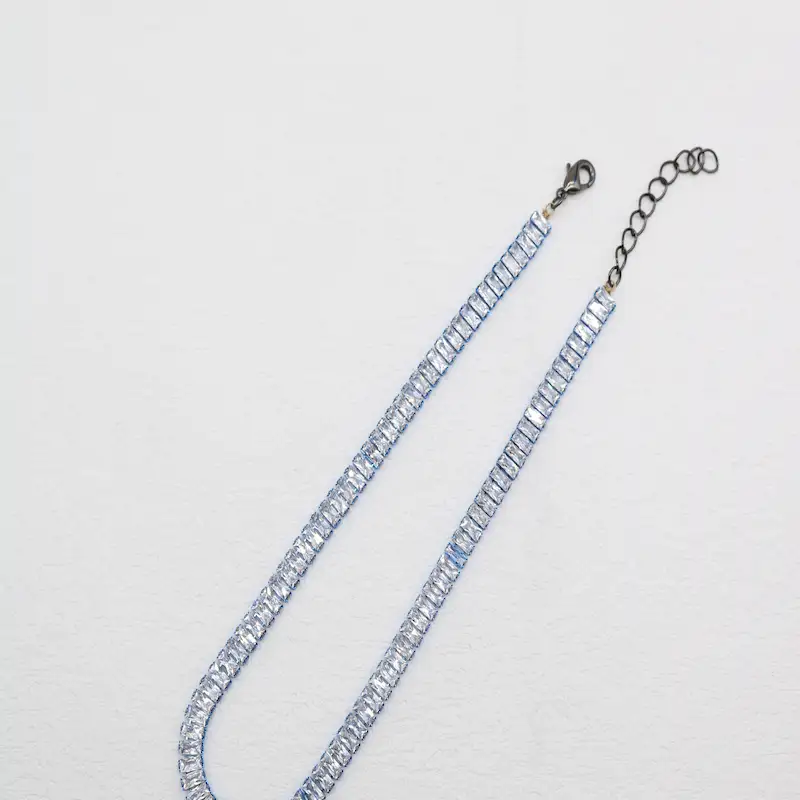
A necklace chain is more than a simple connection between a clasp and a pendant. Its link structure, thickness, flexibility, and finish determine how the necklace looks, feels, and performs when worn.
Understanding the different types of necklace chains helps you choose the right style for everyday jewelry, pendant necklaces, layered designs, and statement accessories. Some chains feature delicate links that complement small pendants, while others have bold patterns that make the chain itself the main design element.
For jewelry brands, retailers, and wholesalers, understanding chain styles is equally important when developing a new collection. The right chain construction can influence product appearance, material costs, manufacturing complexity, and the final retail positioning.
This guide explores 15 popular necklace chain types, explains their characteristics, compares their practical applications, and shares useful tips for choosing or customizing chain necklaces.
Quick Comparison of 15 Different Types of Necklace Chains
Before exploring each style, here is a quick overview of the most common necklace chain designs.
| Chain Type | Visual Characteristics | Best For |
|---|---|---|
| Cable Chain | Connected round or oval links | Everyday wear and pendants |
| Box Chain | Small square interlocking links | Pendant necklaces and minimalist designs |
| Rope Chain | Twisted, rope-like structure | Standalone necklaces and statement styles |
| Curb Chain | Flattened interlocking links | Everyday and bold jewelry |
| Cuban Link Chain | Thick, closely connected flat links | Statement necklaces |
| Figaro Chain | Alternating short and long links | Classic and contemporary styling |
| Snake Chain | Smooth, closely connected links | Sleek necklaces and pendants |
| Paperclip Chain | Long rectangular links | Layering and modern jewelry |
| Ball Chain | Connected round metal beads | Casual and industrial-inspired styles |
| Herringbone Chain | Flat, closely arranged angled links | Smooth, polished statement necklaces |
| Wheat Chain | Interwoven links resembling wheat | Textured everyday necklaces |
| Singapore Chain | Twisted, diamond-cut appearance | Delicate, light-catching necklaces |
| Mariner Chain | Oval links with central bars | Nautical-inspired jewelry |
| Rolo Chain | Rounded, uniform links | Pendants and casual necklaces |
| Byzantine Chain | Complex interwoven link structure | Decorative and statement jewelry |
The best chain depends on its intended use. Cable and box chains are common choices for pendants, while Cuban, curb, and Figaro chains can work well as standalone designs. Snake and herringbone chains create a smoother appearance but require more careful handling.
1. Snake Chain
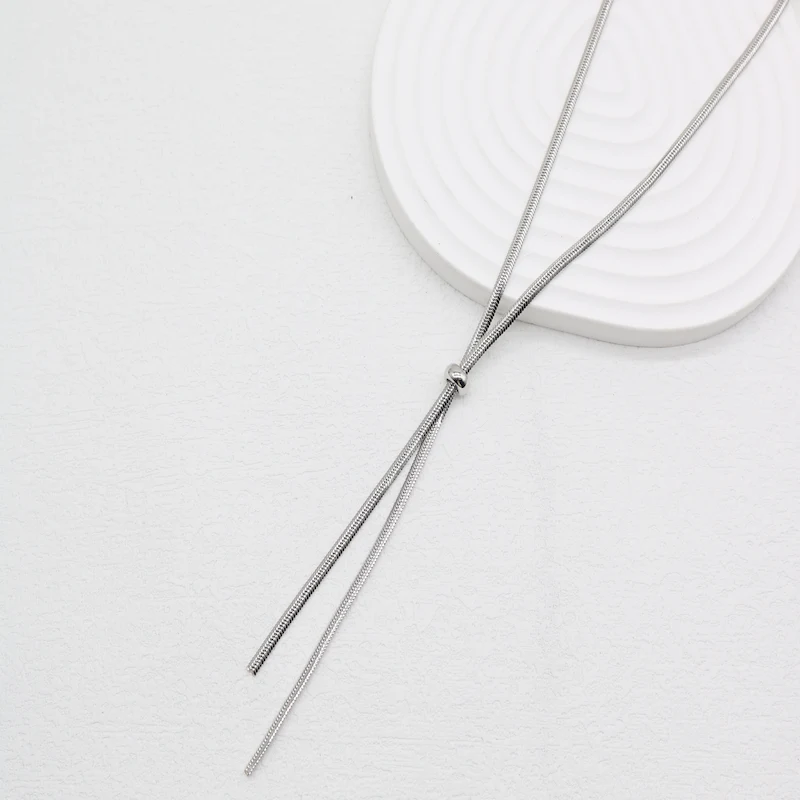
A snake chain consists of tightly connected metal links or plates that create a smooth, continuous surface.
Instead of displaying clearly separated links, the finished chain resembles a flexible metal tube or snake-like surface.
Features:
Precisely interlocked metal plates create a silky-smooth surface that produces liquid-like light reflections. Exceptionally pliable, it contours naturally to the neckline, making it an ideal pendant carrier.
Key Specs:
▸ Width: 2-5mm (narrow for delicacy, wider for presence)
▸ Length: 16-24 inches (standard choker to princess lengths)
▸ Materials: 925 silver, 14K/18K gold, titanium steel (rhodium plating recommended for durability)
Occasions:
✓ Daily wear, dates – exudes understated elegance
⚠️ Caution: Avoid sharp objects; store flat to prevent kinking
Key Characteristics
Smooth and streamlined appearance
Closely connected link structure
Flexible movement along normal curves
Minimal visible gaps between links
Suitable for sleek jewelry designs
Best Uses
Snake chains are commonly used for:
Minimalist necklaces
Small pendant designs
Letter and initial necklaces
Modern everyday accessories
Contemporary fashion collections
One important consideration is kink resistance. Although snake chains can bend naturally around the neck, sharp folding or twisting may damage their structure.
For buyers developing custom snake chain necklaces, it is important to evaluate flexibility, surface smoothness, clasp connections, and the chain's ability to support the intended pendant.
Charmwell offers snake-style necklace designs such as the K138 Bamboo Letter K Pendant Necklace.
This type of product shows how a simple chain structure can be combined with a personalized letter pendant to create a more distinctive fashion accessory.
2. Box Chain
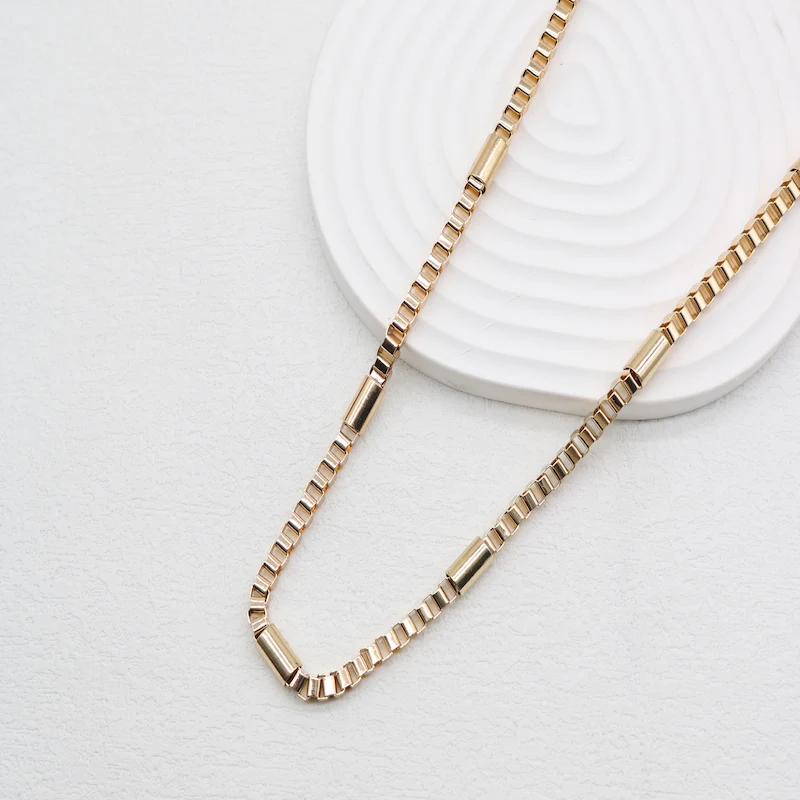
A box chain, sometimes called a Venetian chain, uses small square or box-shaped links connected to create a structured appearance.
Unlike the rounded links of a cable chain, its geometric construction gives it a cleaner and more contemporary look.
Features:
Geometric cube links with softened edges offer structural integrity and superior weight-bearing capacity.
Tech Details:
▸ Link size: 1-3mm (smaller = more refined)
▸ Ideal length: 18" (classic collarbone-skimming fit)
▸ Premium option: Surgical-grade stainless steel (hypoallergenic)
Styling:
• Showcase alone for architectural appeal
• Use V-shaped bail with pendants to prevent twisting
Key Characteristics
Square-shaped interlocking links
Smooth, structured appearance
Relatively stable link arrangement
Available in different widths and finishes
Suitable for simple pendants
Best Uses
Box chains work well with:
Geometric pendants
Small metal charms
Minimalist necklaces
Letter and initial pendants
Contemporary jewelry collections
The square structure gives the chain a distinctive appearance without requiring additional decorative elements.
For manufacturing projects, the size and construction of the box links should be considered carefully. A very narrow pendant bail may not fit over the chain, so the bail opening and chain dimensions should be confirmed together.
3. Rope Chain
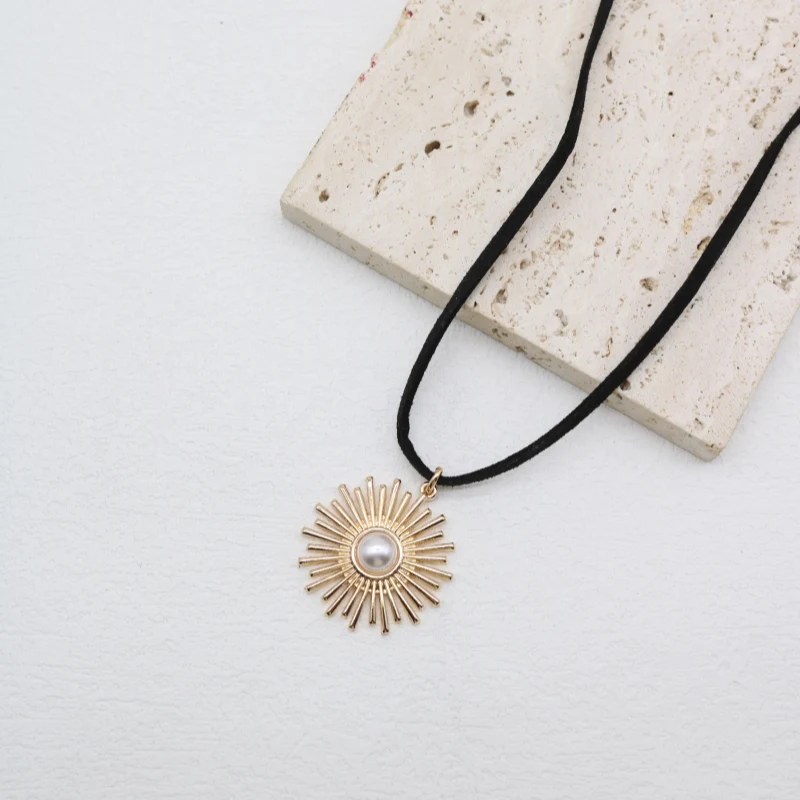
A rope chain is made from multiple small links twisted or arranged in a spiral pattern to create the appearance of a rope.
Its textured construction produces multiple reflective surfaces, giving the chain more visual depth than a simple cable design.
Features:
Twisted metal strands mimic maritime cables, producing dynamic light play through its textured surface.
Construction:
▸ Strand count: 3-8 (higher = more substantial)
▸ Luxury finish: Micro-brushed treatment
Best For:
✓ Gala events, black-tie occasions
✘ Avoid ornate pendants (competes with texture)
Key Characteristics
Twisted, spiral-like structure
Textured surface
Attractive light reflection
Available in fine and chunky widths
Suitable for standalone wear
Best Uses
Rope chains are often selected for:
Gold-tone statement necklaces
Pendant necklaces
Fashion layering
Classic and vintage-inspired collections
Unisex jewelry designs
The rope structure makes this chain visually interesting even without a pendant.
For fashion jewelry manufacturers, rope-inspired designs can also be incorporated into multi-strand necklaces or combined with suede cords and decorative pendants.
For example, Charmwell's K111 Mixed Stone Pendant Rope Suede Necklace combines a rope-style suede cord with a decorative mixed-stone pendant. It demonstrates how chain-inspired structures can be adapted into more distinctive fashion necklace designs.
4. Figaro Chain
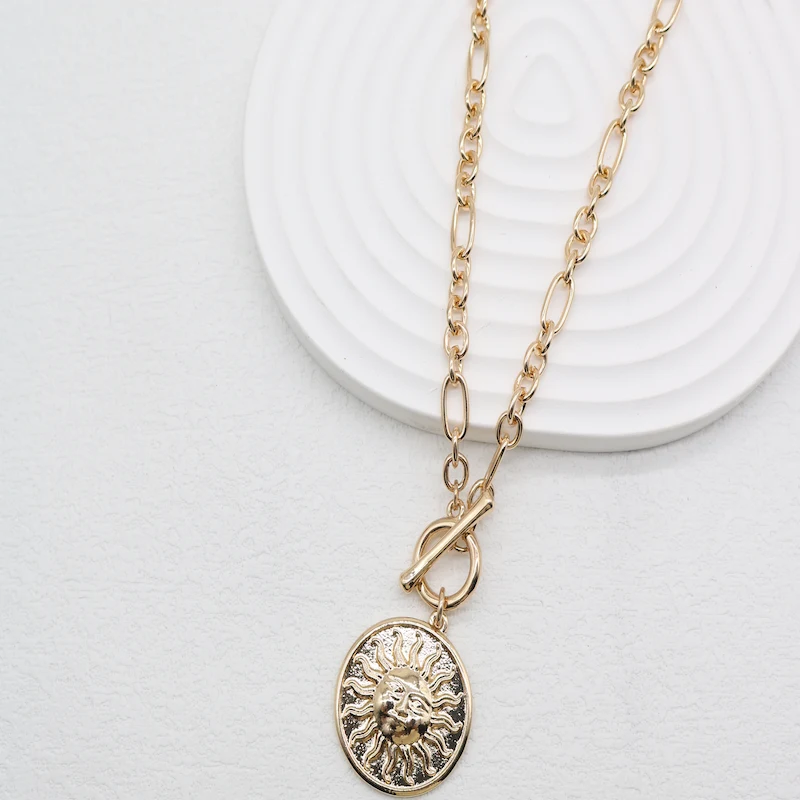
A Figaro chain features a repeating pattern of links, typically consisting of one elongated link followed by two or three shorter links.
The alternating arrangement creates a recognizable rhythm that distinguishes it from uniform chain designs.
Features:
Italian-inspired alternating link pattern (typically 3:1 ratio) balances masculine strength with refined detailing.
Customization:
▸ Link proportions adjustable
▸ Men’s version: ≥4mm width
Pairing Ideas:
• Business casual attire
• Complements coin pendants for vintage vibe
Key Characteristics
Alternating long and short links
Usually a flattened appearance
Repeating decorative pattern
Classic and versatile styling
Suitable for standalone or pendant use
Best Uses
Figaro chains can be used for:
Classic fashion necklaces
Gold-tone chain collections
Unisex jewelry
Simple pendant designs
Layered necklaces
The alternating link pattern adds visual interest without requiring additional charms or pendants.
For brands developing a coordinated jewelry range, Figaro chains can also be adapted into matching bracelets and anklets.
5. Curb Chain
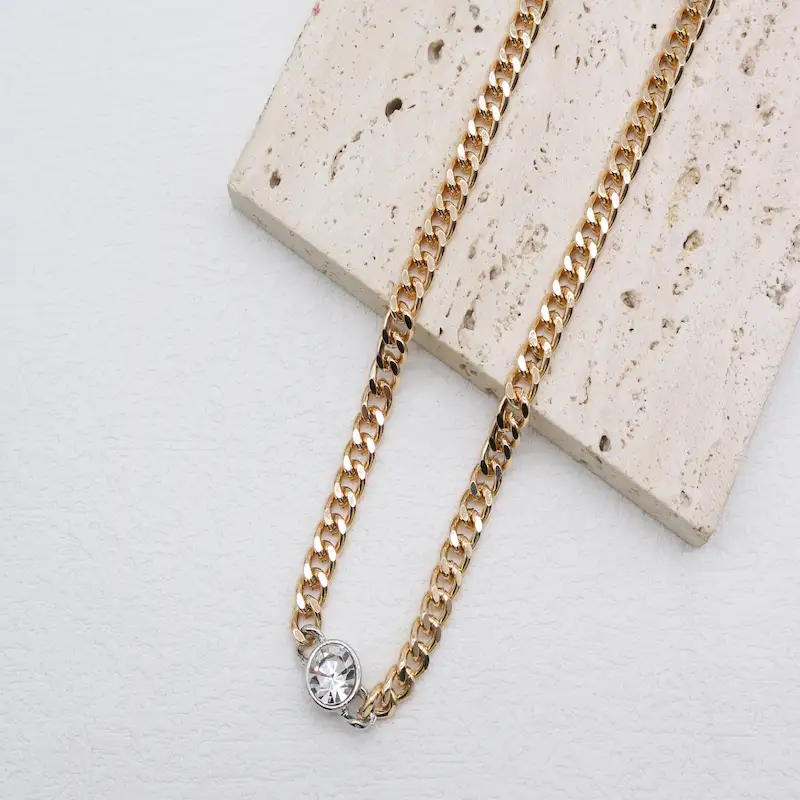
A curb chain consists of interlocking links that are twisted and flattened so they sit close together.
This creates a relatively flat profile that follows the neckline and produces a consistent reflective surface.
Features:
Flattened interlocking rings originally designed for equestrian gear, now a hip-hop culture staple.
Durability:
▸ Tensile strength: 50kg+ (3mm+ thickness)
▸ Urban edge: Distressed titanium finishes
Street Style:
✓ Layered stacking with varying widths
✓ Dog tag pendants for attitude
Key Characteristics
Flattened, interconnected links
Relatively close-fitting structure
Uniform link appearance
Available in delicate and bold widths
Suitable for different jewelry categories
Best Uses
Curb chains are commonly used for:
Everyday necklaces
Minimalist metal chains
Men's and women's jewelry
Pendant necklaces
Layered chain combinations
A fine curb chain can provide a subtle foundation for a pendant, while a wider version creates a stronger standalone appearance.
The term curb chain is sometimes confused with Cuban link chains. Although both use flattened interlocking links, Cuban styles generally have thicker, more closely fitted links and a heavier visual appearance.
6. Heart Chain
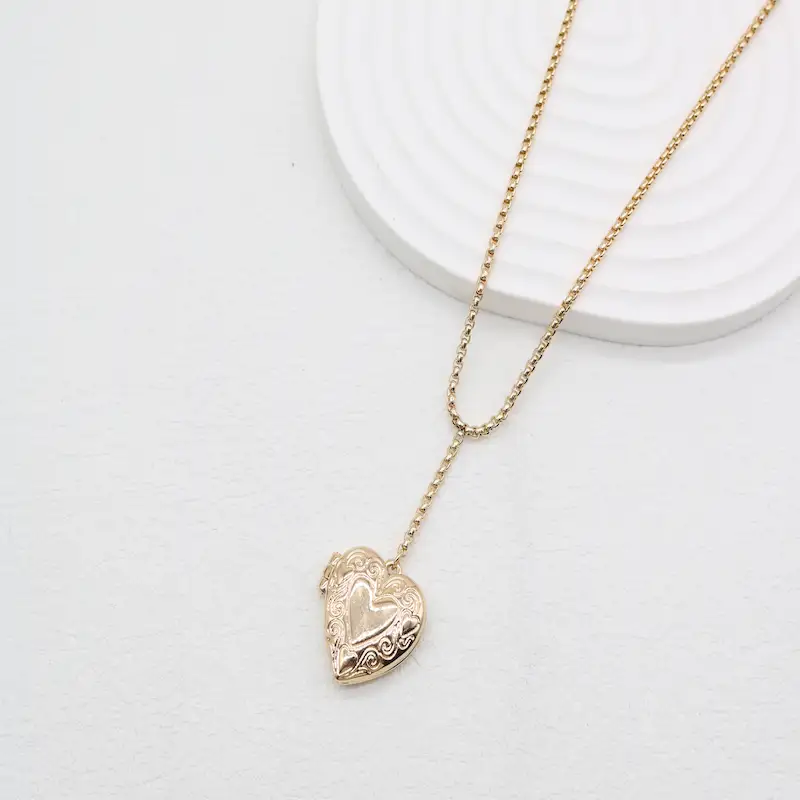
Features:
Micro-sculpted heart links require precision engineering, often featuring pavé accents for special editions.
Quality Markers:
▸ Seamless link construction
▸ Valentine’s editions: Micro-cubic zirconia embellishments
Sentimental Value:
• Anniversary gifting favorite
• 14K gold recommended for shape retention
7.Wheat Chain
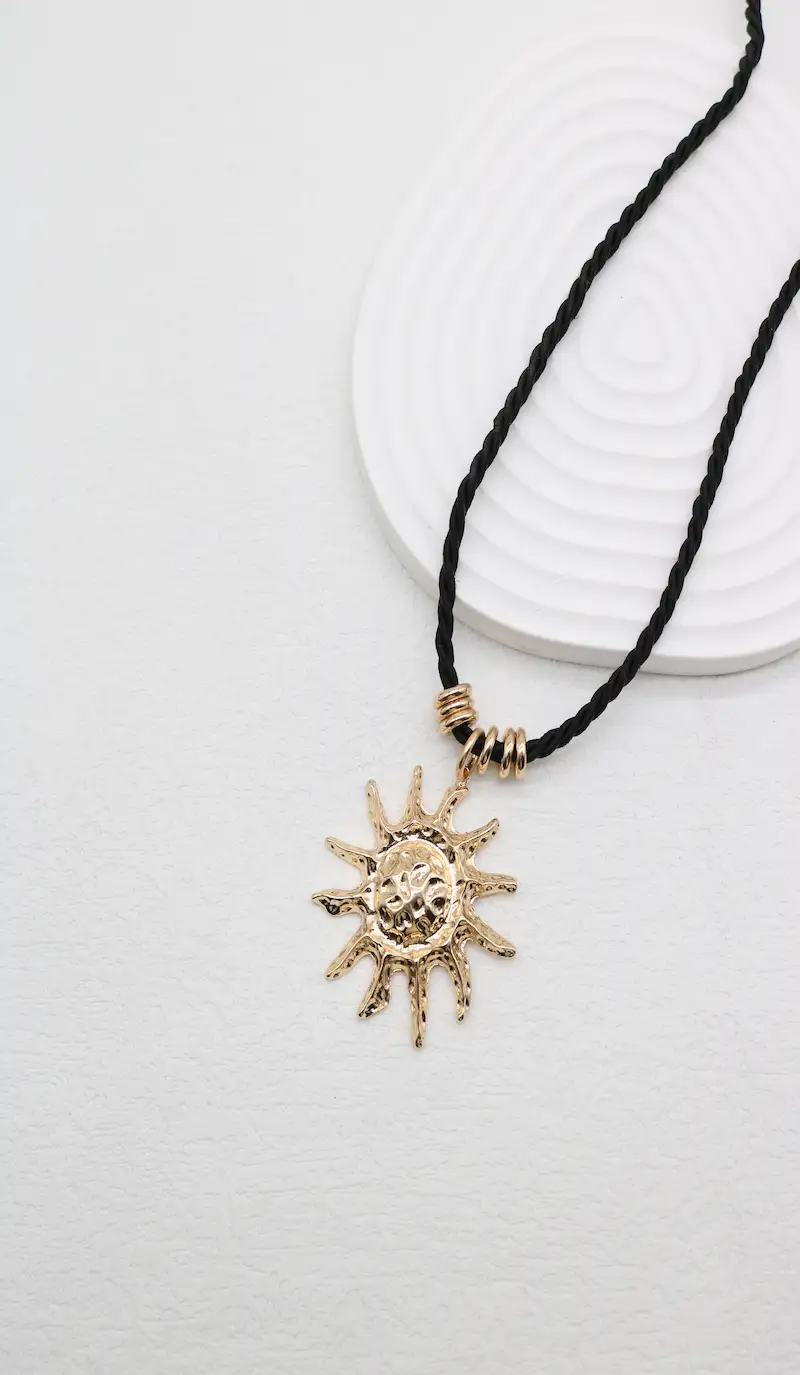
A wheat chain, also known as a Spiga chain, is made from interwoven links arranged to resemble a wheat stalk.
Its braided construction creates a textured appearance while maintaining a relatively continuous chain structure.
Key Characteristics
Interwoven links
Braided appearance
Textured surface
Flexible construction
Suitable for different pendant styles
Best Uses
Wheat chains work well for:
Everyday necklaces
Medium-sized pendants
Textured metal jewelry
Classic chain collections
Standalone necklace designs
The interwoven structure gives wheat chains more visual detail than simple cable chains.
For wholesale buyers, the key considerations include link uniformity, flexibility, surface finishing, and the strength of the end connections.
8. Singapore /Twisted Chain
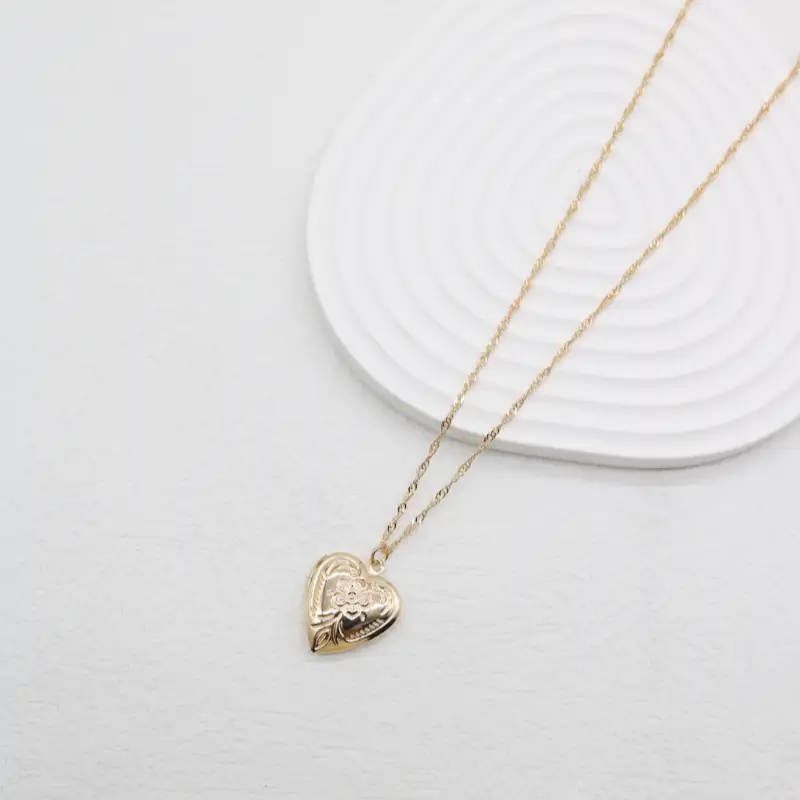
A Singapore chain is created through a twisted arrangement of interconnected links, producing a delicate spiral appearance.
Its multiple reflective surfaces create a sparkling effect when the chain moves.
Features:
Spiral-wound wires create dimensional texture, evoking vintage jewelry aesthetics.
Considerations:
▸ 2-6mm widths (thinner = daintier)
▸ Avoid excessive tension (may deform)
Boho Chic:
✓ Perfect with embroidered fabrics
✓ Minimalist pendants recommended
Key Characteristics
Twisted link structure
Fine, decorative appearance
Reflective surfaces
Flexible movement
Suitable for delicate necklaces
Best Uses
Singapore chains are often used for:
Delicate pendant necklaces
Feminine jewelry collections
Layered necklaces
Minimalist everyday accessories
Gift-oriented jewelry designs
Its twisted appearance gives it more visual movement than a simple cable chain.
For brands developing fine-looking fashion jewelry, Singapore-style chains can offer a decorative option without relying on large pendants or oversized components.
9. Rolo Chain
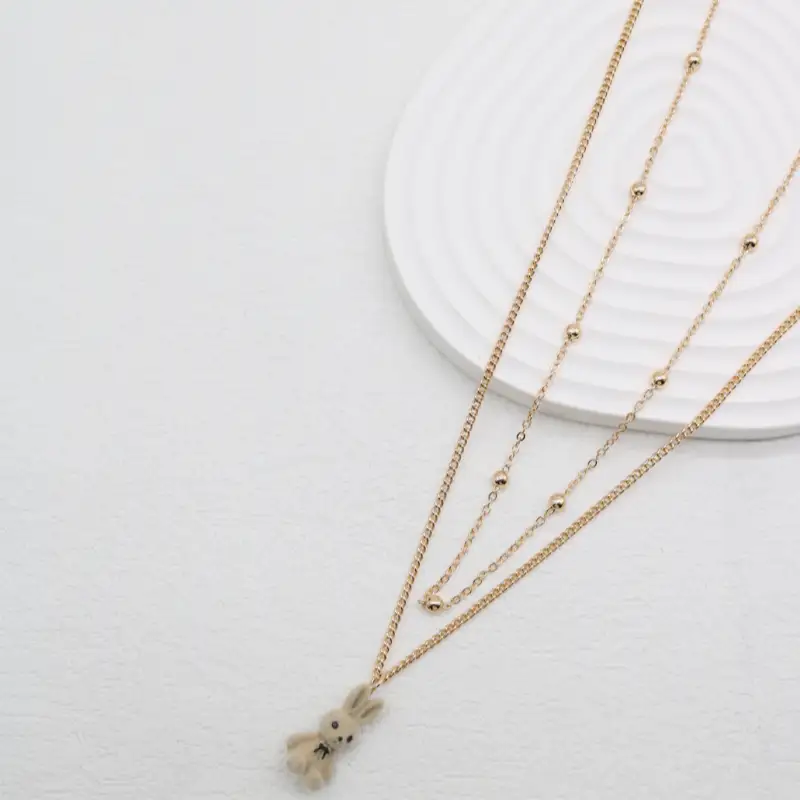
A Rolo chain consists of round or slightly rounded links connected in a regular pattern.
It is sometimes called a Belcher chain, although naming and construction details can vary between manufacturers.
Key Characteristics
Rounded, uniform links
Open and balanced appearance
Flexible construction
Available in different link sizes
Suitable for charms and pendants
Best Uses
Rolo chains are often used for:
Charm necklaces
Everyday pendant necklaces
Casual fashion jewelry
Layered accessories
Personalized jewelry
Their rounded links give them a softer appearance than square or sharply geometric chains.
For product development, link diameter and wire thickness are important because they influence the finished necklace's visual weight and overall strength.
10. Cup Chain
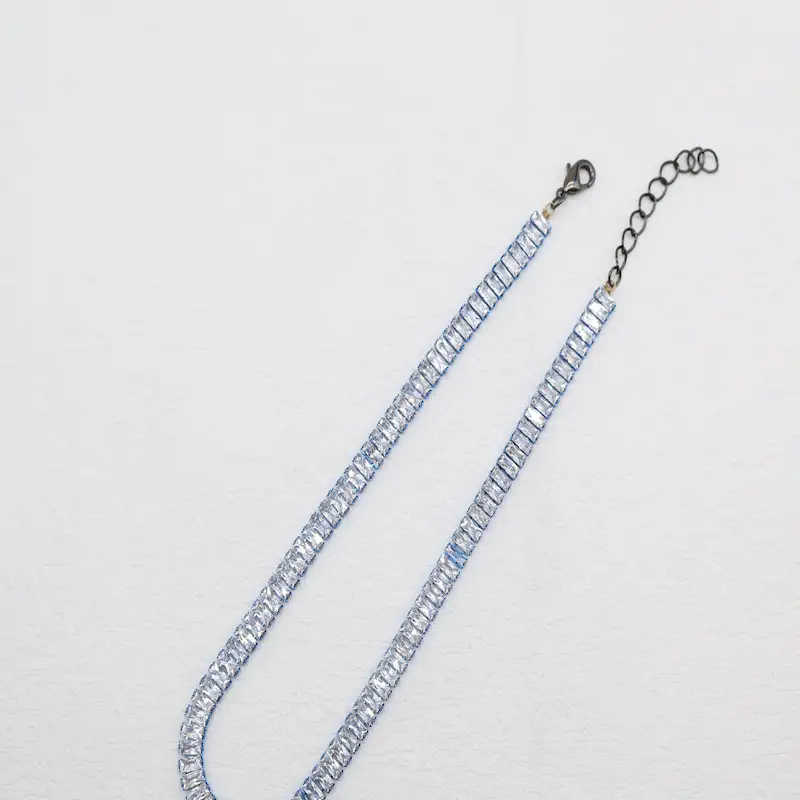
Features:
Concave links act as light catchers, delivering subtle sparkle through masterful metalwork.
Technical Mastery:
▸ 1.5-4mm cup diameters
▸ 18K gold preferred for malleability
Red Carpet Ready:
✓ Strapless gown complement
✘ Weight restrictions apply
11.Ball Bead Chain
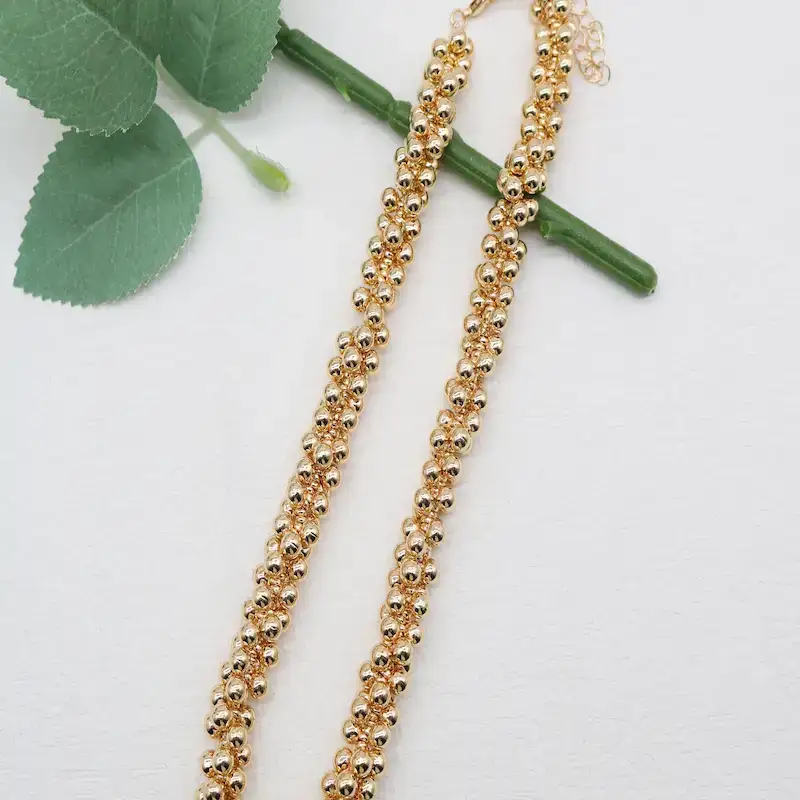
A ball chain consists of small round metal beads connected by short links or connecting sections.
Its distinctive beaded appearance makes it different from conventional interlocking chain structures.
Features:
Discreetly threaded metal spheres create "constellation" effects, embodying Parisian minimalism.
Innovations:
▸ Seamless "knotless" engineering
▸ Rhodium vs. sandblasted finishes
Versatility:
✓ Office: 1.5mm white gold + solitaire
✓ Evening: 3mm black gold drama
Key Characteristics
Connected spherical beads
Repetitive rounded appearance
Flexible construction
Available in different bead sizes
Casual and industrial-inspired styling
Best Uses
Ball chains are often used for:
Minimalist fashion necklaces
Small pendants
Personalized jewelry
Casual accessories
Decorative fashion collections
The bead diameter affects both appearance and flexibility. Smaller beads create a more delicate necklace, while larger beads produce a more noticeable style.
Charmwell's Chained Necklace with Round Ball Pendant provides an example of combining a chain structure with a decorative round pendant.
12.Paperclip Chain
A paperclip chain uses elongated rectangular or oval links that resemble the shape of traditional paperclips.
Its open-link appearance gives it a modern and minimalist aesthetic.
Key Characteristics
Long, narrow links
Open and lightweight appearance
Modern geometric styling
Available in different link proportions
Suitable for layering and charms
Best Uses
Paperclip chains are popular for:
Minimalist necklaces
Layered chain jewelry
Initial and letter pendants
Small decorative charms
Contemporary fashion collections
The proportions of the links can significantly change the overall appearance. Longer links create a more noticeable geometric pattern, while shorter links produce a denser and more traditional look.
For manufacturing, link thickness, connection strength, clasp size, and pendant compatibility should be considered together.
13. Herringbone Chain
A herringbone chain is made from closely arranged, angled metal links that form a flat, smooth surface.
Its pattern resembles a fishbone structure, creating a polished and reflective appearance.
Key Characteristics
Flat profile
Closely arranged angled links
Smooth surface
Reflective finish
Limited tolerance for sharp bending
Best Uses
Herringbone chains are often selected for:
Standalone statement necklaces
Smooth gold-tone jewelry
Minimalist evening accessories
Contemporary fashion collections
Herringbone chains look elegant because their flat structure creates a continuous surface. However, they are more sensitive to sharp bends and kinks than many conventional link chains.
They should be stored flat and handled carefully rather than folded or tightly twisted.
For manufacturers, the alignment of the links and the consistency of the finished surface are important quality inspection points.
14. Singapore Chain
A Singapore chain is created through a twisted arrangement of interconnected links, producing a delicate spiral appearance.
Its multiple reflective surfaces create a sparkling effect when the chain moves.
Key Characteristics
Twisted link structure
Fine, decorative appearance
Reflective surfaces
Flexible movement
Suitable for delicate necklaces
Best Uses
Singapore chains are often used for:
Delicate pendant necklaces
Feminine jewelry collections
Layered necklaces
Minimalist everyday accessories
Gift-oriented jewelry designs
Its twisted appearance gives it more visual movement than a simple cable chain.
For brands developing fine-looking fashion jewelry, Singapore-style chains can offer a decorative option without relying on large pendants or oversized components.
15. Mariner Chain
A mariner chain, also known as an anchor chain, features oval links with a small central bar across each link.
Its design is inspired by traditional anchor chains and creates a recognizable nautical appearance.
Key Characteristics
Oval-shaped links
Central crossbar
Repeating symmetrical pattern
Available in different link widths
Distinctive nautical styling
Best Uses
Mariner chains are suitable for:
Nautical-inspired jewelry
Everyday metal necklaces
Unisex fashion accessories
Statement chain collections
Pendant necklaces
The central bar gives each link a more decorative appearance than a standard oval cable chain.
When selecting a mariner chain for a pendant, check whether the pendant bail can pass over the links and whether the chain width is proportionate to the pendant.
How to Choose the Right Necklace Chain
Understanding chain names is only the first step. The right necklace chain should match the pendant, intended wearing occasion, material, dimensions, and target customer.
Here are six important factors to consider.
1. Choose the Chain Based on Its Intended Use
Different chain structures serve different purposes.
| Intended Use | Recommended Chain Types | Reason |
|---|---|---|
| Small pendants | Cable, Box, Rolo | Simple structure and versatile styling |
| Medium pendants | Cable, Rope, Wheat | Balanced appearance and flexible design options |
| Bold standalone necklaces | Cuban, Curb, Figaro | Strong visual presence |
| Layered necklaces | Paperclip, Cable, Singapore | Different textures and proportions |
| Smooth statement necklaces | Snake, Herringbone | Continuous, polished appearance |
| Decorative collections | Byzantine, Mariner | Distinctive link patterns |
These are general design recommendations, not guarantees of strength. Actual pendant compatibility depends on chain dimensions, construction, material, and the weight of the pendant.
2. Select the Appropriate Chain Length
Necklace length changes where the chain sits on the body and how it works with different clothing styles.
Common necklace length categories include:
| Necklace Length | Common Position | Typical Application |
|---|---|---|
| 14–16 inches | Close to the neck | Chokers and short necklaces |
| 18 inches | Around the collarbone | Everyday necklaces and pendants |
| 20 inches | Slightly below the collarbone | Casual and layered necklaces |
| 22–24 inches | Upper chest | Longer pendants and statement styles |
| 28–36 inches | Lower chest or longer | Long necklaces and layering |
Actual positioning varies according to neck size, body proportions, chain style, and pendant weight.
For brands developing necklaces for different markets, it is worth considering adjustable extension chains rather than offering only one fixed length.
3. Consider Chain Width and Thickness
Chain width has a major influence on the visual appearance and wearing experience.
Fine chains create a delicate and minimalist appearance.
Medium-width chains offer a balance between visibility and versatility.
Thick chains create stronger visual impact and are often worn without pendants.
When developing a product, buyers should distinguish between link width, wire thickness, and overall chain thickness. These measurements are not interchangeable.
A supplier should provide a clear technical specification rather than simply describing a chain as thin, medium, or chunky.
4. Match the Chain Material to Your Product Positioning
Chain style and material are two separate product decisions.
A cable chain, for example, can be manufactured using different metals and finishes.
Common jewelry chain materials include:
| Material | Common Applications | Purchasing Considerations |
|---|---|---|
| 925 Sterling Silver | Silver jewelry and premium fashion collections | Silver purity and applicable marking requirements |
| Stainless Steel | Everyday fashion jewelry | Steel grade, finishing, and component consistency |
| Brass | Fashion necklaces and decorative designs | Alloy composition and plating quality |
| Zinc Alloy | Fashion jewelry and decorative components | Composition, casting details, and coating |
| Iron | Fashion chains and cost-oriented designs | Corrosion protection and finish |
| Gold-Plated Base Metals | Fashion and private label jewelry | Base metal, plating process, and coating specifications |
Buyers should request exact material information. Terms such as gold plated, stainless steel, and alloy do not automatically establish product durability or skin-contact safety.
5. Check the Clasp and Connection Components
The clasp is an important part of necklace functionality.
Common necklace closures include:
Lobster clasps
Spring ring clasps
Toggle clasps
Magnetic clasps
Box clasps
Adjustable extension chains
The clasp should match the chain's weight, thickness, and intended use.
For a custom jewelry project, also inspect the jump rings, end caps, pendant bails, and connection points. These small components can influence both appearance and product reliability.
6. Consider Layering and Pendant Compatibility
A chain designed to carry a pendant may not be ideal for every layered necklace arrangement.
For a layered collection, consider combining different:
Chain lengths
Link patterns
Chain widths
Surface finishes
Pendant sizes
Decorative components
A successful layered design creates visual separation between each chain rather than allowing all the components to overlap in the same position.
For inspiration, explore our A0095 Multiple Burnt Silver Round Pendant Metal Necklace, which combines three chain layers with different lengths and decorative details.
Different Necklace Chain Types: Which Ones Are Best for Layering?
Layered necklaces are popular because they combine multiple chain textures and lengths in one coordinated look.
However, layering is not simply a matter of wearing several necklaces together. The chain structures should complement each other.
Combine Fine and Chunky Chains
A fine cable chain can create a delicate base, while a chunky curb or paperclip chain provides contrast.
This combination works well for brands developing contemporary fashion jewelry collections.
Mix Different Link Patterns
Combining a smooth snake chain with an open-link paperclip chain creates visual contrast.
Similarly, a cable chain can be paired with a rope chain to introduce additional texture.
Use Different Necklace Lengths
A typical layered arrangement may combine a shorter chain, a medium chain, and a longer pendant necklace.
The difference between the lengths helps prevent the chains from sitting directly on top of one another.
For ready-made layered jewelry, Charmwell offers several product directions:
These examples show how chain patterns, different lengths, and decorative elements can be combined into coordinated necklace designs.
How Are Fashion Necklace Chains Customized?
For jewelry brands, choosing an existing chain style is often only the beginning of product development.
OEM and ODM manufacturing allow buyers to adapt chain designs to their own product positioning and brand identity.
1. Chain Pattern Development
Buyers can select an existing chain pattern or provide reference images for a customized design.
The manufacturer evaluates the link structure, dimensions, material, and production feasibility.
2. Material and Finish Selection
Depending on the design, customization may include:
Base metal selection
Gold, silver, or other color finishes
Surface polishing
Textured or brushed effects
Decorative coating options
The exact finish should be confirmed through sample evaluation and agreed technical specifications.
3. Chain Length and Width Customization
Brands may require different lengths and widths for different customer groups or product categories.
A manufacturer should confirm the exact measurements, acceptable tolerances, and extension chain requirements.
4. Pendant and Charm Integration
Chain necklaces can be customized with:
Initial and letter pendants
Heart-shaped charms
Geometric metal pendants
Gemstone decorations
Pearls and glass components
Logo charms
For example, the A0007 Heart Charm Pendant Necklace combines an adjustable chain with a decorative heart charm.
5. Private Label Packaging
Custom packaging helps brands create a more consistent retail presentation.
Possible options include:
Branded jewelry cards
Custom labels
Logo printing
Gift boxes
Pouches
Retail tags
The final packaging should be selected according to the product size, shipping requirements, target market, and retail channel.
What Should Buyers Check When Sourcing Wholesale Necklace Chains?
For wholesale purchasing, chain appearance is only one part of the evaluation. Buyers should confirm product specifications before comparing supplier quotations.
Use this checklist when sourcing necklace chains:
| Item | What to Confirm |
|---|---|
| Chain Type | Cable, box, snake, rope, Figaro, or other construction |
| Base Material | Exact metal or alloy specification |
| Chain Length | Total length and extension length |
| Chain Width | Measured in millimeters |
| Wire Thickness | Where applicable |
| Plating | Color, process, and available specifications |
| Clasp | Type, material, and attachment strength |
| Pendant Compatibility | Bail opening and pendant weight |
| Testing | Applicable material and chemical compliance reports |
| Packaging | Individual bags, jewelry cards, and retail boxes |
| MOQ | Minimum order quantity per style and customization |
| Lead Time | Sampling and mass production schedule |
Why Sample Approval Matters
A chain may look correct in a product photograph but behave differently in person.
Before bulk production, request a sample to check:
Link consistency
Flexibility and drape
Surface finish
Chain weight
Clasp operation
Connection strength
Pendant compatibility
Packaging protection
For repeat orders, keep an approved sample and written specifications as the reference for production quality.
Why Work with Charmwell Accessories for Custom Chain Necklaces?
Charmwell Accessories, the brand of Qingdao Charmwell Industry & Trading Co., Ltd., provides fashion jewelry design, OEM, ODM, and private label manufacturing services for international brands, retailers, and wholesalers.
Established in 2013, the company combines international design resources with manufacturing operations in China.
International Design Resources
Charmwell has offices in Qingdao and Yiwu, with a design office in London.
Its design teams support product development through fashion research, design concepts, CAD development, and material sourcing.
Sampling and Product Development
The company has a dedicated sampling team of 10 makers and reports an output of approximately 1,000 samples per month.
This supports the evaluation of chain patterns, pendant proportions, materials, and finishes before bulk production.
In-House Mold Making and Casting
Charmwell has an in-house team of five mold makers and a casting room for developing customized metal components.
These resources support fashion jewelry projects that require coordinated product development and manufacturing.
Multiple Necklace Categories
Charmwell develops different necklace styles, including chain necklaces, pendant necklaces, layered necklaces, Y-necklaces, and statement designs.
Explore our OEM Chain Necklace Collection and Layered Necklace Collection to see different product directions.
For custom pendant designs, you can also explore our K121 Square Charm Pendant Necklace.
Production and Quality Management
According to the company's published information, Charmwell has an annual production capacity of approximately 5–7 million pieces and a typical production lead time of 5–6 weeks after sample approval.
The company's in-house QC team inspects shipments before release.
Learn more about our company background and jewelry manufacturing capabilities.
Frequently Asked Questions About Different Types of Necklace Chains
1. What are the most popular types of necklace chains?
Some of the most popular styles include cable, box, rope, curb, Cuban link, Figaro, snake, paperclip, ball, herringbone, wheat, and Singapore chains. Each has a different link structure and appearance.
2. Which necklace chain is best for everyday wear?
Cable, curb, rope, and wheat chains are commonly considered versatile options for everyday jewelry. However, actual durability depends on material, thickness, link construction, clasp quality, and how the necklace is worn.
3. Which chain type is best for pendants?
Cable and box chains are common choices because their simple structures work with many pendant styles. Rope and wheat chains can also complement pendants when their width and construction match the pendant's weight and bail opening.
4. What is the difference between a curb chain and a Cuban link chain?
Both feature interlocking links that lie relatively flat. Cuban link chains are generally thicker and more closely fitted, creating a bolder appearance, while curb chains are available in a wider range of delicate and substantial styles.
5. What is the difference between a cable chain and a box chain?
Cable chains use round or oval links connected in sequence. Box chains use square links that create a more geometric and structured appearance.
6. Which necklace chain is most suitable for layering?
Fine cable, Singapore, paperclip, and delicate curb chains are popular for layering. Combining different lengths, link patterns, and thicknesses helps create a balanced layered look.
7. Which chain types are more likely to kink?
Snake and herringbone chains require more careful handling because their closely connected structures can be damaged by sharp bends or folding. They should be stored flat and handled gently.
8. What materials are commonly used for fashion necklace chains?
Common materials include stainless steel, brass, zinc alloy, iron, and 925 sterling silver. The choice depends on the target price, product design, required finish, and applicable market standards.
9. Can necklace chain length and width be customized?
Yes. Many jewelry manufacturers offer customization of chain length, width, link pattern, finish, clasp, and pendant components. The available options depend on the design and production requirements.
10. What should I ask a necklace chain manufacturer before ordering?
Ask about material composition, chain dimensions, plating specifications, clasp construction, MOQ, sample costs, production lead time, quality inspection, and applicable test documentation.
11. Can I order custom necklace chains with my own brand?
Yes. OEM and private label manufacturers can support customized chain designs, logo charms, jewelry cards, labels, and branded packaging, depending on the project requirements and order quantity.
12. How do I choose the right chain for a jewelry collection?
Start with your target customer and product positioning. Decide whether the chain will carry a pendant, be worn alone, or form part of a layered design. Then confirm material, dimensions, finish, clasp, and sample quality.
Develop Your Custom Necklace Chain Collection with Charmwell Accessories
The different types of necklace chains offer a wide range of design possibilities, from simple cable and box chains to textured rope, bold Cuban links, and intricate Byzantine patterns.
For jewelry brands and retailers, the right choice depends on more than appearance. Chain construction, material, thickness, length, pendant compatibility, and finishing all influence the finished product.
Charmwell Accessories supports fashion jewelry development through design, sampling, OEM, ODM, and private label manufacturing.
Whether you are sourcing an existing chain necklace or developing a customized collection, our team can discuss your product requirements and manufacturing options.
Contact Charmwell Accessories to discuss your necklace chain project and request a quotation.
Website: https://www.okaaccessoriescn.com/