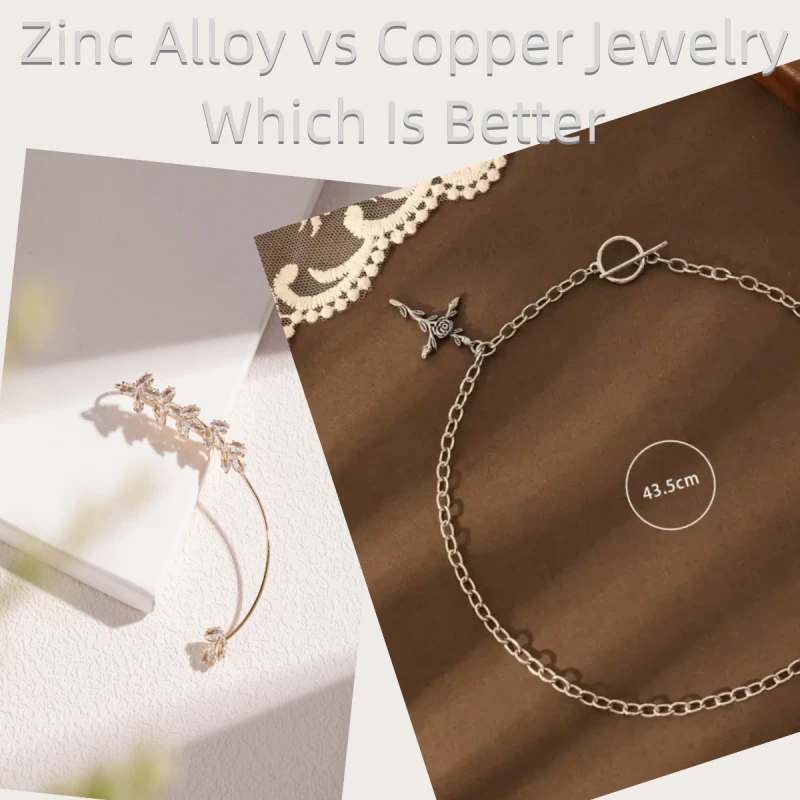
In the global fashion jewelry market, material selection directly affects cost, quality, durability, and brand perception. Among the most widely used base metals, zinc alloy and copper dominate fast-fashion and mid-range jewelry production due to their affordability, versatility, and compatibility with various plating techniques.
But when brands and buyers ask “Which is better: zinc alloy or copper jewelry?” the answer is not one-size-fits-all. The better choice depends on design complexity, target price point, production scale, sustainability goals, and market positioning.
This article provides an in-depth, data-driven comparison of zinc alloy vs copper jewelry, covering composition, performance, cost, environmental impact, and commercial suitability—helping brands make informed sourcing decisions.
Overview of Zinc Alloy Jewelry
1. What Is Zinc Alloy?
Zinc alloy jewelry is primarily composed of zinc (Zn) combined with small amounts of aluminum, magnesium, and copper. The most common industrial grades include Zamak 3 and Zamak 5, widely used in jewelry casting.
Typical composition (Zamak 5):
| Element | Percentage |
|---|---|
| Zinc (Zn) | 95–96% |
| Aluminum (Al) | 3.5–4.3% |
| Copper (Cu) | 0.75–1.25% |
| Magnesium (Mg) | <0.1% |
(Source: International Zinc Association)
2. Key Characteristics of Zinc Alloy Jewelry
Low melting point (~385°C)
Excellent casting fluidity
Ideal for complex and detailed designs
Lightweight compared to copper
Highly compatible with electroplating (gold, silver, rhodium)
Zinc alloy has become the preferred material for fast-fashion jewelry, especially earrings, pendants, charms, and decorative components.
To learn how long zinc jewelry can last, please see this article: How Long Does Zinc Alloy Jewelry Last?
Overview of Copper Jewelry
1. What Is Copper Jewelry?
Copper jewelry uses high-purity copper (Cu ≥ 99.9%) or copper-based alloys such as brass (copper + zinc) or bronze (copper + tin).
Basic properties of pure copper:
Melting point: ~1,085°C
Density: 8.96 g/cm³
Electrical and thermal conductivity: very high
2. Key Characteristics of Copper Jewelry
Warm, reddish metallic tone
High density and weight
Strong malleability
Susceptible to oxidation (patina)
Naturally antimicrobial
Copper jewelry is often associated with craftsmanship, vintage aesthetics, and premium hand-finished designs.
To learn how long gold-plated brass jewelry can last, please see this article: How Long Does Gold Plated Brass Last?
Zinc Alloy vs Copper Jewelry: Technical Comparison
1. Physical and Mechanical Properties
| Property | Zinc Alloy | Copper |
|---|---|---|
| Density (g/cm³) | 6.6–6.9 | 8.96 |
| Melting point (°C) | ~385 | ~1085 |
| Hardness (HB) | 80–120 | 35–50 |
| Casting precision | Excellent | Moderate |
| Weight feel | Light | Heavy |
Insight: Zinc alloy’s low melting point and hardness make it superior for mass casting, while copper offers a heavier, more “solid” feel preferred in artisanal jewelry.
2. Durability and Wear Resistance
| Performance Factor | Zinc Alloy | Copper |
|---|---|---|
| Deformation resistance | High | Medium |
| Scratch resistance | Medium–High | Low–Medium |
| Long-term structural stability | High | High |
| Oxidation tendency | Low (with plating) | High |
Copper oxidizes easily, forming green or brown patina (copper carbonate), while zinc alloy relies on protective plating for durability.
To understand the differences between these two materials and stainless steel jewelry, please refer to these two articles:
Brass vs Stainless Steel Jewelry: A Comprehensive Comparison for Brands and Manufacturers
Zinc Alloy vs Stainless Steel Jewelry: Which Is Better for Your Brand?
Skin Safety and Compliance
Nickel and Lead Content
Both zinc alloy and copper jewelry must comply with EU REACH and US CPSIA standards.
| Standard | Requirement |
|---|---|
| Nickel release (EU) | ≤ 0.5 µg/cm²/week |
| Lead content (US CPSIA) | ≤ 100 ppm |
Industry data (2023 testing results):
| Material | REACH Pass Rate |
|---|---|
| Zinc alloy (controlled) | 97–99% |
| Copper | 95–98% |
When produced by qualified manufacturers with full inspection and lab testing, both materials are safe for skin contact.
Cost Analysis: Zinc Alloy vs Copper Jewelry
1. Raw Material Cost (2024 Average)
| Material | Price per ton (USD) |
|---|---|
| Zinc | $2,400–2,800 |
| Copper | $8,000–9,500 |
(Source: London Metal Exchange)
2. Manufacturing Cost Comparison
| Cost Factor | Zinc Alloy | Copper |
|---|---|---|
| Raw material cost | Low | High |
| Casting efficiency | Very high | Medium |
| Scrap rate | Low | Higher |
| Labor dependency | Low | High |
Conclusion: Zinc alloy jewelry can reduce total unit cost by 25–40% compared to copper jewelry, making it ideal for price-sensitive fashion markets.
Design Flexibility and Trend Adaptability
1. Zinc Alloy: Built for Fast Fashion
Zinc alloy excels in:
Hollow and lightweight designs
High-detail textures
Multi-layer structures
Seasonal trend updates
Sample production speed (industry average):
| Material | Sample Lead Time |
|---|---|
| Zinc alloy | 5–7 days |
| Copper | 10–14 days |
2. Copper: Best for Craft and Minimalist Design
Copper works well for:
Simple geometric forms
Hand-hammered textures
Retro and bohemian styles
However, complex copper designs often require manual labor, increasing cost and lead time.
Sustainability and Environmental Impact
Recycling and Energy Consumption
| Factor | Zinc Alloy | Copper |
|---|---|---|
| Recyclability | High | Very high |
| Energy per kg (MJ) | ~20–25 | ~30–40 |
| Casting waste reuse | Easy | Moderate |
Zinc alloy offers lower energy consumption during casting, making it more suitable for large-scale production with reduced carbon footprint.
Market Usage and Brand Preference
1. Application Scenarios
| Jewelry Category | Preferred Material |
|---|---|
| Fast fashion earrings | Zinc alloy |
| Statement necklaces | Zinc alloy |
| Handmade artisan jewelry | Copper |
| High-volume retail collections | Zinc alloy |
2. Global Retailer Trends
According to supplier data from European and US retailers:
Over 70% of fast-fashion jewelry collections use zinc alloy as the base metal
Copper is increasingly used for limited editions and premium sub-lines
Zinc Alloy vs Copper Jewelry: Which Is Better?
Summary Comparison
| Criteria | Better Choice |
|---|---|
| Cost efficiency | Zinc alloy |
| Design complexity | Zinc alloy |
| Production scalability | Zinc alloy |
| Craft aesthetics | Copper |
| Natural material appeal | Copper |
| Fast fashion suitability | Zinc alloy |
Overall verdict:
For modern fashion brands, large retailers, and fast-moving collections, zinc alloy jewelry is generally the better choice due to its cost control, design flexibility, and production efficiency. Copper jewelry remains valuable for niche, artisanal, or premium positioning.
Why Leading Brands Choose OKA Accessories
When material choice meets professional execution, the difference lies in the manufacturer.
About Qingdao OKA Arts and Crafts Co., Ltd (OKA Accessories)
Founded in 2013, OKA Accessories is a leading custom jewelry manufacturer serving global fashion brands.
Company Highlights:
Market coverage: 50+ countries
Offices: Qingdao, Yiwu, with a London design center
Clients include Pull&Bear, Tally Weijl, Urban Outfitters
Specialization: High-quality zinc alloy and copper fashion jewelry
Core Competitive Advantages
Design Excellence
London Design Center with 12+ years serving EU & US retailers
Real-time material sourcing via Qingdao design team
Combination of CAD precision and hand-crafted detailing
Production Strength
Monthly sample capacity: 1,000+
Annual output: 5–7 million pieces
In-house mold workshop and casting room
Average delivery time: 5–6 weeks
On-time delivery rate: 97%
Quality & Compliance
100% full inspection, signed release management
Laboratory test pass rate: 98%
Fully compliant with European and American standards
Flexible Service Terms
Minimum order quantity: 200 pieces
Ideal for fast fashion jewelry and hair accessories
High cost-performance with rapid response
Final Recommendation
Whether you choose zinc alloy for scalable fashion collections or copper for distinctive craftsmanship, success depends on a manufacturer who understands design, compliance, speed, and cost control.
With over a decade of experience, global retailer partnerships, and advanced production capabilities, OKA Accessories is a trusted partner for brands seeking reliable, trend-driven, and high-quality jewelry manufacturing.
If your goal is to stand out in the competitive jewelry market while maintaining speed and value, OKA Accessories is the partner worth choosing. Contact OKA Accessories today!